A Guide to Implementing Indirect Water Heating With Boilers
Choosing the right water heating method for your home or business significantly impacts energy efficiency, comfort, and long-term costs. While traditional direct-fired water heaters have served us well for decades, indirect water heating offers a compelling alternative, especially if you already use a boiler for space heating.
Indirect water heating uses your boiler’s energy to heat water rather than relying on a separate burner or electric element. This system integrates seamlessly with your existing heating infrastructure, often providing a more consistent supply of hot water while reducing fuel consumption.
If you are considering an upgrade or a new installation, understanding how indirect water heating with boilers works and how to implement it correctly is essential. This guide explores the mechanics, benefits, and practical steps to install an indirect system, ensuring you make an informed decision for your property.
Understanding How Indirect Water Heating Works
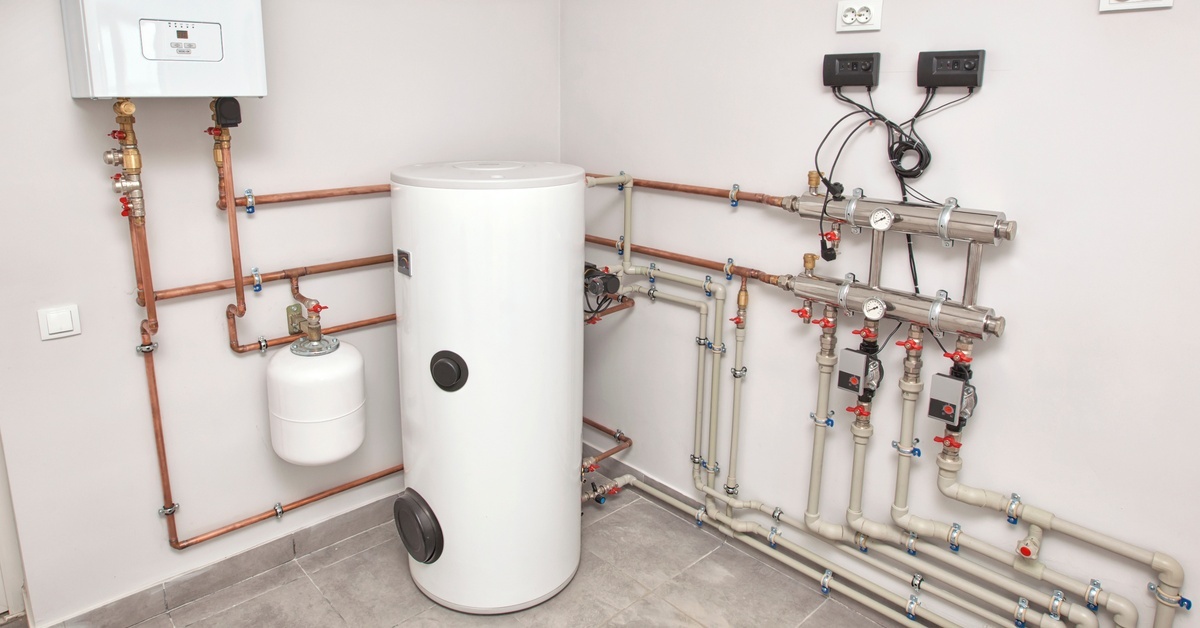
An indirect water heater functions differently from the standard water heater tank. Instead of creating heat itself, it uses heat from a boiler. The indirect tank connects to the boiler via piping, and the boiler heats water and circulates it through a heat exchanger coil inside the indirect tank.
As the hot boiler water flows through the coil, it transfers thermal energy to the water stored in the tank. Once the water in the tank reaches the set temperature, the boiler turns off the circulation to that zone.
Choosing Indirect Heating Over Traditional Methods
Homeowners and facility managers often switch to indirect systems due to better efficiency and longevity. Since indirect tanks do not have their own burner or flue, they experience less thermal stress than direct-fired tanks. This design difference often results in a longer lifespan and fewer maintenance concerns.
Efficiency gains come from the boiler itself. When you pair a high-efficiency boiler with a well-insulated indirect tank, you minimize standby heat loss. Furthermore, installation flexibility means you do not need to worry about venting the water heater separately, as the boiler handles all exhaust requirements. This simplifies the mechanical room layout and reduces the number of penetrations through your building envelope.
Determining The Right Tank Size
Sizing the indirect tank correctly ensures you never run out of hot water during peak demand. Unlike a standard water heater where you might just match gallon capacity, indirect sizing relies on the first hour rating. This rating calculates how much hot water the unit can supply in one hour, starting with a full tank.
To size your tank, calculate your peak hour demand. For example, a family of four that showers in the morning while running the dishwasher might need 60 to 80 gallons.
Remember that the boiler’s output matters just as much as tank size. A powerful boiler heats the water inside the tank rapidly, which means you can potentially install a smaller tank than you would with a traditional gas or electric heater. Consult the manufacturer’s specifications to match the boiler BTU output with the tank’s heat exchanger capacity for optimal performance.
Following Installation Steps for Indirect Systems
Proper installation ensures safety and efficiency. While we recommend hiring a professional plumber or heating contractor to complete the work, understanding the process helps you manage the project effectively.
Position the Tank
Place the indirect water heater near the boiler to minimize piping length—shorter pipe runs reduce heat loss and improve system response time. Make sure the floor can support the weight of the full tank.
Pipe the Boiler Loop
Connect the supply and return lines from the boiler to the heat exchanger coil in the tank. You must install a dedicated circulator pump or a zone valve for the water heater loop. This allows the boiler control to prioritize hot water generation when needed.
Connect Domestic Water
Plumb the cold water inlet and hot water outlet to your home’s plumbing system, and install a mixing valve on the hot outlet. Indirect tanks often store water at higher temperatures to prevent bacterial growth, and the mixing valve blends in cold water to deliver safe, non-scalding water to your taps.
Complete Electrical Connections
Wire the tank’s thermostat, or aquastat, to the boiler control or zone controller. When the tank temperature drops, the aquastat signals the boiler to fire and the circulator to run.
Prioritizing Hot Water With Zone Controls
One critical aspect of implementing indirect heating is priority zoning. When you turn on a shower, you want hot water immediately. Priority zoning ensures the boiler directs all its energy to the water heater first, temporarily pausing space heating if necessary.
Many modern boiler controls include a priority feature. When the indirect tank calls for heat, the system shuts off the circulators for the radiators or radiant floor zones. Once the tank is hot, the system switches back to space heating.
Maintaining Your Indirect Water Heater
Maintenance extends the life of your equipment and keeps efficiency high. Although indirect tanks require less maintenance than direct-fired units, they still need occasional attention.
Flush the tank annually to remove sediment buildup. Minerals in the water settle at the bottom of the tank over time, reducing heat transfer efficiency and potentially causing premature leaks. Connect a hose to the drain valve and let the water run until it clears.
Check the anode rod periodically. This sacrificial rod attracts corrosive elements in the water, protecting the steel tank from rust. Replacing the anode rod every few years is a cheap insurance policy for your expensive tank.
Inspect the boiler piping and circulator pump for leaks or unusual noises. Check that the aquastat functions correctly by verifying the water temperature at the tap. If the water feels too hot or too cold, you may need to adjust the settings or replace a faulty sensor.
Exploring Commercial Applications For Indirect Heating
Indirect water heating scales up well for larger properties. Hotels, apartment complexes, and office buildings often use multiple boilers and large storage tanks to meet massive hot water demands.
In these settings, you might see a dedicated commercial-grade water heater setup or a bank of indirect tanks connected to a modular boiler plant. The principle remains the same: use the high BTU output of the heating plant to generate hot water efficiently.
Commercial systems often utilize redundancy; if one boiler fails, the others pick up the slack, ensuring tenants or guests never experience a cold shower. The rapid recovery rate of indirect systems is particularly valuable here, as it handles the sudden spikes in usage that are typical in large buildings.
Final Thoughts On Efficient Water Heating
Implementing indirect water heating with boilers represents a smart move for energy-conscious property owners. You leverage the power of your existing boiler to deliver endless hot water with greater efficiency and reliability.
Consult qualified professionals—like our team at 24hr Supply—to assess your specific needs. We can help you calculate the precise heating load, recommend the appropriate tank size, and ensure the piping configuration optimizes performance. With the right setup, you will enjoy consistent comfort and lower utility bills for years to come.
Recent Posts
-

How Much Does It Cost to Hydro Jet a Sewer Line?
Hydro jetting a sewer line typically costs between $300 and $800 for most homes, while more severe c …Mar 27th 2026 -
What Is PEX Plumbing? A Practical Guide for Homeowners and Pros
PEX plumbing is a system that uses flexible cross-linked polyethylene tubing to deliver water in res …Mar 27th 2026 -
What Is PEX Piping and What Is It Used For?
If you have ever tackled a late-night leak repair, a fast-track bathroom remodel, or a tight mechani …Mar 19th 2026