Commercial vs. Residential Plumbing: 15 Key Differences You Need to Know
Plumbing might seem straightforward at first glance, but residential and commercial systems are fundamentally different. From the materials used to installation techniques, regulatory requirements, and maintenance expectations, understanding these distinctions is very critical for anyone doing any project.
Here’s an in-depth, contractor-focused exploration of the 15 key differences between commercial and residential plumbing.
Commercial and Residential Plumbing Differences
1. Scope and Scale
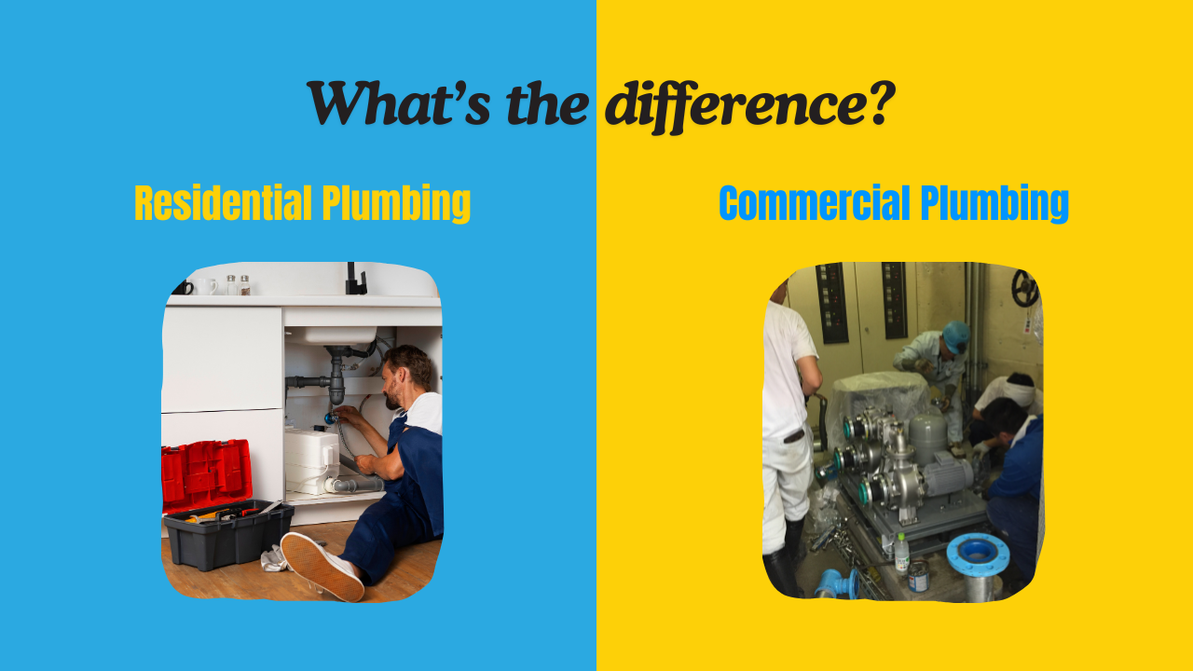
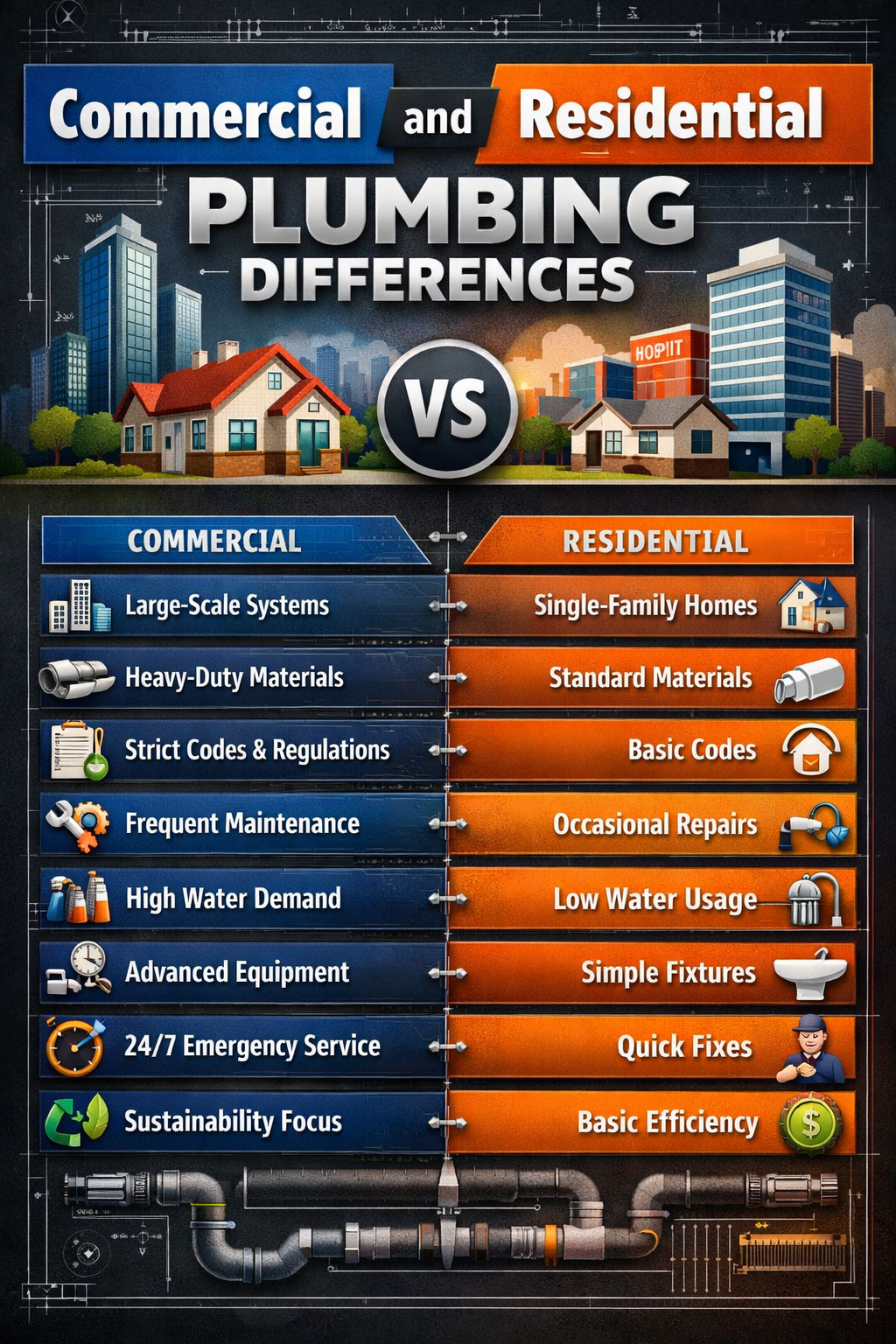
Residential plumbing typically serves single-family homes or small apartments, focusing on everyday tasks like fixing leaky faucets, unclogging drain lines, installing water heaters, and occasionally handling sewer line repairs or full-home repiping.
Jobs are usually localized, straightforward, and require standard tools. In contrast, commercial plumbing projects involve much larger and more complex systems, such as multi-story office buildings, hospitals, hotels, or industrial facilities.
These systems often span multiple floors, include hundreds of fixtures, and demand careful coordination with other contractors. Commercial projects require extensive planning, specialized tools, and robust materials to handle high usage and complex layouts.
2. Plumbing Codes and Regulations
Residential plumbers follow codes like the International Plumbing Code (IPC) or local equivalents, ensuring safe installation of pipes, fixtures, and drainage systems. Inspections focus primarily on safety, efficiency, and basic functionality.
Commercial plumbing, however, operates under far stricter regulations due to public use and liability.
Contractors must navigate ADA compliance, EPA WaterSense standards for water efficiency, health and sanitation codes for food service and healthcare facilities, fire codes for sprinklers, and local building codes dictating materials, layout, and venting.
Noncompliance in commercial projects can result in severe penalties, legal liability, or public safety hazards.
3. System Design and Layout
Residential plumbing networks are typically simple, with straightforward water supply and drainage systems. Repairs often affect only one area of the home, and redundancy is minimal.
Commercial piping systems are far more intricate, requiring valves, sump pumps, and multiple redundant pathways to prevent total system failure.
Pressure-boosting systems may be necessary in multi-story buildings, and complex venting networks are essential to manage odors and gas release.
Contractors need to carefully study blueprints and design systems with both reliability and maintainability in mind.
4. Usage Demands
Water usage in homes is generally predictable, concentrated during mornings and evenings. Standard PEX, PVC, or household-grade copper pipes and fixtures handle these demands efficiently.
In commercial settings, plumbing systems must accommodate hundreds or thousands of users with constant water usage throughout the day.
Hotels, hospitals, restaurants, and office buildings require high-capacity water heaters, pressure regulators, durable piping, and industrial-grade fixtures capable of withstanding frequent use without failure.
5. Maintenance and Repairs
Residential plumbing typically requires moderate, occasional maintenance. Homeowners call for quick fixes such as leaky faucets, clogged drains, or routine water heater servicing.
Commercial systems, however, demand regular, proactive maintenance to prevent downtime and costly disruptions.
Maintenance may involve inspecting large-diameter pipes, pressure-balancing pumps, industrial boiler systems, and advanced filtration systems.
Contractors often need specialized inspection tools like pipe cameras and heavy-duty wrenches to navigate complex layouts safely and efficiently.
6. Plumbing Fixtures and Equipment
In-home water systems and plumbing fixtures prioritize both style and practicality, balancing aesthetics with functionality. Standard faucets, toilets, and water heaters suffice for everyday use. Commercial facilities focus primarily on durability and functionality.
Fixtures are designed to endure heavy usage, often using stainless steel, heavy-duty ceramics, or sensor-based systems to promote hygiene and water efficiency. Some commercial fixtures include features like automatic flushing or touchless faucets to accommodate public use.
7. Health and Safety Concerns
While residential plumbing prioritizes preventing leaks, ensuring clean water, and avoiding mold growth, commercial plumbing faces higher stakes.
Contamination in a commercial water supply can affect hundreds or thousands of occupants, making advanced filtration, frequent inspections, and strict adherence to sanitation standards essential.
Facilities such as hospitals or food-service buildings demand rigorous water quality protocols to protect public health.
8. Cost Considerations
Residential plumbing jobs typically involve lower material and labor costs, with occasional repairs and routine maintenance. Commercial plumbing projects, by contrast, require a larger upfront investment due to the scale, durability requirements, and specialized labor.
Costs increase further when factoring in compliance inspections, ongoing preventive maintenance, and emergency repairs. Contractors should always plan for long-term expenses when estimating commercial projects to ensure profitability and client satisfaction.
9. Client Communication and Project Management
Residential plumbing often involves direct, informal communication with homeowners. Scheduling is flexible, decisions are made quickly, and many jobs can be completed in a single visit.
Commercial plumbing, however, involves multiple stakeholders, including property managers, contractors, and facility teams.
Projects require formal documentation, progress reports, scheduled meetings, and careful coordination, often over weeks or months. Contractors benefit from using CRM systems, scheduling tools, and HVAC supply distributor portals to streamline communication and maintain efficiency.
10. Training and Certification Requirements
All plumbers require basic licensing and training, but commercial work demands higher technical expertise. Commercial plumbers often need certifications for backflow prevention, fire sprinkler systems, medical gas systems, and blueprint interpretation.
While residential plumbers focus on standard home systems, commercial contractors must understand complex building codes, operate specialized machinery, and manage large-scale plumbing installations safely.
11. Emergency Service Expectations and SLAs
Residential clients expect fast resolution of common emergencies such as burst pipes, clogged drains, or leaking water lines. Commercial facilities operate under Service Level Agreements (SLAs) that dictate response times, escalation procedures, and resolution expectations.
Plumbing issues in hospitals, hotels, or retail chains can disrupt operations, pose safety hazards, or violate codes, so commercial plumbers must maintain 24/7 readiness with tiered emergency response plans.
12. System Redundancy
Homes generally have minimal redundancy, with single lines for supply and drainage. Commercial systems often include redundant piping, backup pumps, and parallel supply lines to maintain operations in case of failures.
Redundancy is critical in hospitals, hotels, and other high-traffic facilities where downtime can have serious consequences.
13. Water Pressure Management
Water pressure in homes is typically managed with simple gravity-fed systems or small booster pumps. Commercial buildings, especially multi-story structures, require careful zoning, pressure boosters, and regulators to ensure consistent flow across all areas.
Maintaining proper pressure prevents stress on pipes, ensures fixture performance, and avoids complaints from occupants.
14. Technology Integration
Residential systems may include smart water heaters, leak detectors, or app-controlled valves, providing convenience but limited operational control. Commercial systems often integrate into building management systems, IoT sensors, automated monitoring, and energy-efficient controls.
These technologies help facility managers track water usage, detect leaks, and optimize energy and maintenance costs across large networks.
15. Environmental and Sustainability Requirements
Residential plumbing may include optional low-flow fixtures or energy-efficient appliances, but standards are generally flexible.
Commercial plumbing increasingly faces mandatory sustainability requirements, including greywater reuse, sensor-activated fixtures, low-flow systems, and energy-efficient boilers or pumps.
Compliance with environmental standards is essential for LEED certification, regulatory approval, and long-term cost savings in large facilities.
Be Prepared for Every Job: Shop Commercial and Residential Plumbing Supplies
Commercial plumbing differs from residential in scale, complexity, materials, codes, and maintenance requirements. While residential systems focus on simplicity, aesthetics, and cost efficiency, commercial systems demand durability, redundancy, strategic planning, and strict compliance with health, safety, and sustainability standards.
Contractors, facility managers, and plumbing supply buyers who grasp these distinctions can select the right materials, tools, and workflows, reduce risk, and deliver professional, code-compliant results.
Pro tip: Stock up on plumbing supplies, whether it's commercial plumbing supplies, emergency plumbing supplies, or residential solutions at 24hr.supply to ensure you’re prepared for any project, from routine repairs to large-scale installations.
Recent Posts
-

What Is PEX Piping and What Is It Used For?
If you have ever tackled a late-night leak repair, a fast-track bathroom remodel, or a tight mechani …Mar 19th 2026 -
Approximate Cost to Install New Plumbing
The approximate cost to install new plumbing in the United States ranges from $7,000 to $15,000 for …Mar 9th 2026 -
Quick Fixes for a Gurgling Kitchen Sink
A gurgling kitchen sink can be quite a nuisance since it makes such an annoying noise. It usually si …Feb 26th 2026