What Causes Pipe Corrosion?
Pipe corrosion occurs when metal reacts with water, oxygen, and minerals over time. Factors that speed up corrosion signs include:
- Pipe material: Older galvanized steel or copper pipes deteriorate faster
- Water chemistry: Acidic or mineral-heavy water accelerates metal breakdown. Hard water can actually contribute to this.
- Pressure fluctuations: High-velocity water erodes pipe interiors
- Temperature: Hot water speeds corrosion in steel pipes
- Environmental factors: Moisture, bacteria, sediment, and harsh chemicals
Let's now dive into the 10 common signs of pipe corrosion
10 Common Signs You Have Pipe Corrosion at Home
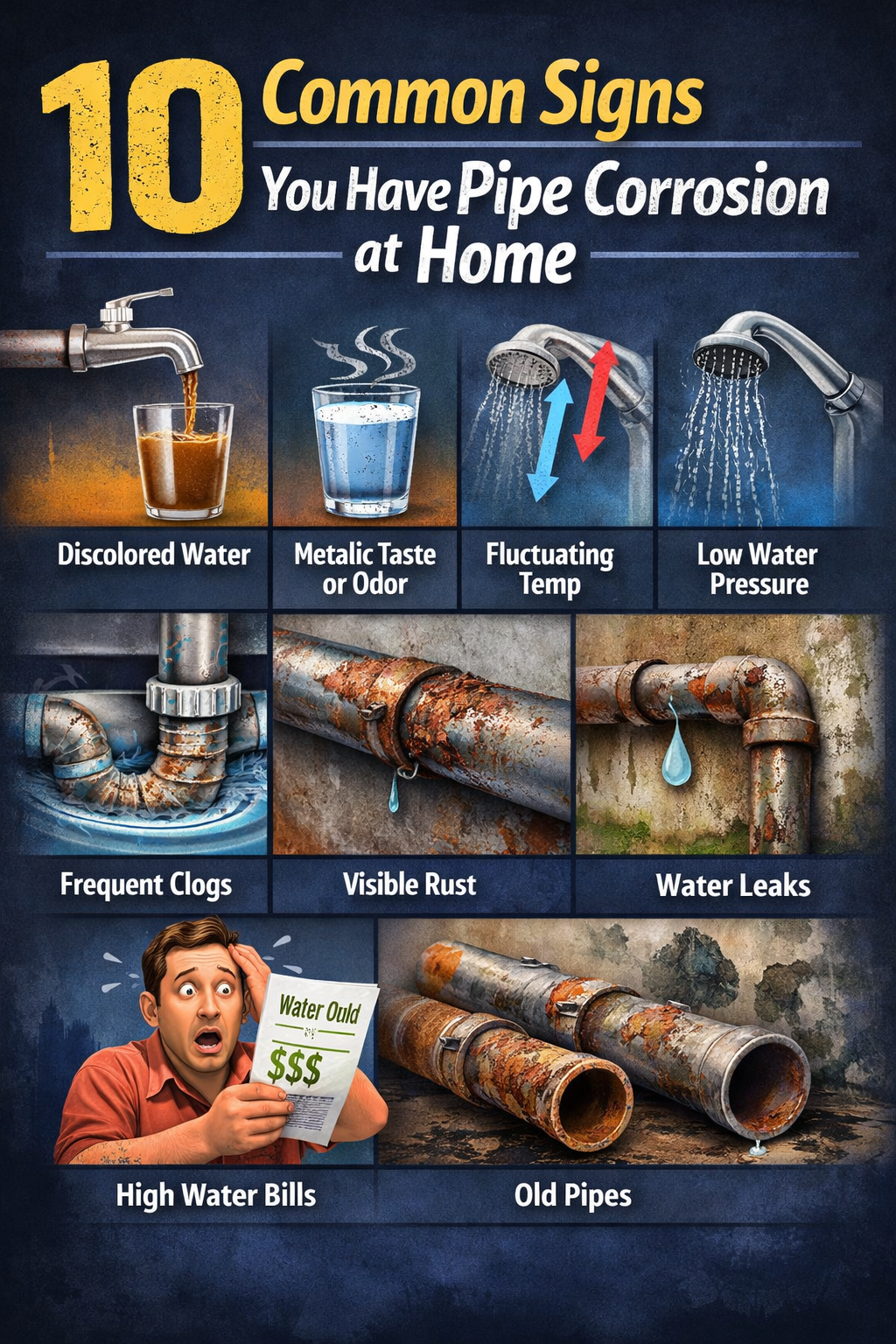
1. Discolored Water
Do you ever notice your morning water running brown or yellow? It's not exactly the water quality if you ask us. A very rusty-looking water that can sometimes appear as brown or yellow water usually comes from iron or steel corrosion.
Blue-green water often indicates corroded copper lines. Discolored tap water usually happens when rust flakes detach from the inside of the pipe.
Another telltale sign is usually when you find multiple pinhole leaks in the old galvanized main line.
How to Fix it:
Try flushing out exposed pipes and check for rust spots or even rust buildup. If there is still persistent discoloration in your water supply line, it requires a professional inspection.
2. Metallic Taste or Odor
Sometimes tap water tastes metallic or smells unusual. This is often caused by corrosion, releasing metals such as iron, copper, or lead into the water.
A metallic taste or smell is a clear sign that the water is carrying small amounts of metal from corroded metal pipes. Lead pipes can even cause a slightly sweet taste, which should never be ignored because of potential health risks.
How to Fix It:
Start by checking your pipes for signs of corrosion and address any damaged lines early to prevent bigger problems. If your water has a strange taste or odor, test it and use filters or bottled water until repairs are complete.
3. Fluctuating Water Temperature
Have you noticed that your hot shower water suddenly turns cold? Corroded pipes or worn-out valves may be the cause.
Corrosion can restrict water flow and affect valves, making water temperature swings inconsistent. Hot water especially accelerates corrosion in steel pipes, which can further damage your plumbing system and reduce efficiency.
How to Fix It:
Inspect water heaters and valves for signs of corrosion. Repair or replace affected pipes to restore steady water temperature changes and prevent further damage.
4. Declining Water Pressure
Weak water flow from faucets or showers can signal corrosion inside your pipes. Rust and mineral debris can cause internal buildup, which narrows the interior of the pipes, restricting water flow.
Low water pressure issues not only affect daily tasks such as washing dishes or taking showers but also indicate that your pipes may be deteriorating pipe materials from the inside, which can lead to plumbing leaks over time.
How to Fix It:
Monitor water pressure regularly. If you notice any pressure loss, inspect the pipes for blockages or corrosion and replace any damaged sections to restore proper flow.
5. Frequent Clogs
Slow-draining sinks or showers that keep clogging may indicate internal pipe corrosion. You may even find yourself repeatedly clearing a slow-draining bathroom sink
Corroded pipes develop rough interior surfaces that trap debris and minerals. Over time, these blocked drain vents become persistent, making routine cleaning less effective.
How to Fix It:
Use a pipe inspection camera or hire a professional to locate and repair affected sections. Replacing corroded pipes will prevent recurring blockages.
6. Visible Rust or Flaking
If you notice reddish-brown or bluish-green powder forming on exposed pipes, it is often a sign of internal corrosion.
External rust indicates that the metal is weakening, which can lead to leaks or pipe bursts. Corrosion may also compromise the structural integrity of valves and fittings, making the plumbing system less reliable.
How to Fix It:
Inspect exposed pipes regularly for rust or flaking. Treat minor rust immediately and replace sections showing significant corrosion to prevent future problems. Early replacement of the corroded sections prevented leaks that could have caused extensive water damage.
7. Water Leaks
Maybe you discovered a small puddle under the kitchen sink that just would not dry.
Small puddles under sinks or around plumbing fixtures may indicate corroded pipes.
Corrosion weakens pipe walls, eventually creating pinholes or cracks that cause leaks. Over time, even minor leaks can damage flooring, cabinetry, and walls.
How to Fix It:
Repair leaks promptly. Temporary fixes such as epoxy or clamps are acceptable in the short term, but replacing corroded pipes is the long-term solution.
8. Mold or Musty Odors
Ever notice a musty smell in the basement, and just assumed it was from outside moisture? It may reveal mold growth behind the drywall caused by a slow leak from corroded piping.
Persistent musty smells in your basement, bathroom, or behind walls are often caused by moisture from hidden leaks in corroded pipes.
Leaks create the perfect environment for mold growth, which can affect indoor air quality and cause health issues if left untreated.
How to Fix It:
Inspect damp areas and test for mold. Repair corroded pipes immediately and address any mold growth to protect your home and health. Repairing the pipe and cleaning the mold eliminated the odor and prevented further damage.
9. Unexplained Spike in Water Bills
Bills can sometimes be unpredictable, but if your water bill suddenly rises without an increase in usage, slow leaks from corrosion might be the cause.
Even minor leaks caused by corrosion can waste water over time and signal hidden problems in your plumbing system.
How to Fix It:
Compare water meter readings each month. Investigate any unexplained spikes and replace corroded sections to prevent water waste and further damage. Replacing the corroded section stopped the waste and lowered the water bill.
10. Aging Plumbing System
Homes with pipes older than 30 to 40 years are at higher risk of corrosion. Old galvanized steel or copper pipes deteriorate over time and may fail unexpectedly.
For example, a 1960s home had extensive corrosion in the galvanized pipes. The homeowner proactively upgraded to PEX piping before a major leak occurred.
How to Fix It:
Schedule regular inspections for older homes. Consider proactive replacement with corrosion-resistant materials like PEX or CPVC to prevent emergency repairs and costly damage.
How to Prevent Pipe Corrosion
- Inspect pipes regularly to catch early signs
- Replace old galvanized or copper lines with corrosion-resistant materials
- Use water filters, softeners, or neutralizers to control water chemistry, pH levels, and avoid mineral buildup
- Apply approved corrosion inhibitors such as phosphates where appropriate
- Avoid mixing incompatible metals and secure pipes properly
- Flush lines periodically to remove sediment and rust
- Source high-quality materials from a trusted plumbing supply store online
Repair or Upgrade Corroded Pipes Fast with 24hr.Supply
Minor corrosion can be handled with epoxy or clamp fittings, but severe damage calls for pipe replacement with code-compliant materials from a trusted plumbing supply store online.
Emergencies can happen anytime. With 24 hour plumbing supply, you can get pipes, fittings, valves, and other materials when you need them most.
Catch corrosion early, maintain your water system, drain line, sewer lines, and even your gas lines to their best quality. Shop 24hr.supply now and source quality supplies to prevent costly emergencies.
Recent Posts
-

Approximate Cost to Install New Plumbing
The approximate cost to install new plumbing in the United States ranges from $7,000 to $15,000 for …Mar 9th 2026 -
Quick Fixes for a Gurgling Kitchen Sink
A gurgling kitchen sink can be quite a nuisance since it makes such an annoying noise. It usually si …Feb 26th 2026 -
ABS Pipe vs PVC: Choosing the Right Plumbing Solution
ABS pipe vs PVC pipe are two of the most common plastic piping options in plumbing today. ABS (Acryl …Feb 24th 2026