Available 9am - 5pm EST

What Is PEX Piping and What Is It Used For?
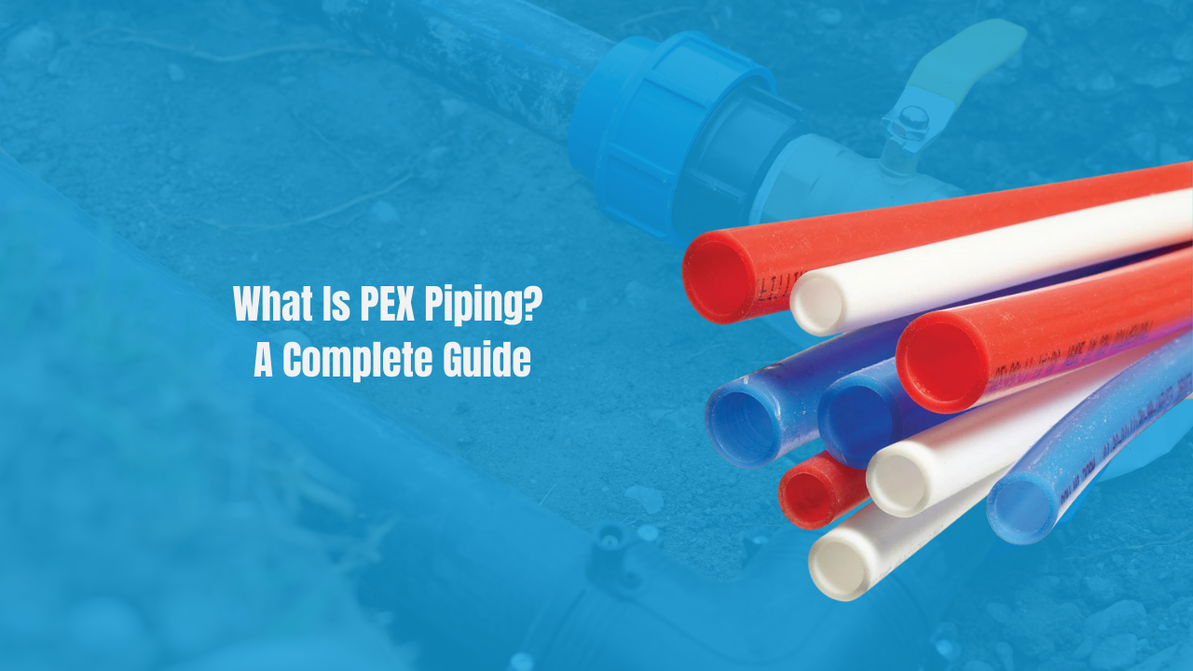
If you have ever tackled a late-night leak repair, a fast-track bathroom remodel, or a tight mechanical room retrofit, chances are PEX piping made the job easier. PEX piping, or cross-linked polyethylene tubing, is a flexible, lightweight piping solution widely used for residential and commercial plumbing, radiant heating, and hydronic HVAC systems.
In this guide, we will dive into what PEX tubing actually is, what it is used for, and what type is the best fit for you.
What Is PEX Piping? What Is It Used For?
PEX piping, or cross-linked polyethylene, has revolutionized plumbing and HVAC systems across residential and commercial applications. Lightweight, flexible, and code-approved, PEX is a durable alternative to copper and galvanized steel pipes.
Its flexibility allows contractors to route water and heating lines with minimal fittings, reducing leak risk and installation time. PEX tubing is recognized by industry standards, including IAPMO, IPC, and ICC, making it suitable for potable water and hydronic heating applications.
PEX piping is extremely versatile and is commonly used for:
- Residential hot and cold water distribution
- Commercial plumbing systems in office spaces, retail, and multi-unit buildings
- Hydronic heating and radiant floor systems
- Municipal water service lines, including REHAU MUNICIPEX applications
- Emergency repairs, taking advantage of emergency plumbing supplies for fast deployment.
- Most professionals choose PEX because it is easy to install, has long-term durability, and displays great performance in complex systems.
Common Applications for PEX Plumbing
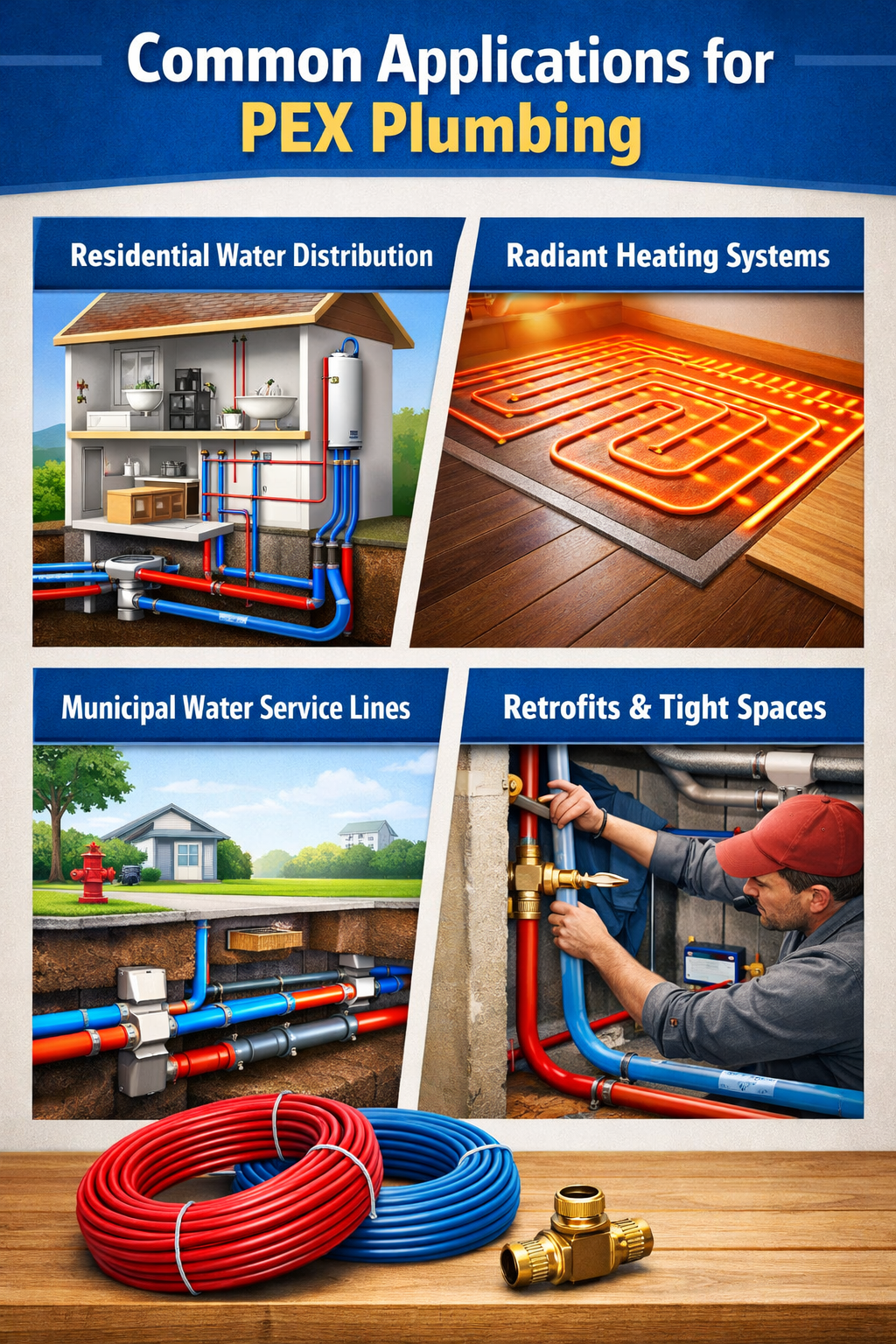
Residential Water Distribution
PEX is widely used for hot and cold water lines in residential plumbing systems. It is approved for potable water and safe for drinking water under IAPMO, IPC, and ICC codes. Since PEX resists corrosion and scale buildup, hence, it helps maintain water quality over time. Its flexibility allows longer runs with fewer fittings, which improves water pressure and lowers the risk of leaks behind walls and ceilings.
Radiant Heating Systems
PEX is a go-to choice for radiant heating systems, including underfloor heating and snow and ice melting applications. It handles temperature changes well and stays flexible even as it expands and contracts.
In-floor radiant heating systems rely on PEX tubing to move warm water evenly despite freezing temperatures, creating consistent comfort and improved energy efficiency compared to traditional heating methods.
Municipal Water Service Lines
PEX is commonly used for municipal water service lines that connect public water mains to homes and commercial buildings. It performs well in underground installations and is known for its durability and freeze resistance.
It is also very resistant to bacterial growth, which makes potable water safe. In colder climates, PEX can expand slightly if water freezes, which helps reduce pipe failures and service disruptions in public water systems.
Retrofits and Tight Spaces
PEX is especially useful for plumbing retrofits and remodeling projects where space is limited. Flexible tubing makes it easier to work around framing, existing pipes, and finished surfaces.
For plumbers, this often means faster installations, fewer access cuts, and lower labor costs, especially in older homes and occupied buildings.
Types of PEX Piping
Contrary to the name types, PEX piping is categorized by its manufacturing process and not quality. Each type is suitable for different applications:
Type A PEX
- PEX-a tubing produced using the peroxide (Engel) method
- Superior flexibility and kink resistance
- Ideal for radiant floor heating systems and snow/ice melt applications
Type B PEX
- Manufactured via silane cross-linking
- Strong, cost-effective, widely available
- Used in standard residential and commercial plumbing systems
Type C PEX
- Made with electron beam crosslinking technology
- Slightly stiffer, budget-friendly
- Suitable for potable water supply lines and heating loops
Key Advantages of PEX Plumbing
PEX offers numerous benefits for residential and commercial projects:
- Flexibility: Easy routing through walls and around corners, reduces additional fittings and labor costs
- Durability: Resistant to dents, cracks, corrosion, and scale buildup
- Freeze resistance: Can expand and recover if water freezes
- Cost-effectiveness: Lower material and installation costs than copper
- Long lifespan: At least 50 years under proper conditions
- Improved water flow: Smooth interior reduces friction and pressure drops
- Energy efficiency: Ideal for hydronic heating and radiant floor systems
Flexibility and Ease of Installation
- Can be snaked through walls and around corners
- Minimizes potential leak points with fewer connections
- Reduces installation process time and labor costs
- Maintains consistent water flow and pressure, supporting system efficiency
Corrosion and Scale Resistance
- Resistant to rust and corrosion compared with copper and other metals
- Does not accumulate scale, maintaining water flow and system efficiency
- Can withstand temperatures up to 210°F and pressures of 150 psi
Cost-Effectiveness
- PEX piping is generally cheaper to install and maintain than copper tubing
- Lower plumbing material and labor costs contribute to overall project savings
- Ideal for both new construction and renovations.
Potential Drawbacks of PEX Piping
While PEX offers many advantages, contractors and homeowners should note:
- UV Sensitivity: PEX degrades if exposed to sunlight; store and install indoors or shielded
- Specialized Tools Required: Crimping tools, crimp rings, a clamp, and expansion tools are essential
- Taste or Odor Issues: Rare, usually caused by improper installation
Methods for Connecting PEX Pipes
PEX pipes can be joined using several reliable connection methods, including crimp, clamp, push-fit fittings, and expansion fittings. Each method is designed for durability and leak-free performance, but it’s important to make sure your installation meets the requirements of your state or local jurisdiction.
Always reference approved local building codes, as well as the International Plumbing Code (IPC), to ensure compliance and safety (ICC IPC).
Crimping and Clamping
Crimping and clamping are widely used by professional plumbers, especially with copper plumbing pipes, where crimp rings or stainless steel clamps secure PEX to fittings for a reliable, long-lasting connection
Expansion Connections
Expansion connections involve expanding the pipe end before inserting a fitting, allowing the pipe to contract and form a tight seal, which makes this method ideal for tight spaces and more complex layouts.
Push-Fit Connections
Push-fit connections offer a fast and tool-free option, with fittings that can be adjusted or removed using a specific removal ring, making them particularly convenient for repairs or retrofit projects.
Tools and Accessories Required
- PEX pipe cutters for clean cuts
- Crimping rings or clamp tools suited to fittings
- Expander tools to stretch PEX tubing before inserting a fitting
- Support clamps to secure tubing
- Go No Go gauges to verify watertight connections
All tools are available from a trusted plumbing supply store online.
Frequently Asked Questions
- What are the main types of PEX pipes? PEX-A (flexible, radiant heating), PEX-B (durable, cost-effective), PEX-C (budget-friendly, less flexible).
- Can PEX pipes be used outdoors? No. UV light exposure degrades PEX; install indoors or shielded.
- Why choose PEX over copper? Lower installation costs, flexibility, fewer connections, corrosion resistance, and energy efficiency.
- How are PEX pipes connected? Crimping, clamping, expansion, or push-fit methods are used depending on project requirements.
- Are there potential drawbacks? UV sensitivity and the need for specialized tools; proper installation mitigates risks.
Ready to Upgrade Your Plumbing System?
PEX piping offers flexibility, durability, and cost savings for modern plumbing and HVAC projects. Whether installing residential water systems, commercial plumbing, or radiant heating, PEX provides reliable, efficient solutions with fewer leak points and lower labor costs.
Ready to upgrade your plumbing system? Explore PEX piping and fittings at 24hr.supply and ensure your next project is efficient, code-compliant, and future-proof.
Recent Posts
-

Approximate Cost to Install New Plumbing
The approximate cost to install new plumbing in the United States ranges from $7,000 to $15,000 for …Mar 9th 2026 -
Quick Fixes for a Gurgling Kitchen Sink
A gurgling kitchen sink can be quite a nuisance since it makes such an annoying noise. It usually si …Feb 26th 2026 -
ABS Pipe vs PVC: Choosing the Right Plumbing Solution
ABS pipe vs PVC pipe are two of the most common plastic piping options in plumbing today. ABS (Acryl …Feb 24th 2026