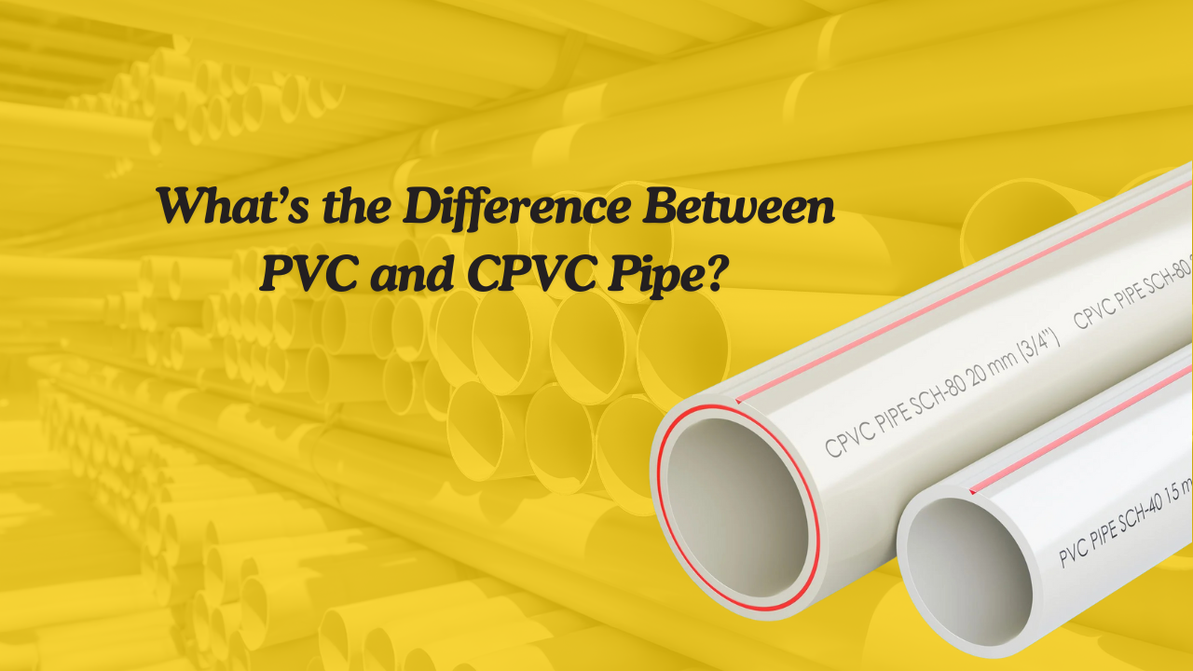
What’s the Difference Between PVC and CPVC Pipe?
PVC and CPVC pipes may look similar, but their performance and uses are definitely not the same. PVC is best for cold water, drainage systems, irrigation, and non-heated systems, while CPVC is designed for hot water, higher heat exposure, and commercial plumbing systems.
In this guide, we break down the real-world differences using industrial piping standards.
PVC vs. CPVC: Core Difference Explained
The primary difference between PVC and CPVC is temperature resistance.
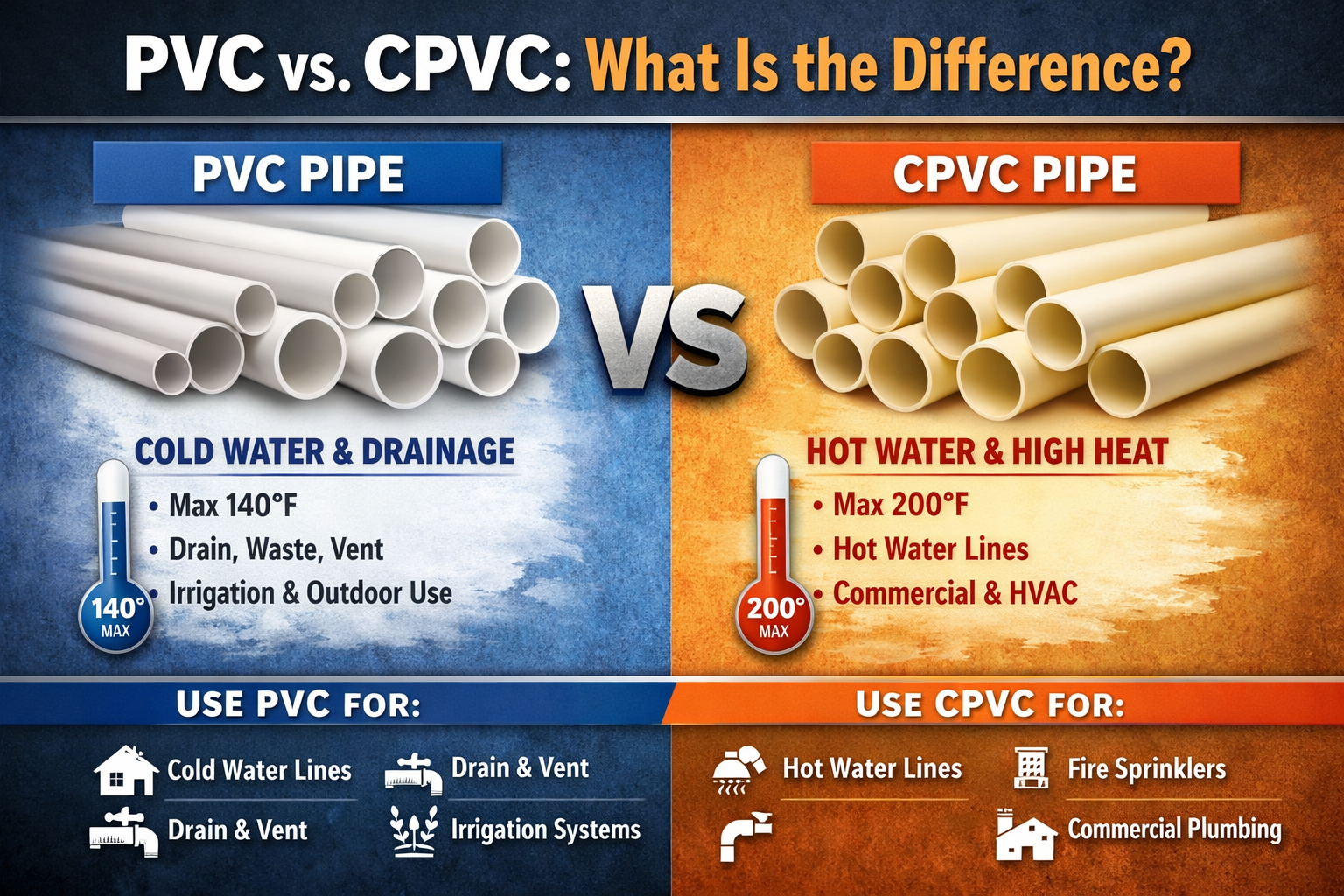
- PVC is rated for cold water and low temperature applications, with a maximum operating temperature of 140°F
- CPVC is engineered for hot water and higher heat exposure, rated up to 200°F
Here is a quick overview of their differences:
| Feature | PVC Pipe | CPVC Pipe |
|---|---|---|
| Full Name | Polyvinyl Chloride | Chlorinated Polyvinyl Chloride |
| Max Operating Temperature | 140°F | 200°F |
| Typical Use | Cold water, DWV, irrigation | Hot & cold potable water |
| Pressure Performance at Heat | Drops faster | Maintains strength better |
| Sizing Standards | NPS only | NPS and CTS |
| Flexibility | Lower | Higher |
| Common Colors | White, dark gray | Off white, light gray, yellow |
| Solvent Cement Spec | ASTM D2564 | ASTM F493 |
| Fire Resistance | Moderate | Higher |
| Chemical Resistance | Good | Superior |
| Cost | Lower | Higher |
| Code Approved for Hot Water | No | Yes |
| Typical Lifespan | 50+ years | 50+ years |
When temperatures exceed these limits, pipe material softens, pressure ratings drop, and joint failure risk increases.
Temperature Performance and System Suitability
PVC Temperature Rating
PVC performs best in cold water and non-heated environments.
Common PVC uses:
- Drain, waste, and vent systems
- Cold water supply
- Irrigation and outdoor plumbing
- Pool and spa circulation
- Non-pressurized mechanical piping
PVC is not recommended for sustained hot water distribution.
CPVC Temperature Rating
CPVC is built to handle hot potable water and higher pressure at elevated temperatures.
Common CPVC uses:
- Residential and commercial hot water lines
- Fire sprinkler systems (NFPA-approved applications)
- Industrial piping
- HVAC condensate and mechanical systems
- Commercial plumbing supplies installations
ASHRAE and IPC standards recognize CPVC for higher temperature fluid transport.
Pressure Ratings and Mechanical Strength
Pressure capacity depends on temperature and pipe schedule.
| Material | Schedule | Max Pressure | Tensile Strength |
|---|---|---|---|
| PVC | Schedule 40 | 450 PSI | 7,500 PSI |
| PVC | Schedule 80 | 630 PSI | 7,500 PSI |
| CPVC | Schedule 40 | 450 PSI | 8,200 PSI |
| CPVC | Schedule 80 | 630 PSI | 8,200 PSI |
CPVC maintains its strength better under heat, making it more reliable for hot water and commercial systems.
Pipe Sizing Standards: NPS vs. CTS
PVC Sizing
PVC uses Nominal Pipe Size (NPS)
- NPS references interior diameter
- Common in DWV and cold water systems
CPVC Sizing
CPVC is available in:
- NPS (interior diameter reference)
- CTS (Copper Tube Size), which references the outside diameter
This allows CPVC to transition easily into copper-based plumbing layouts.
Solvent Cement and ASTM Compliance
PVC and CPVC require different primers and solvent cements due to chemical differences.
PVC Solvent Cement
Must meet ASTM D2564
CPVC Solvent Cement
Must meet ASTM F493
PVC and CPVC cement are not interchangeable.
Using the wrong adhesive risks joint failure, inspection failure, and warranty voiding.
Chemical Resistance and Durability
PVC Strengths
- Resistant to acids, alkalis, and inorganic chemicals
- Performs well in drainage and non-potable systems
- Cost-effective and corrosion-resistant
CPVC Strengths
- Higher chemical stability due to added chlorine
- Better resistance to heat, pressure, and degradation
- Improved biofilm and bacterial resistance
- Commonly approved for potable water (ANSI / NSF 61)
Visual and Physical Differences
| Feature | PVC | CPVC |
|---|---|---|
| Color | White or dark gray | Off white, light gray, or yellow |
| Available Schedules | 40, 80 | 40, 80 |
| End Types | Plain, bell | Plain |
| Flexibility | Lower | Higher |
| Standard Lengths | 10 ft, 20 ft | 10 ft |
CPVC generally requires closer support spacing due to flexibility.
Installation Considerations
PVC Installation
- Solvent-welded using PVC-specific cement
- Lightweight and easy to cut
- Best for cold water and DWV
- Lower material cost
CPVC Installation
- Uses CPVC-rated solvent cement
- Suitable for potable hot water
- Requires careful temperature handling
- Higher upfront cost but fewer long-term failures
Both systems require proper cure times, clean cuts, and compliance with IPC and IAPMO installation guidelines.
Safety and Handling Notes
When PVC or CPVC is heated, melted, or hot cut, toxic fumes (including dioxins and hydrochloride gases) may be released.
Best practice safety steps:
- Work in ventilated areas
- Wear gloves, goggles, and respiratory protection
- Avoid overheating during bending or cutting
- Stop immediately if the pipe begins to discolor or burn
Fire Performance and Mechanical Applications
Both materials contain chlorine, tand thy exhibit natural fire-retardant properties.
CPVC is commonly specified under NFPA standards for:
- Fire sprinkler systems
- Commercial mechanical piping systems
- Heat-exposed distribution networks
PVC is more commonly used in non-pressurized mechanical and venting systems.
Expected Lifespan and Reliability
When installed correctly:
- PVC can last 50+ years in cold water and DWV applications
- CPVC has documented service life exceeding 50 years, including early installations still in operation since the 1950s
Common failure causes:
- Improper solvent welding
- UV exposure without stabilization
- Tree root intrusion in buried lines
- Overheating beyond temperature limits
When to Choose PVC vs. CPVC
Choose PVC if you need:
- Cold water supply lines
- Drain, waste, and vent systems
- Irrigation and outdoor plumbing
- Budget-friendly residential or DIY installations
Choose CPVC if you need:
- Hot water system
- Fire protection piping
- Commercial plumbing supplies
- HVAC and mechanical piping exposed to heat
- Higher long-term durability in commercial settings
Where Contractors Source Pipe Fast
When jobs run on tight deadlines, contractors rely on a plumbing supply store online to secure certified materials without delays.
Whether you need emergency plumbing supplies, hot water-rated CPVC, or bulk commercial plumbing supplies, sourcing through a trusted HVAC supply distributor helps ensure code compliance and fast fulfillment.
For urgent projects, a 24-hour plumbing supply provider keeps crews working and minimizes downtime.
Final Takeaway
PVC and CPVC serve different roles in modern plumbing and mechanical systems. PVC remains a cost-effective choice for cold water and drainage, while CPVC offers superior performance for hot water, commercial plumbing, and heat-exposed applications.
Choosing the right pipe protects system longevity, inspection approval, and long-term customer satisfaction.
Need certified pipe fast? Shop a trusted 24-hour supply source and keep your next job on schedule.
Recent Posts
-

What Is PEX Piping and What Is It Used For?
If you have ever tackled a late-night leak repair, a fast-track bathroom remodel, or a tight mechani …Mar 19th 2026 -
Approximate Cost to Install New Plumbing
The approximate cost to install new plumbing in the United States ranges from $7,000 to $15,000 for …Mar 9th 2026 -
Quick Fixes for a Gurgling Kitchen Sink
A gurgling kitchen sink can be quite a nuisance since it makes such an annoying noise. It usually si …Feb 26th 2026