10 Causes and Fixes of Low Hot Water Pressure
If your cold water pressure is fine but your hot water feels weak, you are likely dealing with low hot water pressure. It is a common issue that can affect everything from your morning shower at home to daily operations in a commercial space.
In most cases, the problem is isolated to your water heater, piping, or key system components.
We know how frustrating that can be, which is why we put together this guide. It blends simple, homeowner-friendly troubleshooting with practical, contractor-level insights so you can quickly figure out what is going on and take the right steps to fix it.
Quick Diagnosis Checklist
Okay, before diving into deeper repairs, we highly recommend going through this fast checklist:
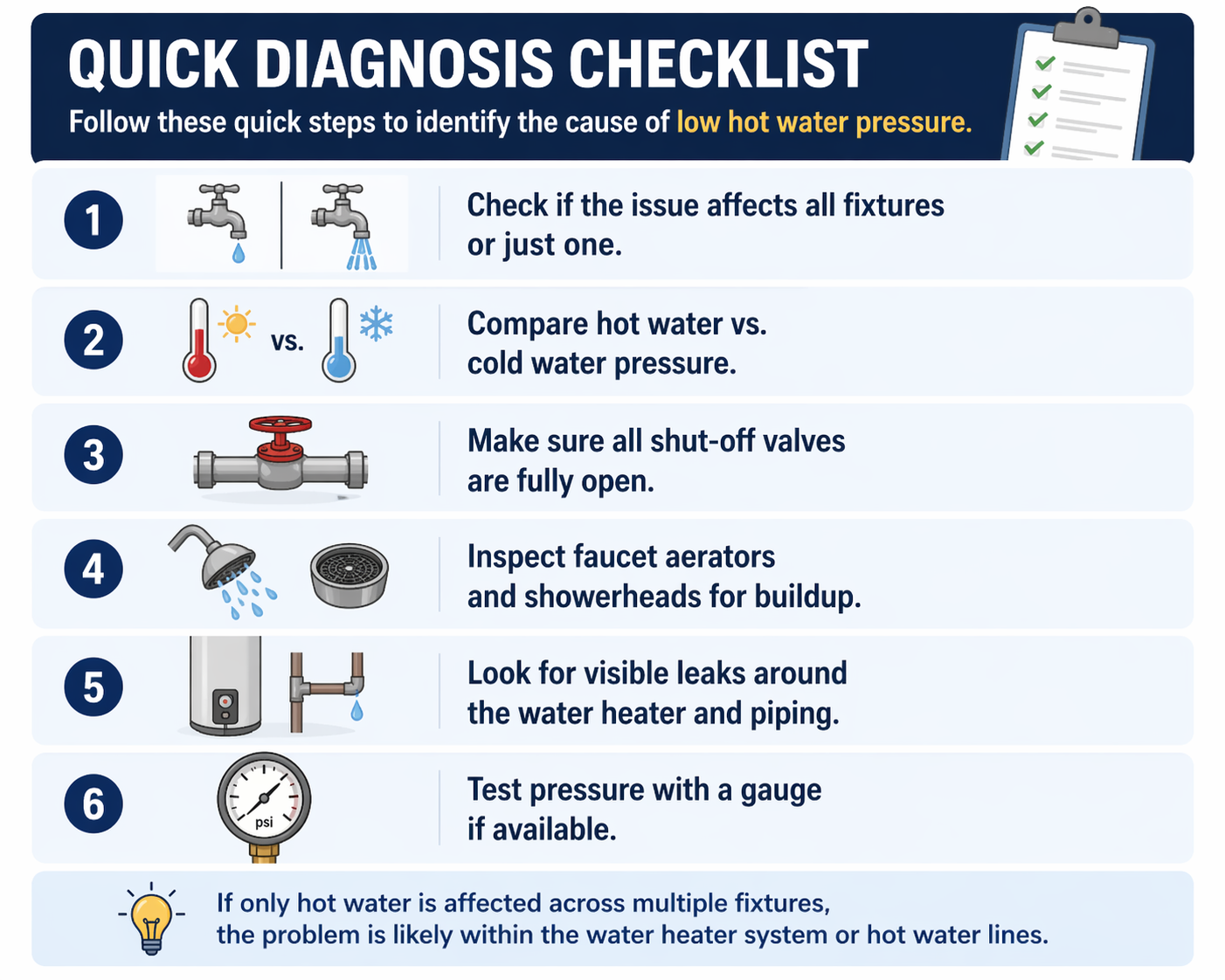
- Check if the issue affects all fixtures or just one
- Compare hot water vs. cold water pressure
- Make sure all shut-off valves are fully open
- Inspect faucet aerators and showerheads for buildup
- Look for visible leaks around the water heater and piping
- Test pressure with a gauge if available
If only hot water is affected across multiple fixtures, the problem is likely within the water heater system or hot water lines.
Now that we have gotten to the bottom of it, let us dive more into the 10 most common causes and fixes of low hot water pressure.
1. Sediment Buildup in the Water Heater
What Happens
As water is heated, dissolved minerals like calcium and magnesium separate and settle at the bottom of the tank. Over time, this layer thickens and begins to interfere with normal water flow. It can also insulate the heating element, forcing the system to work harder while delivering weaker pressure at fixtures.
How to Fix It
Flush the tank at least once a year to remove sediment. In areas with hard water, more frequent flushing may be necessary. If buildup is severe, a professional descaling service may be required. For older systems, replacement is often the most efficient long-term solution.
2. Partially Closed Shut-Off Valves
What Happens
Shut-off valves control how much water enters and exits your water heater. If one is even slightly closed, it restricts flow and reduces pressure throughout the hot water system. This can happen after maintenance work or accidental adjustments.
How to Fix It
Inspect all relevant valves, including the main supply valve and the hot water outlet valve at the heater. Make sure they are fully open. If a valve is stiff or damaged, replace it to ensure proper operation.
3. Corroded or Aging Pipes
What Happens
Older galvanized steel pipes are prone to internal corrosion. Over time, rust and mineral deposits build up inside the pipe walls, reducing the internal diameter and restricting water flow. This often results in gradual pressure loss that worsens over the years.
How to Fix It
Replace aging pipes with modern materials like PEX, CPVC, or copper. This upgrade improves both pressure and water quality. According to International Association of Plumbing and Mechanical Officials, updating outdated piping systems is one of the most effective ways to restore performance.
4. Faulty Pressure Regulator
What Happens
A pressure regulator is designed to maintain consistent water pressure entering your home. When it fails, it can cause pressure to drop too low or fluctuate unpredictably. While it typically affects both hot and cold water, the issue is often more noticeable in hot water lines.
How to Fix It
Use a pressure gauge to test your system. Residential pressure should typically range between 40 and 60 psi based on International Code Council guidelines. If readings fall outside this range, replace the regulator.
5. Water Heater Dip Tube Damage
What Happens
The dip tube directs incoming cold water to the bottom of the tank so it can be heated properly. If it cracks or breaks, water may not flow correctly through the tank. This disrupts both heating efficiency and pressure consistency.
How to Fix It
Remove and inspect the dip tube. If damaged, replace it with a compatible part. This is a relatively simple and cost-effective repair that can restore proper flow.
6. Clogged Fixtures or Aerators
What Happens
Faucet aerators and showerheads can collect mineral deposits over time. These deposits restrict water flow and are often mistaken for system-wide pressure issues when the problem is actually localized.
How to Fix It
Unscrew the aerator or showerhead and soak it in vinegar to dissolve mineral buildup. If cleaning does not restore flow, replace the fixture. Regular cleaning helps prevent recurring issues.
7. Undersized Water Heater
What Happens
If your water heater cannot meet demand, pressure may appear to drop when multiple fixtures are used at the same time. This is especially common in growing households or small commercial settings where usage has increased.
How to Fix It
Evaluate your peak demand and upgrade to a properly sized unit. Sizing recommendations from the Air-Conditioning, Heating, and Refrigeration Institute can help ensure your system matches your usage needs.
8. Leaks in the Hot Water Line
What Happens
Leaks in hot water piping reduce the amount of water reaching your fixtures. Even small leaks can significantly impact pressure over time and increase energy and water costs.
How to Fix It
Inspect exposed pipes for signs of moisture, corrosion, or damage. Check for unexplained increases in water bills. Repair leaks promptly to restore pressure and prevent further damage.
9. Mixing Valve Issues
What Happens
Thermostatic mixing valves blend hot and cold water to maintain safe temperatures. When these valves become clogged with mineral deposits or begin to fail, they can restrict hot water flow and reduce pressure.
How to Fix It
Disassemble and clean the valve if possible. If the issue persists, replace it. This is particularly important in commercial systems where mixing valves are used frequently.
10. Municipal Supply or Peak Demand Problems
What Happens
In some cases, low pressure originates outside your property. High demand periods, infrastructure limitations, or multi-story building layouts can reduce incoming water pressure, which affects hot water performance.
How to Fix It
Install a pressure booster pump or storage system to maintain consistent pressure. For commercial properties, system design adjustments may be needed to meet demand. Consulting standards from ASHRAE can help guide proper system design.
How to Diagnose Low Hot Water Pressure Step by Step
Follow this simple flow to narrow down the cause:
- Step 1: Test cold vs. hot water. If both are low, check your main supply or pressure regulator If only hot is low, continue
- Step 2: Check a single fixture. If only one fixture is affected, clean or replace the aerator or valve. If multiple fixtures are affected, continue
- Step 3: Inspect valves. Confirm the water heater shut-off valve is fully open
- Step 4: Evaluate the water heater. Look for sediment buildup, aging components, or internal restrictions
- Step 5: Check piping and advanced components. Inspect for corrosion, leaks, or mixing valve issues
This step-by-step approach reflects best practices aligned with International Code Council and International Association of Plumbing and Mechanical Officials guidelines.
Preventive Tools and Maintenance That Help
Routine maintenance is the best way to avoid pressure issues. This includes flushing the tank, inspecting valves, and monitoring system performance.
One often overlooked component is the anode rod. It helps reduce corrosion inside the tank, which can indirectly limit sediment buildup over time. While not a direct fix for pressure problems, it plays a role in extending water heater life and maintaining consistent performance.
Following maintenance recommendations from ASHRAE supports both efficiency and system safety.
Get the Right Parts Without the Wait
When hot water pressure drops, timing matters just as much as the repair itself. Having the right parts on hand can make the difference between a quick fix and a prolonged disruption.
At 24hr.supply, you can expect a reliable plumbing supply store online for fast ordering, emergency plumbing supplies for urgent repairs, access to a trusted HVAC supply distributor network, a full range of commercial plumbing supplies, and true 24-hour plumbing supply availability.
Whether it is a small residential fix or a larger commercial job, having quick access to the right parts helps keep everything running without delays.
Recent Posts
-

How to Prime a Grundfos Pump: Step-by-Step Instructions for Homeowners
If your pump is running but the tap is still dry, switch it off before checking whether it needs pr …Oct 12th 2026 -
How Does a Grundfos Pump Work? Types, Controls, and Everyday Uses
Grundfos centrifugal pumps work through an electric motor that turns an impeller, transfers energy t …Oct 12th 2026 -
Gruvlok vs. Victaulic: Key Differences in Couplings, Fittings, and Performance
A contractor, estimator, engineer, or buyer may find one grooved piping brand listed in the project …Sep 15th 2026