Bathroom Plumbing Diagram: How It Works Behind the Wall
A bathroom plumbing diagram shows how water supply lines, drain pipes, and vent pipes connect your sink, toilet, and shower. It helps homeowners avoid installation mistakes, plan renovations, and understand where leaks or clogs usually happen.
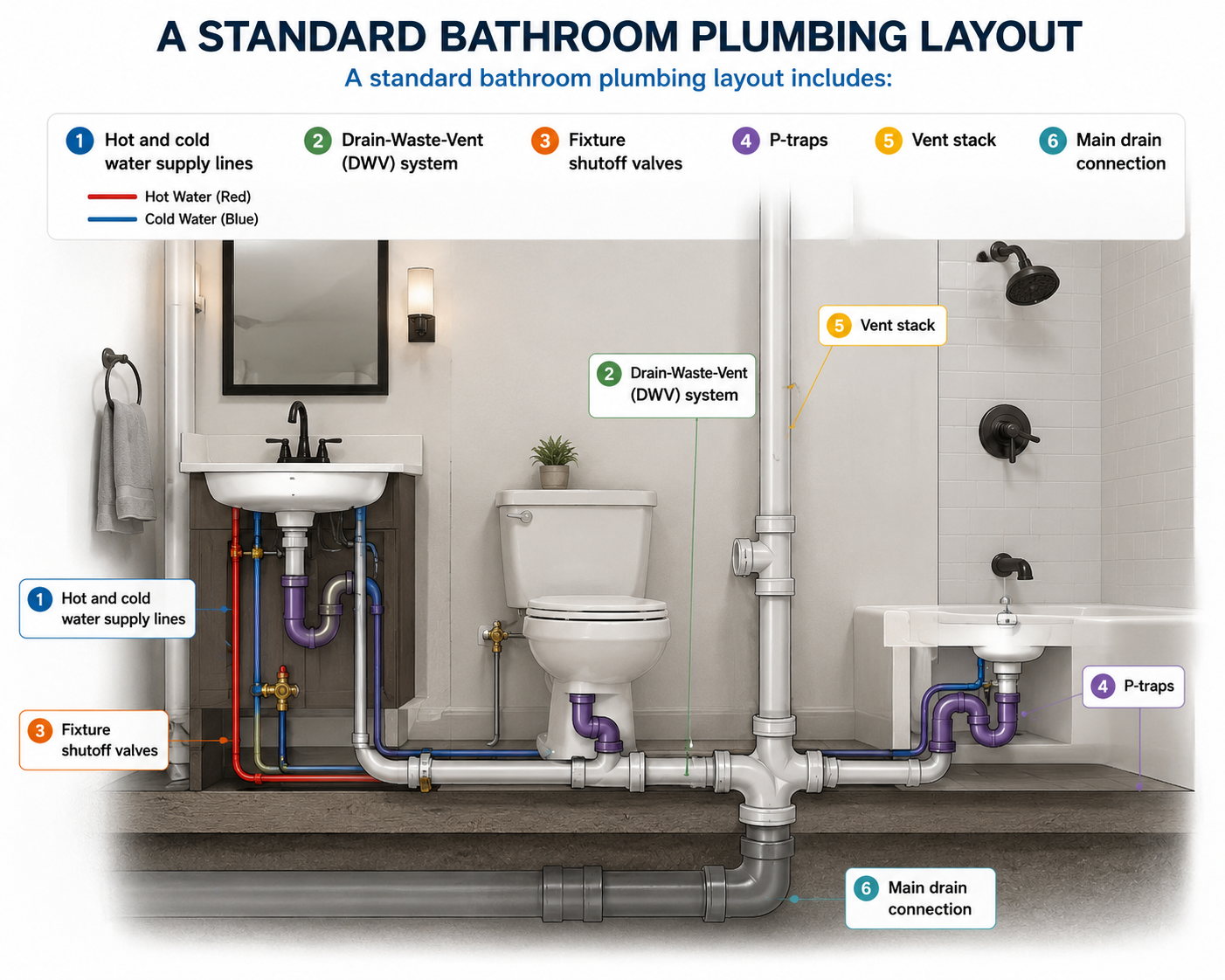
A standard bathroom plumbing layout includes:
- Hot and cold water supply lines
- Drain-waste-vent (DWV) system
- Fixture shutoff valves
- P-traps
- Vent stack
- Main drain connection
What Is a Bathroom Plumbing Diagram?
A bathroom plumbing diagram is a layout showing how water enters and exits bathroom fixtures.
If you are someone who is doing a whole renovation for your bathroom, a plumbing diagram is something that should be in your hands before doing any important decision such as fixtures, replacing pipes, or buying parts.
It maps three connected systems which are the core:
- Fresh water supply
- Drainage
- Ventilation
In other words, without all three, your plumbing would not work correctly.
A bathroom plumbing diagram usually shows:
- Sink connections
- Toilet drain path
- Shower drain
- Vent pipes
- Pipe sizing
- Shutoff valves
- Cleanouts
Plumbers use diagrams during installation, inspection, and repair.
Why Is a Bathroom Plumbing Diagram Important?
A bathroom plumbing diagram prevents really expensive mistakes.
Most bathroom repairs start because pipes were installed incorrectly, moved without planning, or vented improperly.
According to International Association of Plumbing and Mechanical Officials standards, drainage systems require proper slope, venting, and fixture spacing to function safely.
Common problems caused by poor planning
- Slow drainage
- Sewer smell
- Toilet backup
- Leaks behind walls
- Gurgling drains
- Failed inspections
What Are the Main Parts of a Bathroom Plumbing Diagram?
Every bathroom plumbing diagram includes three core systems: (1) Water supply lines, (2) Drain Pipes, (3) Vent pipes
Water Supply Lines
Water supply lines bring clean water into bathroom fixtures.
Supply lines connect water to plumbing fixtures such as sink faucets, shower valves, tub fillers, toilets, and bidets.
In most modern homes, supply lines are installed using PEX, copper, or CPVC piping because these materials provide reliable water flow, corrosion resistance, and long-term durability.
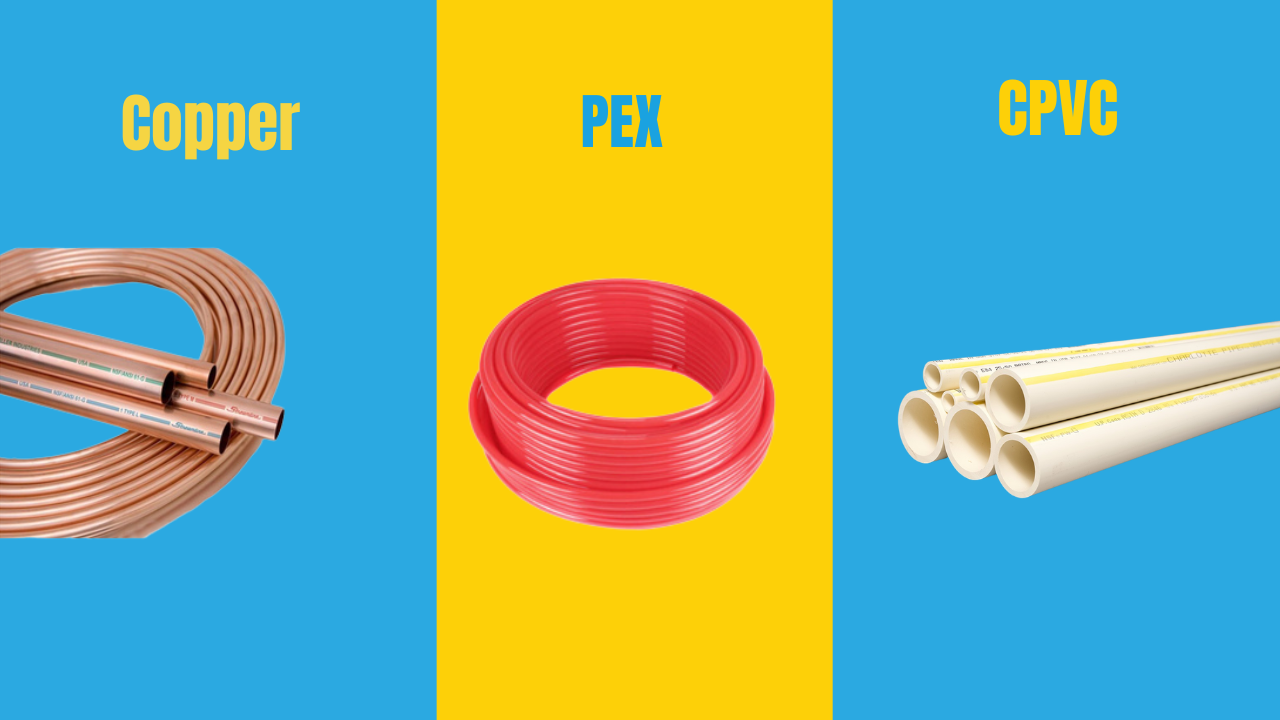
In this guide, 24HR Supply features examples of the trusted used plumbing materials, including the American Granby PXR3C1 1/2" x 100' Canpex Potable UV Plus Red Coil PEX Tubing, the Mueller MH24010 2 1/2" x 10' Copper Type M Hard Plumbing Water Tube, and the Charlotte Pipe 05152 2" x 10' FlowGuard Gold Plain End SDR 11 CPVC Copper Tube Size Pipe.
Want to explore more? Click here to find out your piping options to make sure you have the best one for your project!
Common pipe sizes
| Fixture | Pipe Size |
|---|---|
| Sink | 1/2 inch |
| Toilet | 1/2 inch |
| Shower | 1/2 inch |
| Tub | 1/2 to 3/4 inch |
Many contractors source fittings from an HVAC supply distributor because they often carry shared valves, shutoffs, and fittings.
Drain Pipes
Drain pipes remove wastewater from bathroom fixtures and carry it into the home’s main drainage system. Unlike supply lines, drain pipes rely on gravity to move water and waste efficiently.
Bathroom drain systems usually include the sink drain, shower drain, toilet waste line, and the main branch line that connects to the larger sewer or septic system.
Standard Drain Sizes
| Fixture | Drain Size |
|---|---|
| Sink | 1.5 inches |
| Shower | 2 inches |
| Toilet | 3 to 4 inches |
According to the International Code Council plumbing code, most horizontal drains require 1/4 inch slope per foot.
Vent Pipes
Vent pipes release sewer gases and balance air pressure.
Without vent pipes, drains may clog even if pipe size is correct.
Signs of poor venting
- Bubbling toilet
- Gurgling sink
- Sewer odor
- Slow shower drain
Venting is one of the most misunderstood parts of a bathroom plumbing diagram.
How Does a Standard Bathroom Plumbing Layout Work?
A standard bathroom plumbing layout connects all fixtures to one branch drain.
Typical order
- Sink branch
- Toilet branch
- Shower or tub branch
- Main stack
- Sewer connection
This varies by home design, but most residential layouts follow this logic.
Typical Fixtures Connected
- Vanity sink
- Toilet
- Bathtub
- Shower
- Floor drain
What Does Sink Plumbing Look Like in a Bathroom Diagram?
Sink plumbing usually has the most visible parts.
Sink Plumbing Includes
- Hot water line
- Cold water line
- Shutoff valves
- Trap arm
- P-trap
- Vent branch
A sink may drain slowly when the trap arm is too long or when the vent is positioned too far from the fixture. This can restrict proper airflow in the drain system and reduce drainage efficiency.
This issue often shows up during DIY bathroom remodels, especially when plumbing layouts are extended or modified without proper vent placement.
What Does Toilet Plumbing Look Like in a Bathroom Diagram?
Toilet plumbing connects directly to the largest drain.
Toilet plumbing includes
- Closet flange
- Wax ring
- Supply stop valve
- Soil pipe
- Vent tie-in
Toilet drains are usually:
- 3 inches minimum
- 4 inches in older homes
Toilets create the highest drainage load in the bathroom.
That is why drain size matters.
What Does Shower Plumbing Look Like in a Bathroom Diagram?
Shower plumbing combines supply and drainage.
Shower System parts
- Mixing valve
- Shower riser
- Hot/cold supply
- Drain trap
- Vent line
Hair buildup is one of the most common causes of bathroom drain clogs, but an incorrect pipe slope can lead to recurring backups even after cleaning.
If a clog keeps coming back after snaking or clearing the line, it often points to a deeper issue with the drain layout or improper installation rather than just a surface blockage.
What Materials Are Used in Bathroom Plumbing Today?
Bathroom plumbing systems vary by age and building type.
Most common materials
| Material | Use |
|---|---|
| PEX | Water supply |
| PVC | Drain lines |
| Copper | Older supply systems |
| ABS | Waste pipe in some regions |
| Brass | Valves and shutoffs |
Popular Brands Professionals Use
- Uponor
- SharkBite
- Moen
- Delta Faucet
When Should You Check a Bathroom Plumbing Diagram?
Check the bathroom plumbing diagram before any project involving walls or floors.
Common Situations
- Bathroom remodel
- Adding second sink
- Replacing tub
- Toilet relocation
- Leak diagnosis
- Re-piping
Even small fixture moves can affect the whole drain system.
That is why pros review the diagram first.
Where Do Contractors Buy Bathroom Plumbing Parts Fast?
During repairs, speed matters.
Many plumbers rely on 24hour supply for plumbing sources because emergencies happen outside regular hours.
Common Emergency Purchases
- P-traps
- Closet flanges
- Ball valves
- Supply lines
- Pipe fittings
- Vent fittings
- Shutoffs
A dependable plumbing supply store online can reduce downtime when local stock is unavailable.
This is especially important for commercial repairs needing commercial plumbing supplies late at night.
Need Plumbing Supplies?
Whether you are fixing a small bathroom leak, replacing old fixtures, or planning a full plumbing upgrade, using the right materials can save time, prevent water damage, and reduce future repair costs.
From supply lines and shut-off valves to fittings, drains, and repair parts, having access to reliable plumbing products makes every project easier.
For dependable plumbing supplies trusted by homeowners, contractors, and DIYers, visit 24hr Supply. They offer a wide range of plumbing products for repairs, maintenance, and new installations.
Recent Posts
-

Gruvlok vs. Victaulic: Key Differences in Couplings, Fittings, and Performance
A contractor, estimator, engineer, or buyer may find one grooved piping brand listed in the project …Sep 15th 2026 -
Grundfos Scala 1 vs. Scala 2: A Practical Buyer’s Guide for Homeowners
Choosing between Grundfos SCALA 1 vs. SCALA 2 comes down to how your home uses water and how much co …Sep 14th 2026 -
How to Use a Tube Cutter for Clean, Accurate Cuts Without Damaging the Tubing
When you need to shorten, repair, replace, or prepare tubing, the cut has to come out straight and c …Sep 9th 2026