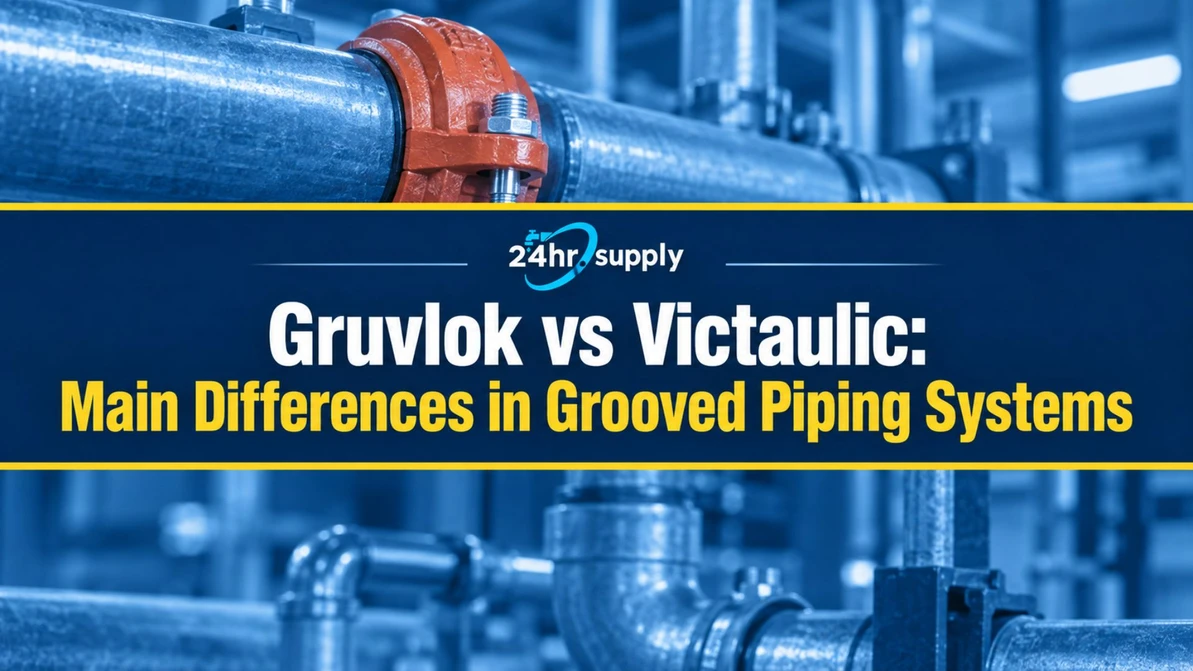
Gruvlok vs. Victaulic: Key Differences in Couplings, Fittings, and Performance
A contractor, estimator, engineer, or buyer may find one grooved piping brand listed in the project documents while another is easier to source. That makes the decision more practical than simply comparing two names.
Pressure ratings, pipe sizes, coupling construction, gasket options, installation details, and availability can all change the outcome. If you want more background on connection styles, you can also review the different types of pipe couplings in our other guide.
But in this guide, we’ll compare the differences that matter before you select or order components.
TL;DR
- Gruvlok and Victaulic both offer rigid and flexible grooved piping products, and neither brand is automatically better for every project.
- Compare exact coupling models, pipe sizes, schedules, pressure ratings, gasket materials, and approvals before choosing.
- Gruvlok and Victaulic can publish very similar pressure ratings on standard-weight pipe, while Schedule 10 ratings may differ.
- Gruvlok offers competitive rigid and flexible coupling options, including the 7401 Rigidlok and 7001 Flexible Coupling.
- Installation speed depends on coupling design, crew experience, pipe preparation, access, and tooling.
- Check compatibility carefully before substituting one brand for the other.
- 24hr Supply carries Gruvlok couplings, fittings, reducers, adapters, and related grooved piping components.
Gruvlok vs. Victaulic at a Glance
A comparison of Gruvlok fittings vs. Victaulic becomes useful when you look beyond brand recognition and focus on actual system requirements. Both manufacturers offer broad grooved piping product families, so the details of the selected component matter most.
Here are the main differences at a glance:
| Comparison Area | Gruvlok | Victaulic | Why It Matters |
|---|---|---|---|
| Grooved couplings | Rigid and flexible options | Rigid and flexible options | Joint type affects movement and rigidity |
| Size coverage | Depends on product family | Depends on product family | Available sizes may change product selection |
| Pressure ratings | Vary by model, size, and schedule | Vary by model, size, and schedule | Exact published conditions must be compared |
| Gaskets | Multiple elastomer options | Multiple elastomer options | Fluid and temperature affect selection |
| Installation | Preassembled options available | Installation-Ready options available | Labor and handling can differ |
| Product ecosystem | Couplings, fittings, valves, fire products | Couplings, fittings, valves, fire products | Project scope may favor one product family |
For example, on Schedule 40 or standard-weight pipe, both Gruvlok 74-CL/74-SL and Victaulic 107V publish a 750 psi maximum pressure across matching 2-inch through 5-inch sizes. That similarity shows why a grooved coupling comparison needs to go deeper than the headline pressure number.
This table gives a general orientation. But the exact model specifications should guide the final decision.
Shop Gruvlok products at 24hr Supply.
Key Differences Between Gruvlok and Victaulic
Brand-level comparisons only tell part of the story. Once we compare actual product families, pipe conditions, installation needs, and system requirements, the differences become much easier to understand.
These are the areas that deserve the closest attention.
Rigid Couplings, Pressure Ratings, and Weight
Rigid couplings are often compared by pressure capacity first. But that rating depends on nominal pipe size, pipe wall thickness or schedule, groove type, coupling model, and system conditions.
For representative rigid products, Gruvlok's 74-CL/74-SL family and Victaulic's 107V can publish very similar figures on standard-weight pipe. Schedule 10 ratings can diverge more at certain sizes, so we recommend checking the exact pipe condition rather than carrying one rating across an entire system.
Weight also matters on jobs where crews handle hundreds of couplings. Across matching 2-inch through 8-inch mechanical sizes, the Gruvlok 74-CL/74-SL has an average listed weight advantage of about 22.8% compared with the Victaulic 107V.
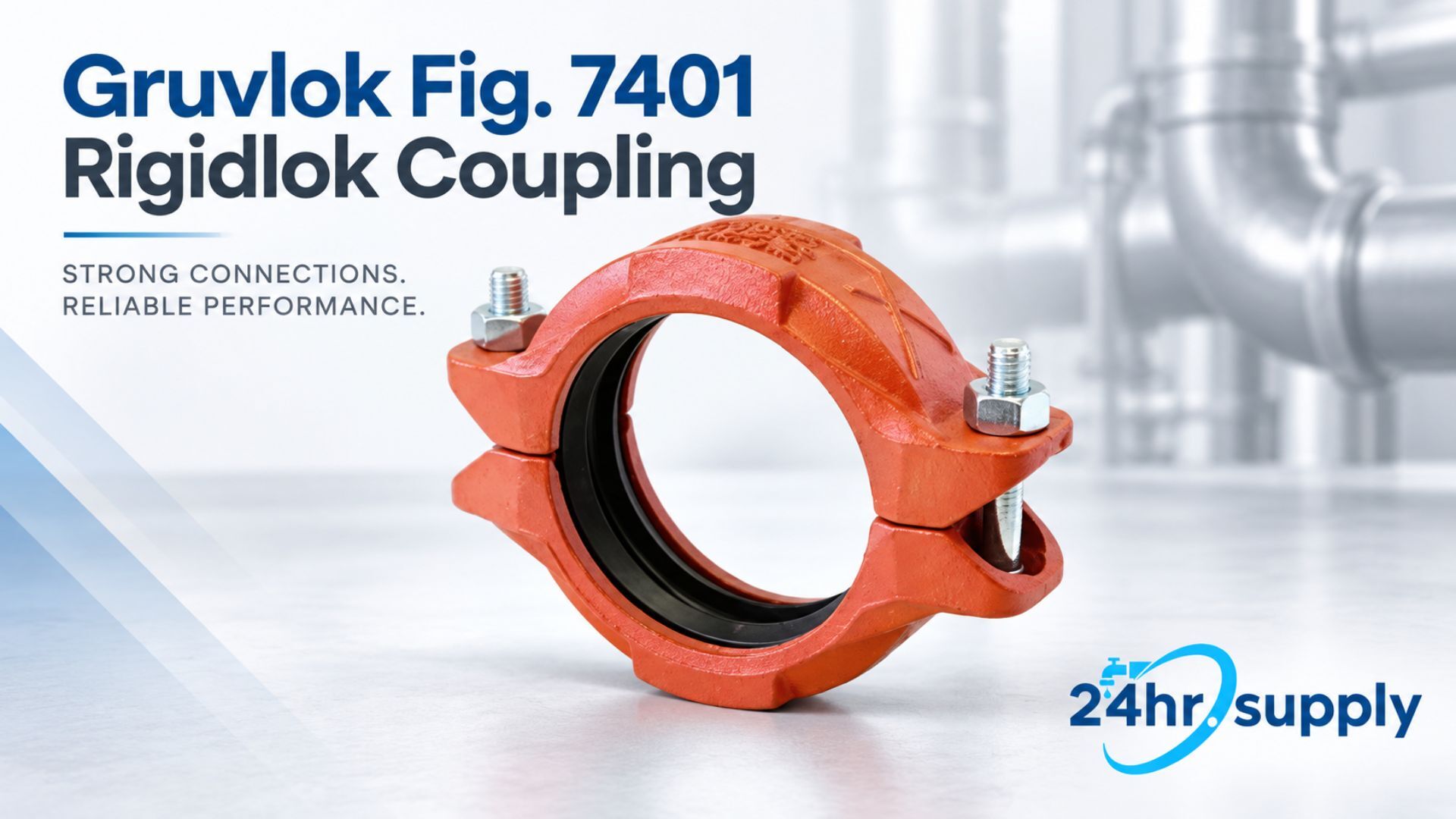
That can make repeated handling easier, although weight alone should never decide the specification. One practical example of a rigid model is the Gruvlok Fig. 7401 Rigidlok Coupling.
Flexible Couplings and Gasket Options
Flexible connections are useful where the system needs controlled movement or where vibration and noise transmission need attention. A rigid joint serves a different purpose, so the connection type should follow the design intent.
Gruvlok Figure 7001 and the Victaulic flexible coupling 177N both reach a published maximum working pressure of 1,000 psi in qualifying applications. Their size coverage differs, though. Gruvlok lists the 7001 from 1 to 30 inches, while Victaulic lists the 177N from 2 to 8 inches.
Gasket selection adds another layer. Gruvlok's EPDM option for the 74-CL/74-SL is published for -40°F to 250°F, while the EHP Victaulic gasket for the 107V is published for -30°F to 250°F.
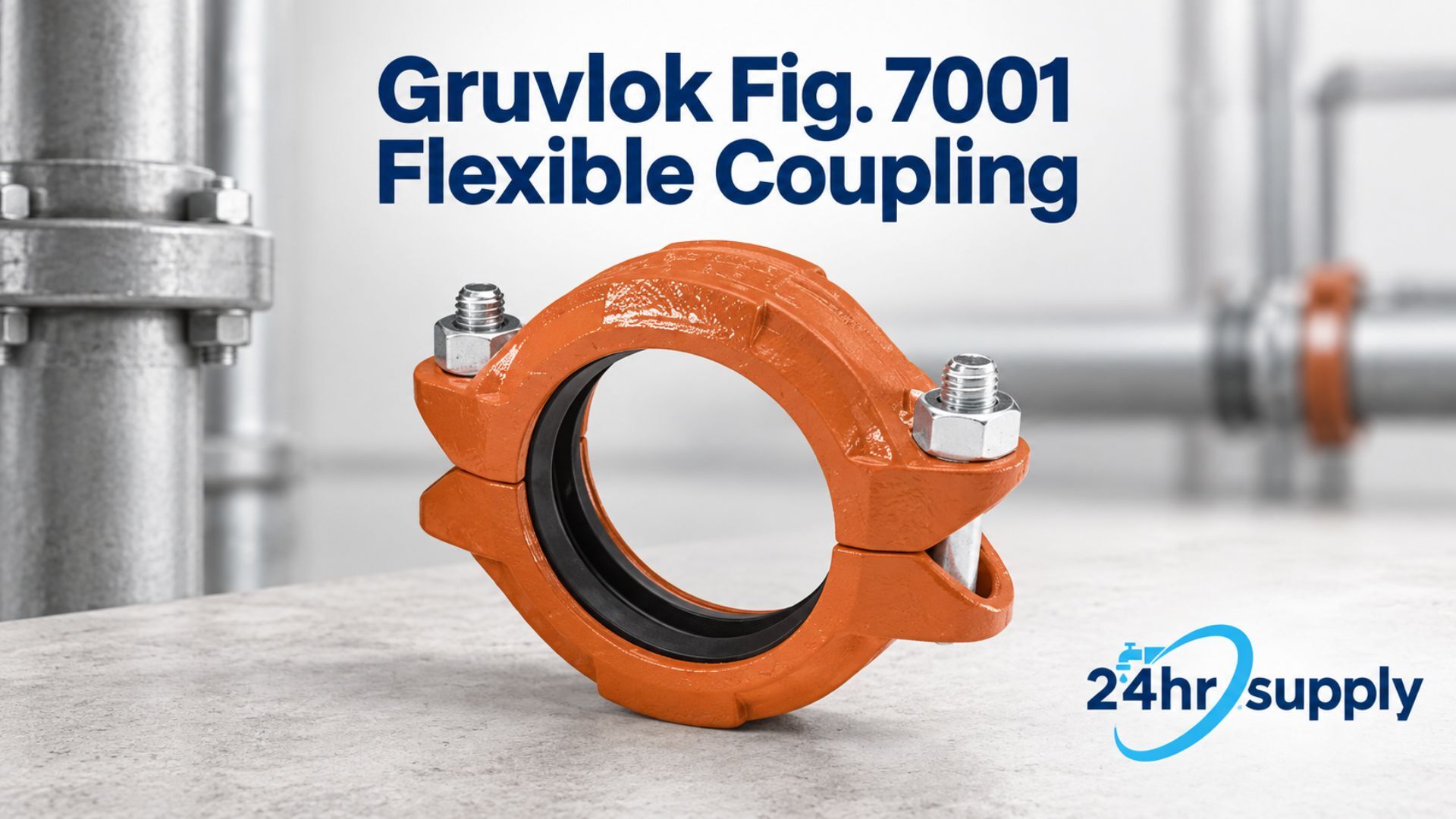
So the conveyed medium, operating temperature, and manufacturer requirements all need to line up. The Gruvlok Fig. 7001 Flexible Coupling is one example you can review when comparing flexible configurations.
Installation and Jobsite Handling
Installation performance depends on the coupling design and on how the crew works with it. Preassembled housings, nut and bolt tightening, gasket positioning, visual or tactile indicators, component weight, and available pipe access all affect the process.
Crew familiarity matters too. A team that routinely installs one product family may work faster and more consistently with it than with an unfamiliar alternative. Tooling, pipe preparation, and workspace can create additional differences between jobs.
That makes labor worth considering when comparing Victaulic couplings with alternative systems. In AGC's 2024 workforce survey, pipefitters and welders were difficult to find for 79% of firms employing those trades.
When qualified labor is already limited, small differences in handling and installation consistency can affect scheduling and total installed cost.
Product Range, Fittings, and System Applications
Both manufacturers offer much more than straight couplings. Their wider systems can include elbows, tees, reducers, mechanical outlets, flange adapters, valves, fire-protection products, stainless-steel options, and other grooved accessories.
That broader range can influence which brand makes sense for a project. A contractor may prefer Gruvlok fittings when one product family covers more of the required connections. Meanwhile, another project may be better served by Victaulic grooved fittings because of its specified system or available sizes.
Application also matters. HVAC, plumbing, mechanical piping, industrial systems, and fire protection can place different demands on the components. The same logic applies when evaluating Victaulic grooved pipe fittings as part of a larger assembly.
Valve selection deserves the same level of care, so our guide to choosing the right plumbing valve can help with that part of the system.
What Should You Compare Before Choosing Between Gruvlok and Victaulic?
You should compare the exact product models, pipe conditions, ratings, materials, approvals, installation requirements, and total project cost before choosing between the two manufacturers.
That approach keeps the decision tied to the actual system. It also prevents a broad brand comparison from overlooking a small specification detail that changes the result.
Here are the main items to check:
- Exact manufacturer model: Compare model-to-model specifications rather than relying on general brand claims.
- Pipe size and wall thickness: Ratings can change by diameter and schedule.
- Working pressure and temperature: Use the published conditions for the exact component.
- Gasket material: Confirm that the elastomer suits the medium and operating temperature.
- Rigid or flexible requirement: Match the joint type to the intended movement or rigidity.
- Listings and approvals: Pay close attention to these in fire-protection and regulated systems.
- Installation requirements: Review tooling, access, torque, pipe preparation, and crew familiarity.
- Availability and installed cost: Product price tells only part of the cost story when labor and delays are involved.
For broader connection planning, our guide to the difference between a coupling and a union can also provide useful context.
How Can 24hr Supply Help You Source Gruvlok and Grooved Piping Components?
24hr Supply can help by giving buyers access to Gruvlok products and a wider range of grooved piping components once the project requirements are clear.
The available selection includes rigid couplings, flexible couplings, grooved fittings, reducers, adapters, and related piping components. Product pages also provide specification information that can help buyers narrow down the correct configuration before ordering.
We recommend confirming the exact model, pressure rating, pipe requirements, gasket material, and project specification before placing an order. That is especially important when the purchase involves a specified system or regulated application.
Products such as the Gruvlok 7401 and 7001 provide useful examples of rigid and flexible options, while the broader catalog covers additional system needs. Customer support can also help with product questions and availability.
Shop Gruvlok products at 24hr Supply .
Conclusion
Gruvlok and Victaulic can deliver similar performance in many grooved piping applications, but the details change from one product family to another. Pipe size, schedule, gasket choice, pressure rating, installation needs, and system requirements can all affect the final selection.
We recommend comparing exact product specifications first, then sourcing the configuration that fits the project as a whole.
FAQs
Does Gruvlok Require Welding Like Victaulic?
No. Conventional grooved mechanical connections from both brands use prepared grooved pipe, housings, gaskets, bolts, and nuts to form the joint. The coupling assembly creates the mechanical connection without producing a welded pipe joint.
Are Gruvlok and Victaulic Compatible?
Corresponding products can exist, and cross-reference guides may help identify possible equivalents. Still, compatibility should be verified for the exact groove profile, pipe wall, gasket, pressure rating, approvals, manufacturer requirements, and project specifications before components are selected.
Can I Accept a Gruvlok Bid When Victaulic Is Specified?
A Gruvlok bid can only be accepted after the proposed substitution is reviewed against the project specification and required approvals. Compare performance, listings, materials, gasket requirements, pressure ratings, and any approval required from the engineer, owner, or other responsible project authority.
Is Schedule 10 Acceptable for Grooved Piping at 50 Psig?
Schedule 10 may be suitable in some systems, but 50 psig alone does not determine acceptability. Check the exact coupling, pipe size, pipe material, groove method, published manufacturer rating, applicable listings, design requirements, and project specification before making that decision.
Recent Posts
-

Gruvlok vs. Victaulic: Key Differences in Couplings, Fittings, and Performance
A contractor, estimator, engineer, or buyer may find one grooved piping brand listed in the project …Sep 15th 2026 -
Grundfos Scala 1 vs. Scala 2: A Practical Buyer’s Guide for Homeowners
Choosing between Grundfos SCALA 1 vs. SCALA 2 comes down to how your home uses water and how much co …Sep 14th 2026 -
How to Use a Tube Cutter for Clean, Accurate Cuts Without Damaging the Tubing
When you need to shorten, repair, replace, or prepare tubing, the cut has to come out straight and c …Sep 9th 2026