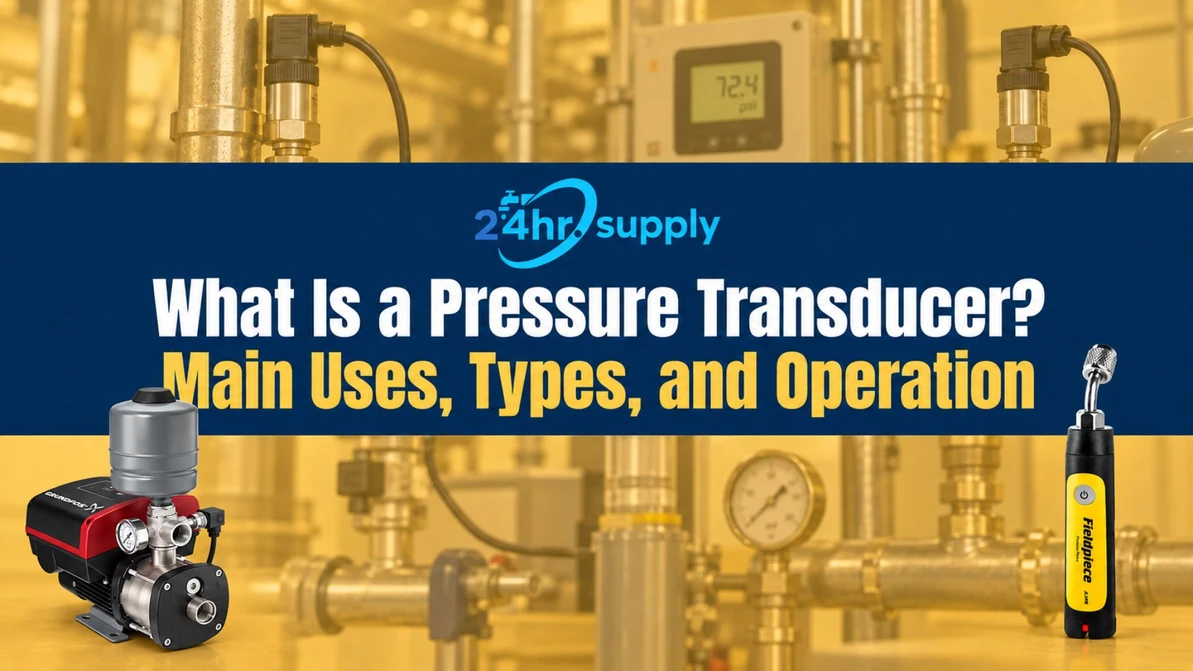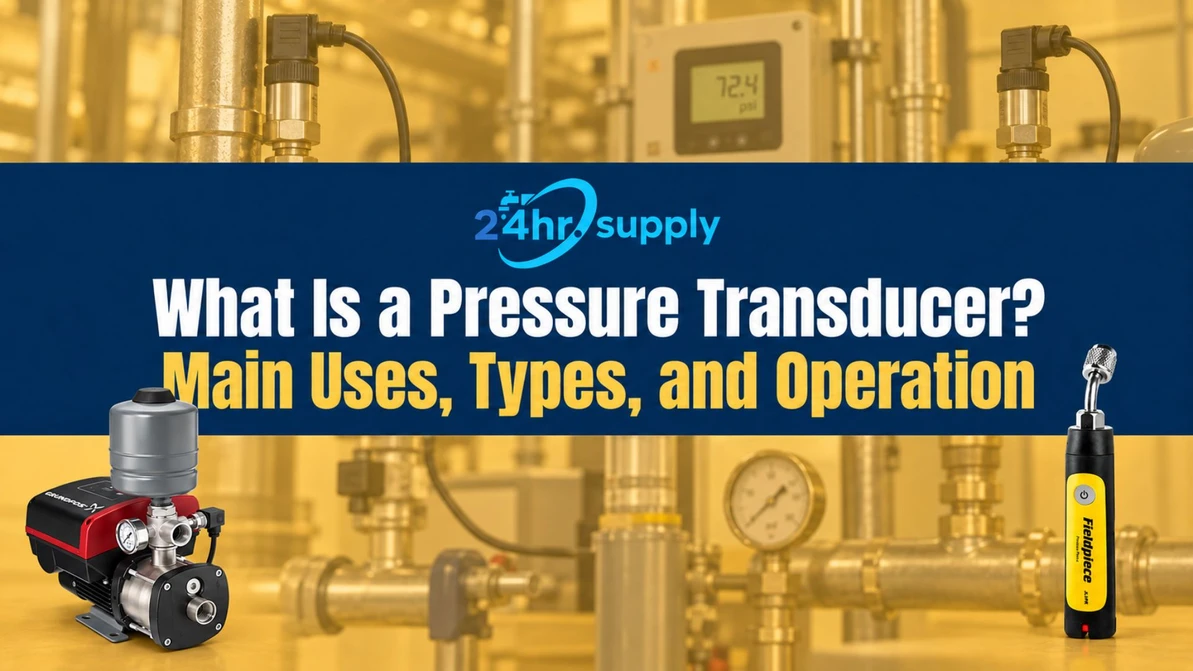
What Is a Pressure Transducer? How It Works in Modern HVAC and Plumbing Systems
How does a pump or HVAC controller know when pressure changes? The answer starts with a small component that gives the system a usable measurement. Once you understand that component, equipment specifications become much easier to read.
In this guide, we’ll walk through how it works, where you’ll find it, and what to check before you choose and use one.
What Is a Pressure Transducer?
A pressure transducer is a component that converts gas or liquid pressure into an electrical signal. A connected instrument or controller interprets that signal as a pressure reading. From there, the equipment can display the measurement or respond through a separate control function.
That distinction matters because the transducer supplies information, while the connected equipment determines what happens next. Below are the operating principles, practical applications, and control differences worth understanding.
How Does a Pressure Transducer Work?
A pressure transducer works by detecting a physical change caused by pressure and converting that change into an electrical output. In a common strain-gauge design, the process starts when gas or liquid presses against a thin diaphragm.
The diaphragm bends slightly under that force. Strain gauges attached to it also deform, and their electrical resistance changes as a result. Those changes are small, so the device needs a circuit that can turn them into a useful measurement.
That circuit is commonly a Wheatstone bridge . It responds to changes in resistance and produces a corresponding electrical signal. From there, signal-conditioning electronics may amplify or process the output before it reaches a controller.
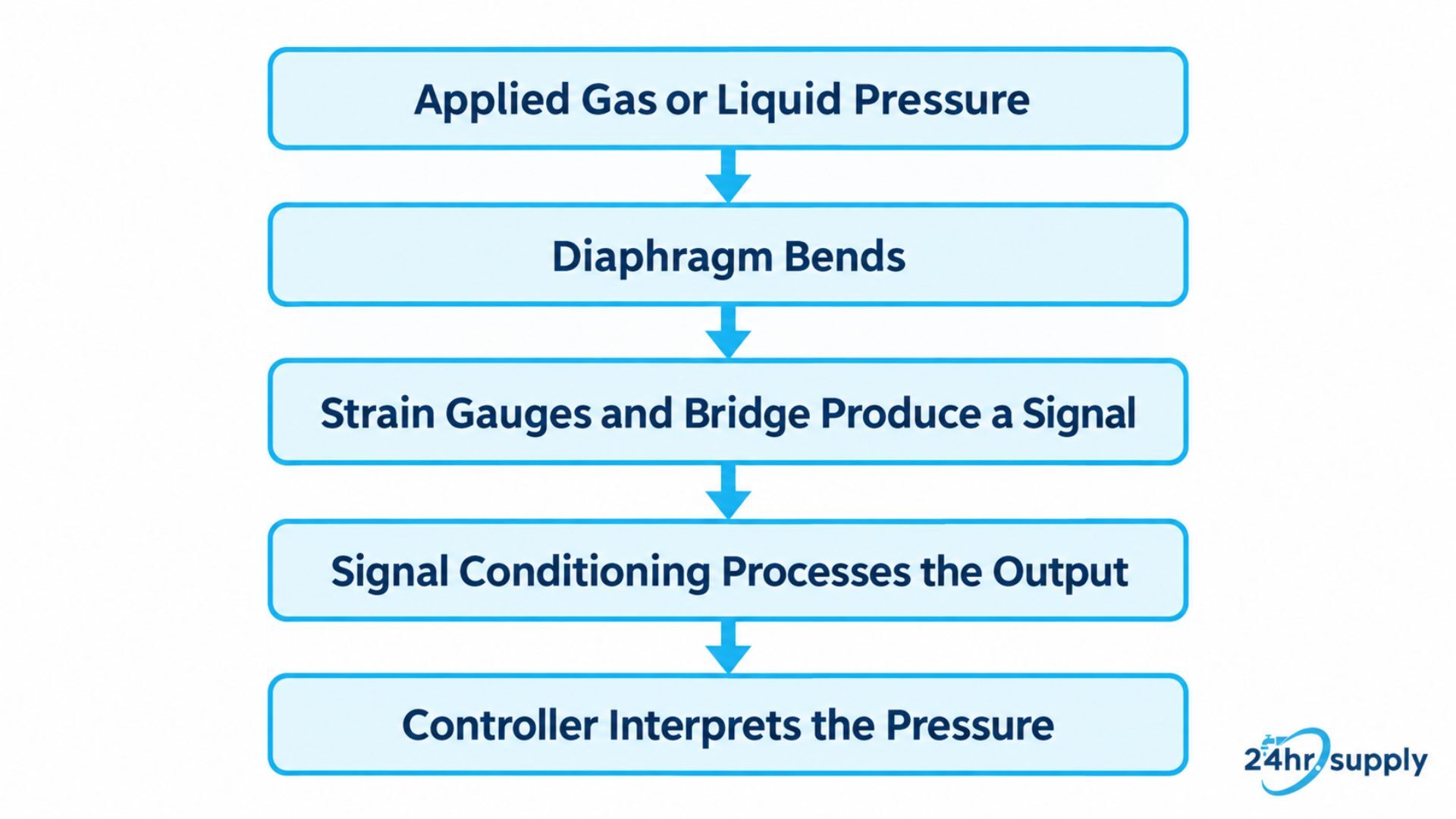
A pressure transducer diagram of a common strain-gauge arrangement. The arrows show the measurement path rather than wiring connections.
Depending on the model, the output may be a millivolt signal, a conditioned voltage, or a current signal. For example, conditioned voltage outputs commonly span 0-5 VDC or 0-10 VDC . The receiving equipment uses the specified relationship between output and pressure to calculate the reading.
We recommend checking that relationship in the datasheet because both ends must agree on the measurement span. This strain-gauge arrangement is common, but other sensing technologies use different physical effects.
What Is a Pressure Transducer Used For?
A pressure transducer is used to monitor pressure and provide measurements for equipment diagnostics, control, and protective functions.
In refrigeration, an HVAC pressure transducer can help a controller assess operating conditions and respond as refrigerant pressures change.
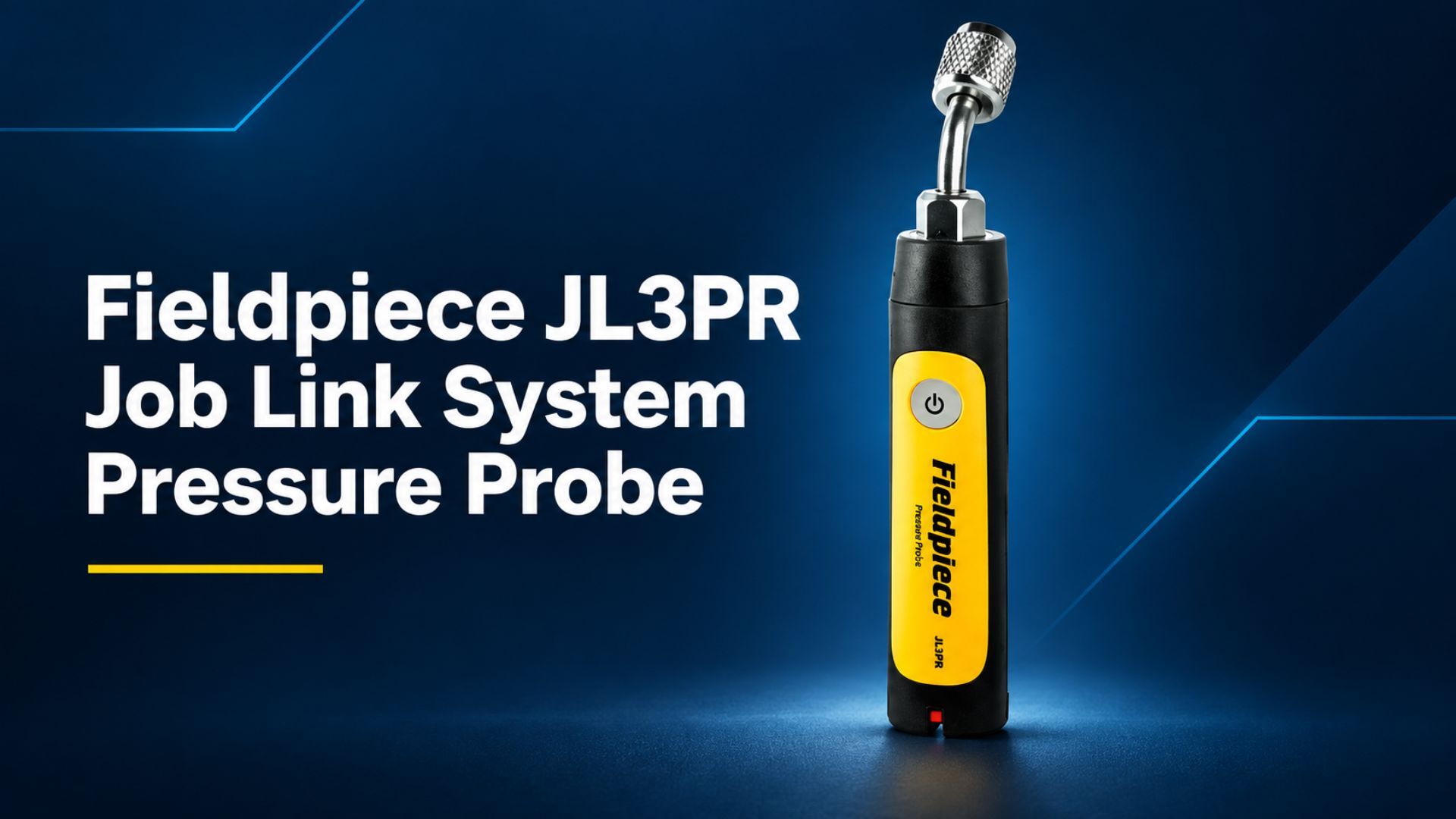
Technicians also use portable instruments during service visits, while permanently installed components remain connected to the equipment’s controls. The Fieldpiece JL3PR Job Link System Pressure Probe is an example of a portable tool.
It provides wireless pressure readings. Also, it helps with field measurements, whereas a built-in control component supplies feedback during normal operation.
The same measurement principle supports water-supply systems.
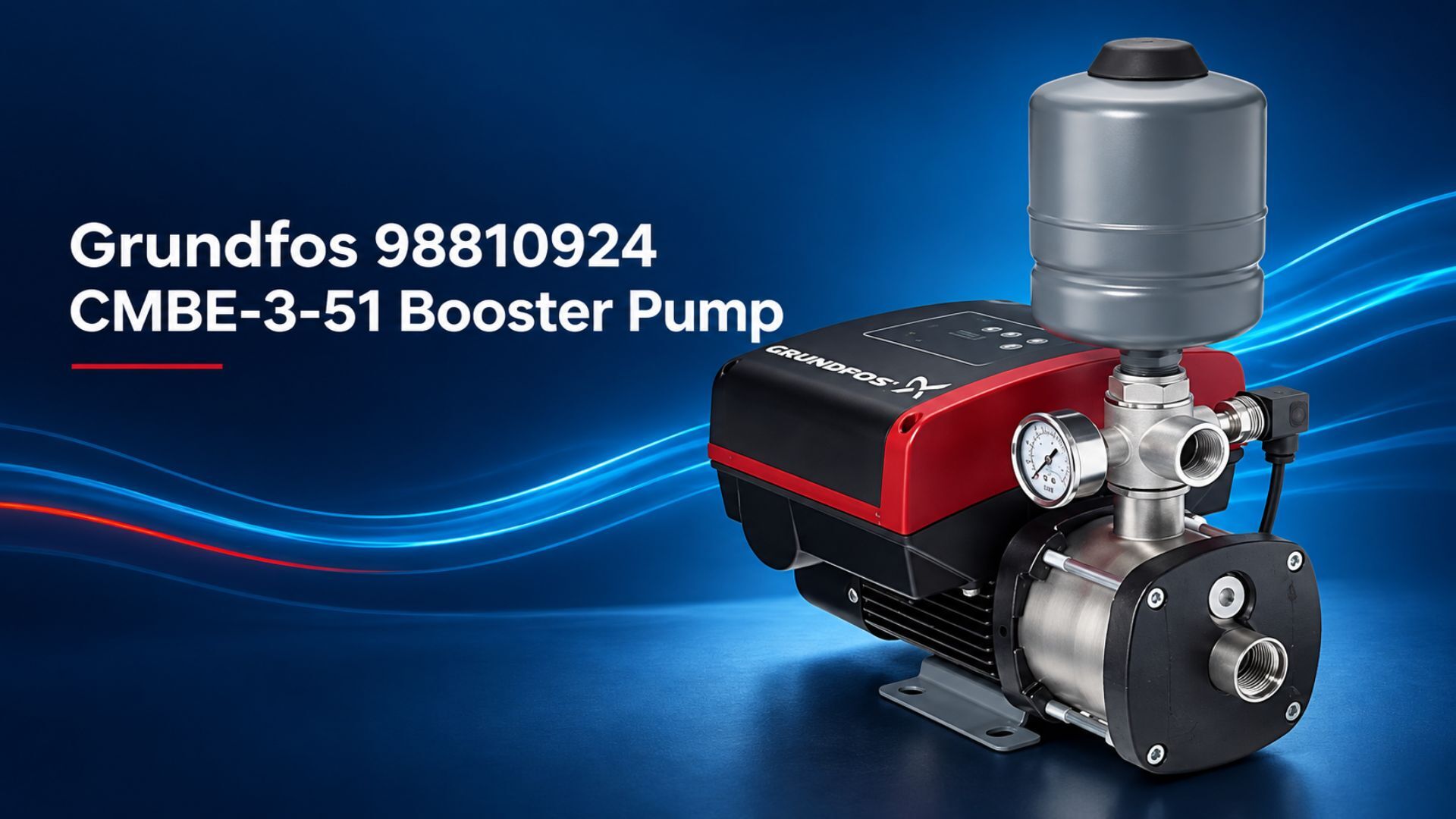
A water pressure transducer can report discharge pressure to a pump controller, which then adjusts motor speed as demand changes. For example, opening several faucets may reduce pressure, so the controller increases pump output to work toward the selected setting.
The Grundfos CMBE 3-51 Booster Pump uses an integrated pressure sensor to inform that speed adjustment. It’s a complete pump system with pressure feedback, and its sensor is one part of the package.
In larger buildings, pressure measurements also help facilities teams monitor supply conditions and pressure differences across equipment.
Readings taken across a filter can reveal a growing restriction, while measurements at different locations can help investigate uneven delivery. That makes how water pressure affects plumbing systems useful context before anyone changes a control setting.
We recommend first identifying where the measurement comes from, because a reading at the pump may differ from conditions at a distant fixture.
Pressure Transducer vs. Pressure Switch
These applications can require continuous feedback or a simple threshold response. That control requirement helps determine whether the system needs a transducer, a switch, or both.
Here are the main differences:
| Comparison Point | Pressure Transducer | Pressure Switch |
|---|---|---|
| Information provided | Pressure measurement across a range | Whether a set threshold has been reached |
| Typical output | Analog signal or digital measurement | A switching state |
| Common purpose | Monitoring and variable control | Start/stop commands, interlocks, or alarms |
For example, a variable-speed controller needs pressure measurements to decide how much to adjust the motor. A separate switch might trigger an alarm when pressure reaches a specified limit. Both functions can therefore exist within the same installation.
Some electronic devices combine measurement and switching functions, so we recommend checking the available outputs before choosing one. If your next task involves pump control thresholds, our guide to pressure settings for booster pumps explains the associated system components and settings.
How to Choose a Pressure Transducer for Your System
Once the control function is clear, the next step is to match the component to its installation. We recommend comparing the equipment requirements against the datasheet before you compare models.
These are the main checks:
- Measured medium and materials. Wetted components contact the process fluid, so their materials and seals must suit the liquid or gas.
- Pressure range and limits. Account for normal pressure and expected peaks. The measurement range covers readings, proof pressure describes a specified overload tolerance, and burst pressure concerns containment failure.
- Mechanical fit. Confirm the port size, thread standard, seal arrangement, and installation space. Similar-looking connections can have different requirements.
- Electrical compatibility. Match the supply requirements and output to the receiving instrument. A physically compatible component can still require a different electrical interface.
- Operating environment. Check temperature limits, moisture exposure, and enclosure suitability against conditions at the actual installation point.
For a pump project, these checks cover the measurement component. The complete system also has flow and head requirements, which we cover in our other guide on how to size a booster pump system .
Once compatibility is established, compare the pressure transducer price across suitable models. Range, construction, output, and required performance all affect cost, so a lower price means little if the device cannot meet the application’s requirements.
How to Use a Pressure Transducer
To use a pressure transducer, install it at the intended measurement point, connect compatible receiving equipment, and verify the readings before normal operation. We recommend following the specific model’s instructions throughout the process because connections and setup requirements vary.
Here’s how you can do that:
- Identify the connections. Check the documented pressure ports, terminals, supply requirements, and output. Wire colors and pin arrangements can differ between models, so use the supplied connection diagram.
- Install it with the system isolated and depressurized. Follow the specified mounting orientation, sealing method, and torque requirements. Support the connection as instructed to avoid unnecessary mechanical strain on the device.
- Connect the receiving equipment. With electrical power safely isolated, make the required connections and configure the instrument or controller for the documented signal and pressure span. Portable wireless probes instead have model-specific pairing and app setup procedures.
- Check the readings against a suitable reference. Verification compares the device’s readings with a known reference. If adjustment is supported and needed, follow the manufacturer’s procedure. A zero adjustment alone does not confirm performance across the entire range.
Repeated checks can also reveal whether results stay consistent. In its 2024 plumbing research facility, NIST repeated calibration five times within one week , and the differential-pressure transducers’ calibration slopes remained within ±0.8% of their mean. That schedule belonged to the research study; routine intervals depend on the equipment and application. - Return the system to operation and record a baseline. Check for leaks, observe whether readings respond plausibly, and document the initial results. Those records give future maintenance checks a useful point of comparison.
Find Pressure-Measurement Equipment at 24hr Supply
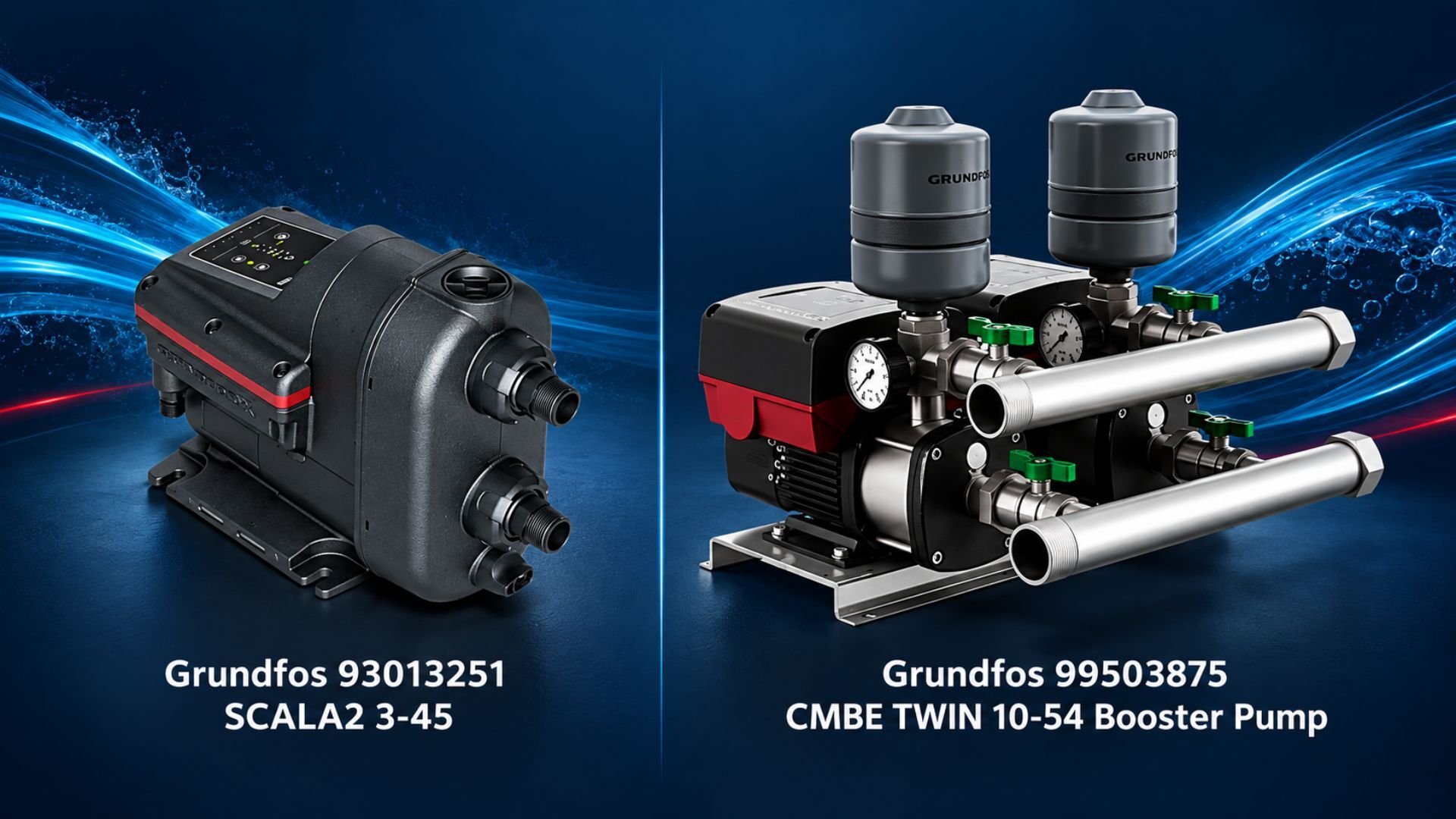
At 24hr Supply , we carry HVAC measurement tools and water-pressure equipment for practical installation and service needs. If your next purchase involves automatic residential water-pressure control, consider the Grundfos SCALA2 3-45 Pressure-Boosting Pump . It brings pressure sensing and control together in a compact residential system, so you can compare a complete package against your household’s requirements.
For commercial water-supply projects, explore the Grundfos CMBE Twin 10-54 Booster System . Before ordering, compare the listed flow capacity, electrical supply, and operating limits with your project specifications.
Browse the product details and ask our team for help with product information if you need to clarify a specification. We can help you review the available options for your application.
Put Pressure Measurements to Work
A useful pressure reading starts with equipment that fits the system and communicates correctly with its controller. Before choosing a component or complete package, gather the existing equipment specifications and identify the measurement you need. That preparation gives you a clearer basis for selection, setup, and future maintenance.
FAQs
What Factors Affect Pressure Transducer Accuracy?
Temperature effects, nonlinearity, hysteresis, repeatability, drift, electrical noise, and overpressure damage can affect accuracy. Because specifications describe error differently, we recommend checking whether the stated percentage applies to full scale or the reading. That distinction changes the possible error at your operating pressure.
What Are the Differences Between Pressure Sensors and Transducers?
The terms overlap, but “ sensor ” can describe the sensing element or a complete measuring device, while “ transducer ” emphasizes conversion into an output signal. Manufacturers use these names differently, so we recommend checking the actual output specification and required interface before deciding whether a device fits.
What Are the Different Types of Pressure Sensors and Pressure Transducers?
Types fall into pressure-reference and sensing-technology groups. Gauge measures relative to atmospheric pressure, absolute to a perfect vacuum, and differential between two pressures. Technologies include strain-gauge/piezoresistive, capacitive, and piezoelectric designs. Vacuum describes a measurement range rather than a separate sensing technology.
Recent Posts
-

What Is a Pressure Transducer? How It Works in Modern HVAC and Plumbing Systems
How does a pump or HVAC controller know when pressure changes? The answer starts with a small compon …Oct 25th 2026 -
What Is Cavitation? A Practical Guide to Protecting Your Water Pump System
You may have seen cavitation mentioned in a pump manual or heard it during a discussion about poor p …Oct 19th 2026 -
How to Prime a Grundfos Pump: Step-by-Step Instructions for Homeowners
If your pump is running but the tap is still dry, switch it off before checking whether it needs pr …Oct 12th 2026