How to Bleed a Grundfos Pump: Everything You Need to Know in ONE Place!
How to bleed a Grundfos pump depends on its design, with either a documented manual vent point or a self-venting procedure.
If yours became noisy after maintenance, trapped air is one possibility, although sound alone cannot confirm it.
Today, we'll cover heating and hot-water circulation equipment here, so you can approach bleeding a central heating pump with instructions that actually match the unit in front of you.
TL;DR
- Your pump model’s instructions determine whether to use a manual vent or designated system vents.
- The central screw may serve another purpose.
- Before opening a vent, isolate power, let equipment cool, and check pressure requirements.
- The system must contain water before any powered venting cycle.
- Covered UPSe instructions specify Zone pump, setting III, for 15 minutes.
- ALPHA HWR offers a 15-minute venting function through Grundfos GO.
- Afterwards, check circulation and open fittings for leaks.
- Persistent noise needs further diagnosis before replacement.
- At 24hr Supply , we help you compare compatible Grundfos pumps or air-removal components after a technician assesses your system.
How to Bleed a Grundfos Pump for Your Model
With the system filled, you bleed the pump through its documented manual vent point or its model-specific self-venting procedure. Air elsewhere in the pipework needs the system’s own removal points, because venting the pump cannot clear every trapped pocket.
If your pump’s instructions confirm a manual vent point, this video shows an example of the process.
https://www.youtube.com/watch?v=h9_BHPOPb9Y
Now, here’s how to choose and follow the right route to remove trapped air from your pump.
Identify the Pump Model and Matching Instructions
The nameplate gives you the model and product number needed to find the correct manual. A similar-looking front cover can hide a different design, so we recommend checking the label before reaching for tools.
These details will help you match the instructions.
| Detail to Record | What It Tells You |
|---|---|
| Full model and product number | Which product instructions apply |
| Control-panel layout | Whether the illustrated buttons match yours |
| Connected system | Whether it serves heating or domestic hot-water circulation |
| Venting instructions | Which procedure below applies |
Our guide can help you identify what your Grundfos pump does . If your label says SCALA2 or CMBE, the priming FAQ below points you to a separate guide.
Prepare the System Before Opening a Vent
Opening a fitting and running a venting programme require different preparations. Hot water and electrical connections need particular care.
Here are the checks before you begin:
- The power must be isolated before physical work, and hot equipment needs time to cool.
- The manual determines the pressure requirements and valve positions.
- A cloth or container should catch discharge without letting water reach electrical components.
- The system must contain water before a powered venting cycle.
Uncertain valve arrangements need an installer’s attention.
Follow the Manual for a Confirmed Pump Vent Point
This route applies only when your unit’s instructions identify a manual vent point. Once the preparation above is complete, the sequence follows that document.
- You locate the fitting shown in the diagram and check access around it.
- You open it only as instructed, without assuming a particular number of turns applies.
- As air escapes, your container catches any water released through the opening.
- When the manual’s venting endpoint is reached, you refit or tighten the fitting as directed.
- You restore the specified valve positions and operating condition before restarting.
Ex: The US UP XL instructions describe removing the vent plug. Once water emerges through the opening, the plug goes back in place. That sequence applies to the UP XL models covered by the document. Your unit may need a different procedure.
Use System Vents and the Correct Self-Venting Controls
For models without a documented manual opening, the installation provides the air-removal route. The pipe layout determines the approach to bleeding heating system air, so follow the system instructions before starting the pump’s own venting sequence.
- UPS15-58FC: Your installation’s designated vents handle air removal. The Grundfos installation instructions require filling before startup and warn against using the pump to vent the system. A central cover should stay in place unless the matching documentation directs otherwise.
- UPSe: After system filling and venting, the 2023 US instructions specify Zone pump at setting III for 15 minutes . The unit must contain water throughout. You can then return it to the recommended operating setting.
- ALPHA HWR: The 2024 instructions describe a 15-minute venting option through Grundfos GO. After connecting, you select Settings, choose the pump-venting function, and start it.
These timings belong to the documented models. They are not a universal timer for every Grundfos unit.
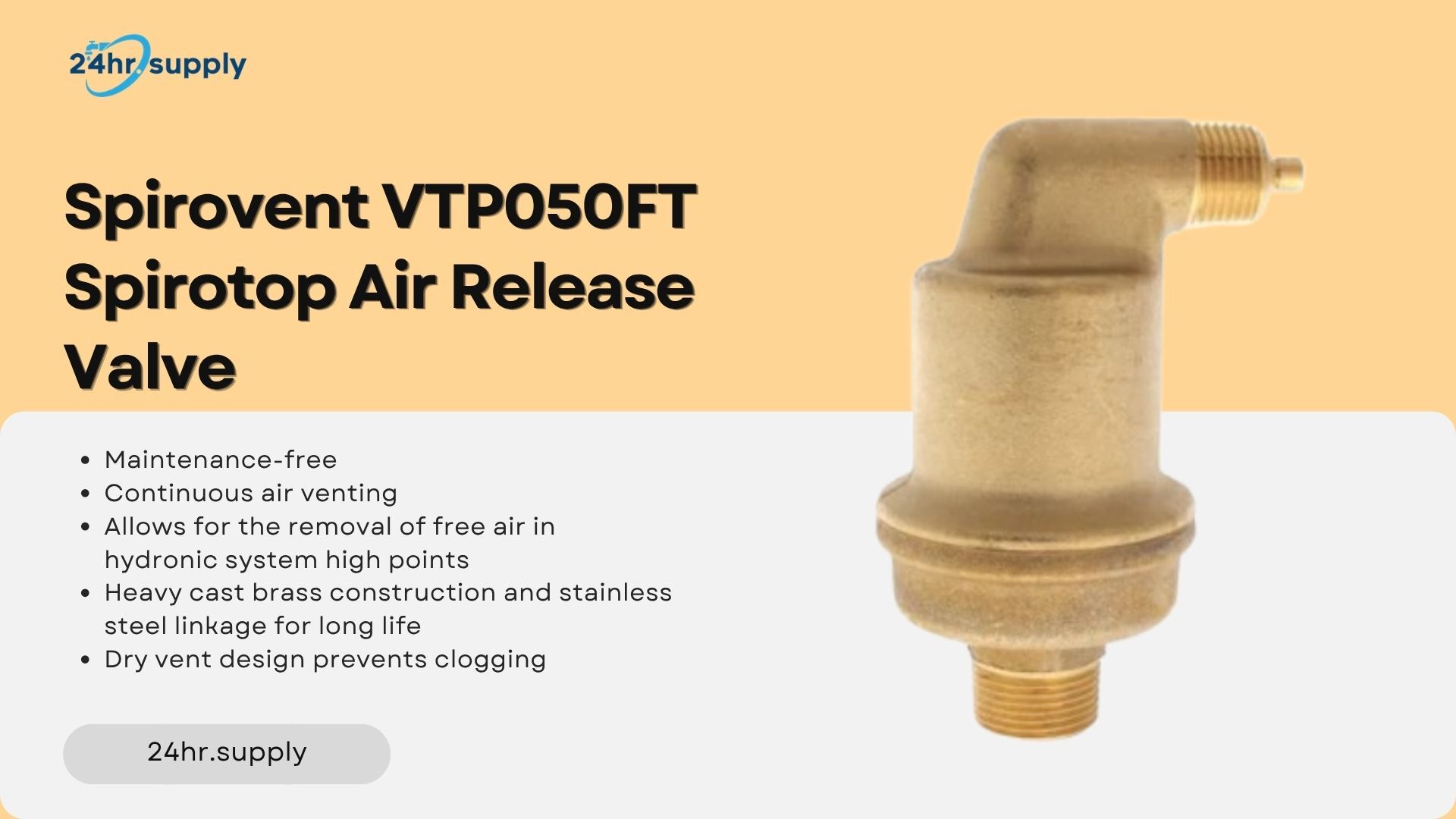
For air-release equipment in the pipework, the Spirotop VTP050FT automatic air vent is one example intended for hydronic-system high points. Its connection and installation requirements need checking before replacement.
Check Circulation and Look for Leaks After Venting
Once the applicable procedure is complete, we recommend checking the system’s response. A running motor alone cannot establish that enough water is moving.
These observations help you judge the result:
- The intended heating areas should respond during a heat demand, or hot-water delivery should return as expected.
- Any fitting opened during the work should remain free of drips.
- The controls should be back at their recommended operating settings.
Your notes about what improved will help if further investigation becomes necessary.
Circulating Pump Making Noise After Venting
Continuing noise or poor flow needs further assessment. A circulating pump not working after venting could have a blockage or another fault, so repeated bleeding may leave the cause unresolved. If it starts quietly and becomes noisy again later, mention that timing to the technician.
Air removal can also continue after the first purge. As fresh fill water heats, dissolved gases can form bubbles. This explains why air in heating system water may need ongoing separation even after the larger trapped pockets have been cleared.
A Spirovent Junior VJR100TM air eliminator is one example of that equipment. Its suitability needs assessment alongside the cause of recurring air.
P.S. For boiler pump troubleshooting beyond air removal, our guide covers other causes of Grundfos pump problems . Electrical faults or leaks near wiring need a qualified technician.
Help With Grundfos Parts and Replacement at 24hr Supply
After the fault has been assessed, we can help you compare product details and suitable replacement options. A clear label photograph gives our team a starting point. Your notes about what happened after venting provide useful context too.
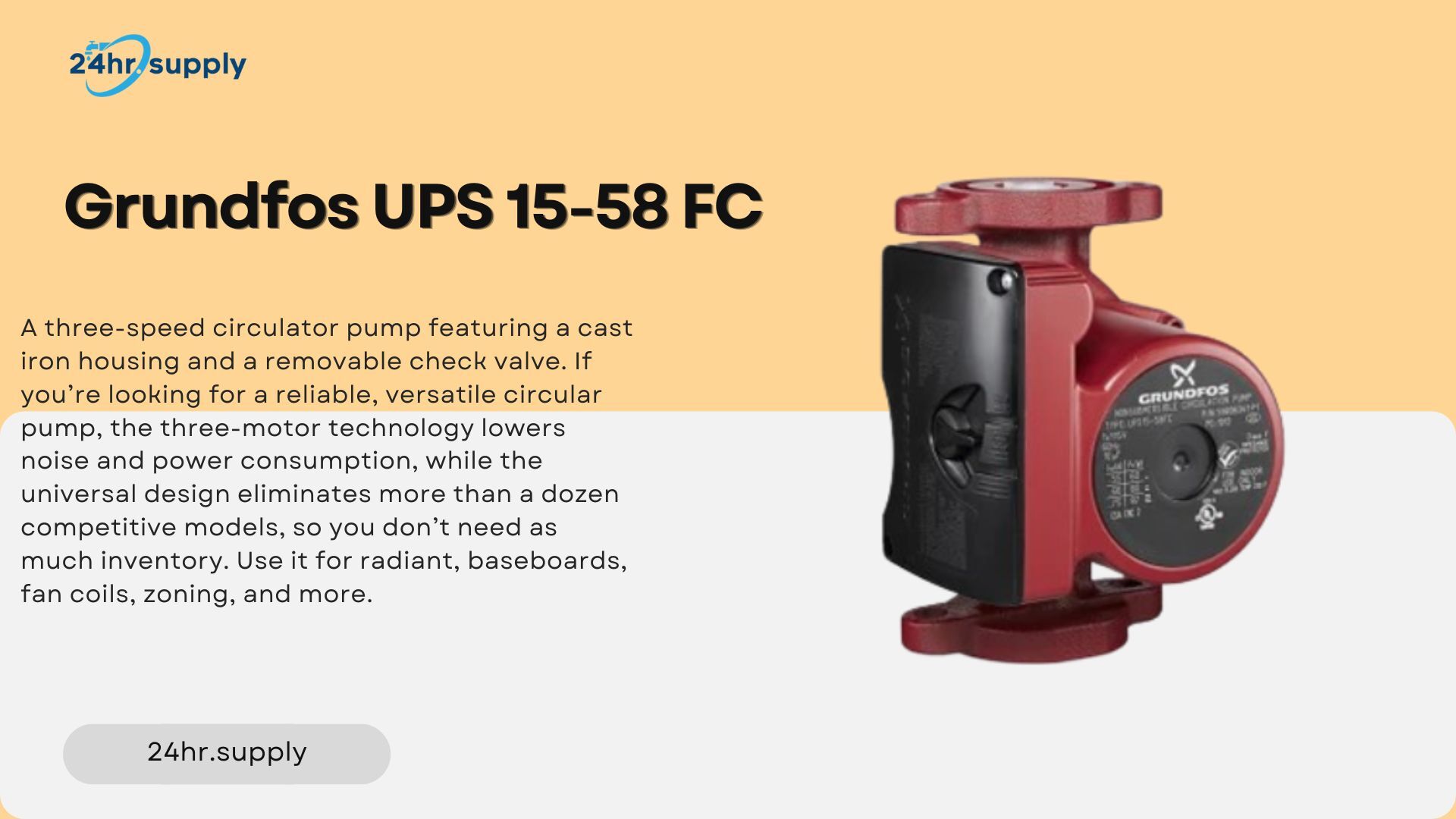
For example, our Grundfos UPS15-58FC is a three-speed, cast-iron model rated 115 V and 1/25 HP . A replacement also needs to match the required flow and fit the existing connections. Its housing material must suit the application.
Conclusion
Learning how to bleed a Grundfos pump starts with the instructions for your model. Once venting is complete, check circulation and look for leaks at any fittings you opened.
If diagnosis points to replacement and you need help finding a compatible option, contact us .
FAQs
What Is a Grundfos Pump?
A Grundfos pump moves water or other suitable liquids. A circulator pump from the brand sends water around a heating or hot-water system.
Who Sells Grundfos Pumps?
We sell Grundfos pumps online at 24hr Supply. Before ordering, check compatibility and current availability. Installed products are excluded from our standard returns.
What Is the Screw on a Grundfos Pump For?
The screw’s purpose depends on the model. It may provide venting access or help free a blocked shaft. Your manual will confirm whether it is a pump bleed screw before you open anything.
Is Bleeding a Grundfos Pump the Same as Priming It?
No. Bleeding removes trapped air, while priming fills the pump with liquid before startup. An air lock in water pump pipework can still interrupt flow after filling. For SCALA2 or CMBE equipment, see our guide on how to prime a Grundfos pump .
Recent Posts
-

How to Bleed a Grundfos Pump: Everything You Need to Know in ONE Place!
How to bleed a Grundfos pump depends on its design, with either a documented manual vent point or a …Nov 10th 2026 -
What Is a Pressure Transducer? How It Works in Modern HVAC and Plumbing Systems
How does a pump or HVAC controller know when pressure changes? The answer starts with a small compon …Oct 25th 2026 -
What Is Cavitation? A Practical Guide to Protecting Your Water Pump System
You may have seen cavitation mentioned in a pump manual or heard it during a discussion about poor p …Oct 19th 2026