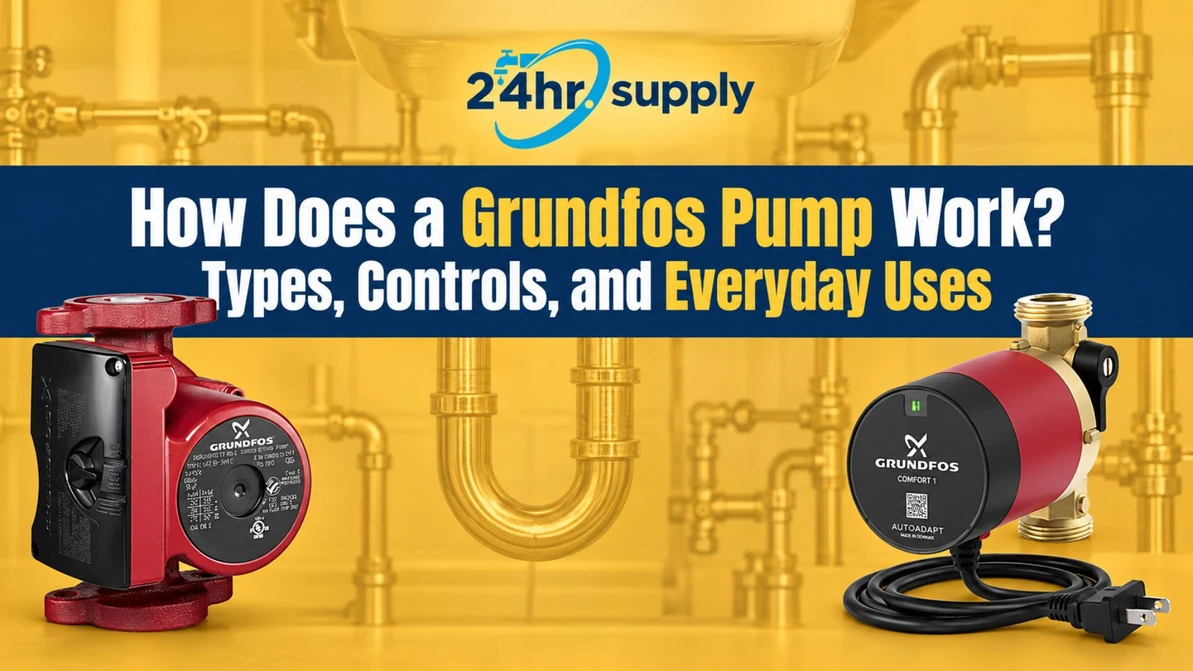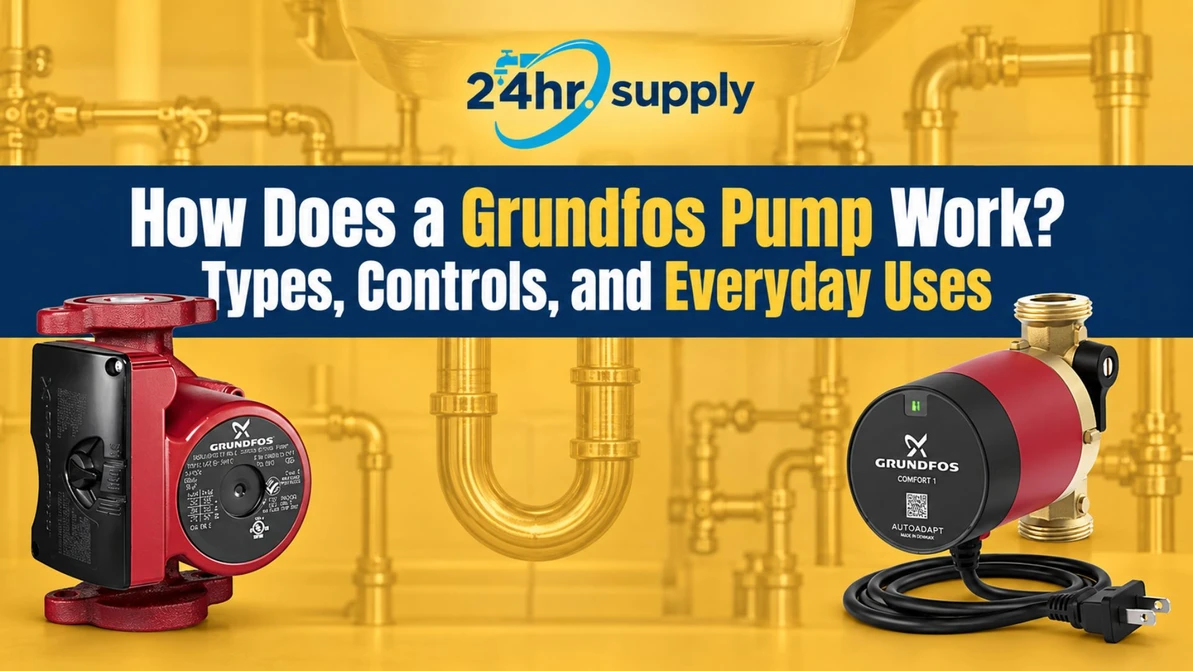
How Does a Grundfos Pump Work? Types, Controls, and Everyday Uses
Grundfos centrifugal pumps work through an electric motor that turns an impeller, transfers energy to water, and creates the pressure difference needed for flow. Grundfos manufactures equipment for several applications, so the unit beside your boiler has a different job from one connected to your household water supply.
If you’re asking “how does a Grundfos pump work?” because you’ve spotted one in your home, start with its purpose. Different Grundfos pump models serve heating, hot-water circulation, or pressure boosting. Once you know which system yours belongs to, its behavior becomes much easier to understand.
Today, we’re going to do just that.
How Does a Grundfos Pump Work in Your System?
In your system, a Grundfos pump creates the water movement needed to distribute heat, return cooled water, or boost supply pressure. The model label and connected pipework help identify which job yours performs.
Here’s the mechanism first, followed by those three applications.
The Motor and Impeller Create Water Flow
Inside a centrifugal water pump, the impeller is a wheel with blades. The motor supplies energy, and the hydraulic components transfer that energy to the water through this sequence:
- Electrical power drives the motor and rotates the impeller.
- Water enters the impeller near its center.
- The blades transfer energy to the water and move it outward.
- The casing or diffuser directs water toward the outlet and converts some velocity into pressure.
- The pressure difference moves water through the connected system.
Two measurements describe the result. Flow is the volume moved over time, typically measured in gallons per minute. Head is the energy added per unit weight of water, expressed in feet.
Actual flow depends on both the pump’s performance curve and system resistance. The curve shows how available head changes with flow, so it helps explain what the unit can deliver through your pipework.
Heating Circulation Moves Heat Around a Closed Loop
In a heating system, a circulating pump moves water from the boiler through radiators, baseboards, or radiant tubing and back again. The boiler adds heat, while the circulator carries that heat to the rooms that need it.
There’s a useful detail here. In a filled, closed loop, water descending through the return side largely balances the elevation of water rising through the supply side. The pump primarily overcomes resistance in pipes, valves, and emitters. A second-floor radiator therefore doesn’t require the pump to lift fresh water upstairs on every circuit.
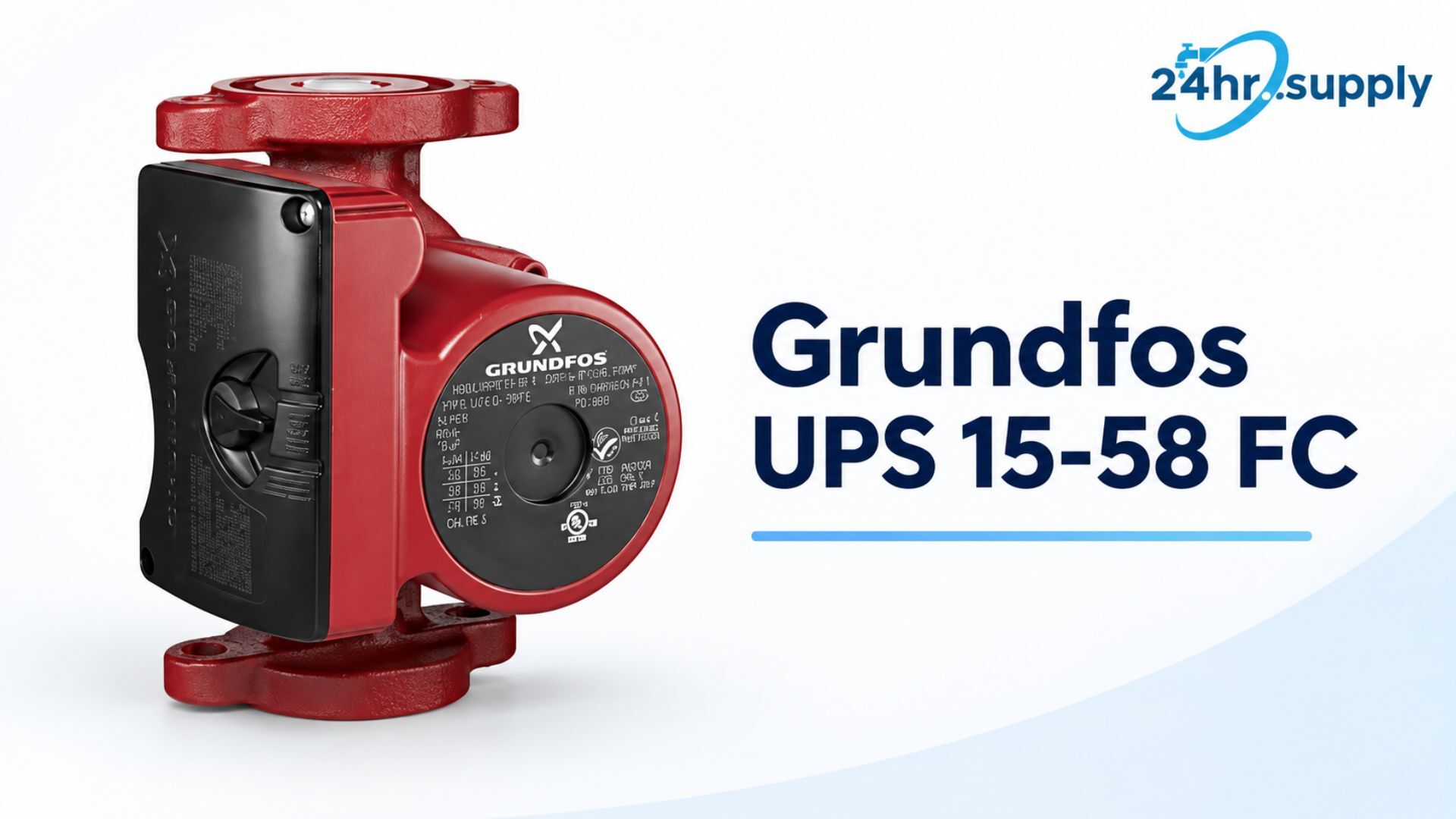
The Grundfos UPS 15-58 FC three-speed circulator gives you three selectable operating speeds. Electronic models can respond differently. For example, ALPHA’s AUTOADAPT controls adapt output as heating requirements change. When fewer zones need heat, an appropriate control mode can reduce motor speed and electrical consumption.
That combination of motor design and control can make a substantial difference. In its US MAGNA3 course , Grundfos reports that MAGNA3 can use up to 75% less energy than a typical circulator . That manufacturer comparison applies to MAGNA3; savings for the linked UPS or an individual home require a separate assessment.
Domestic Hot-Water Circulation Returns Cooled Water to the Heater
Water left in the pipe between the heater and a faucet cools between uses. When you next open the hot tap, that cooler water normally comes out before newly heated water reaches you.
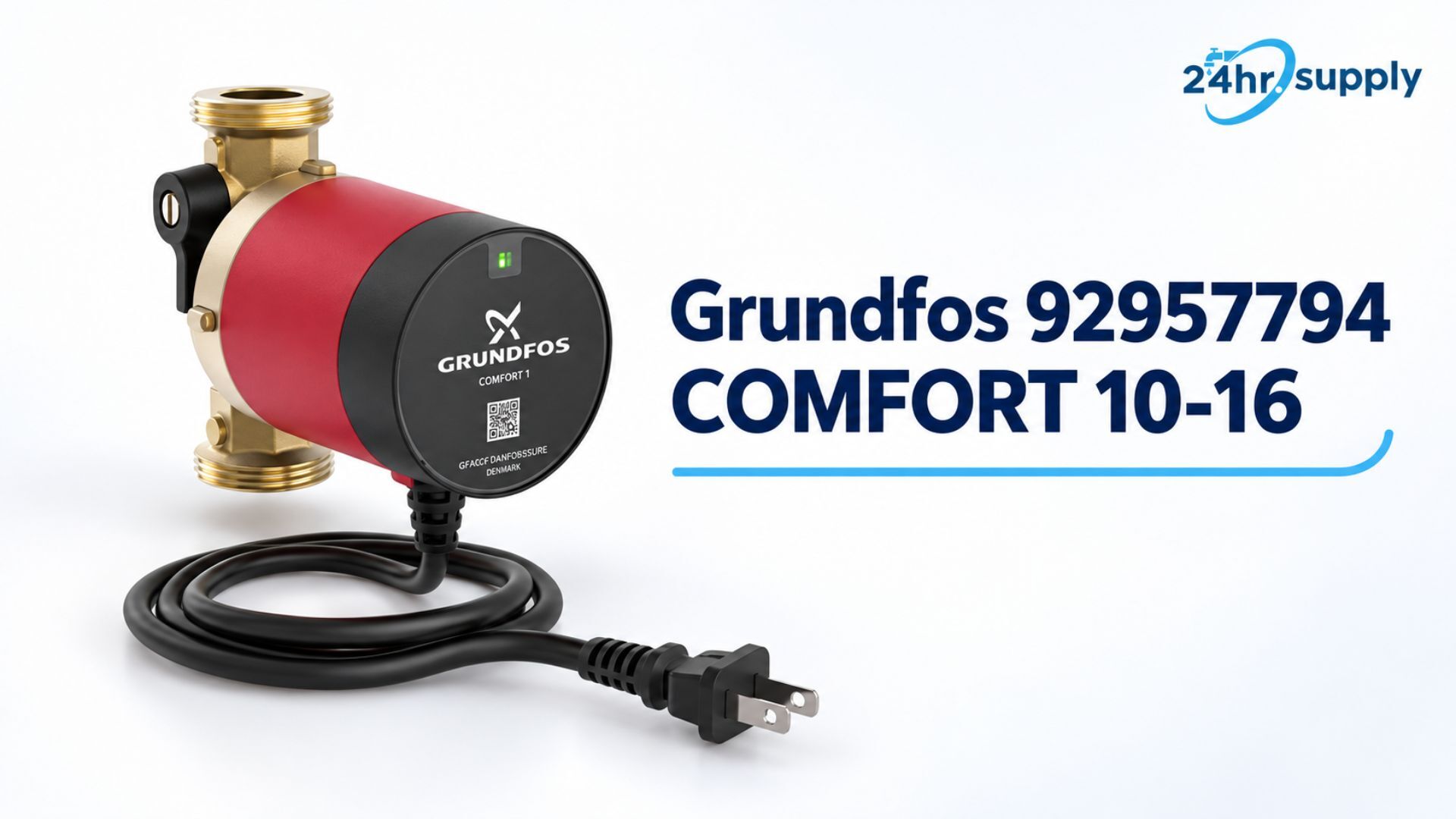
Domestic circulation provides a route back toward the heater, which helps keep warmer water closer to fixtures. In a dedicated-return arrangement, a separate pipe completes that route. The Grundfos COMFORT hot-water recirculation pump listed as model 92957794 is an example intended for a return-line system.
Some compatible retrofit kits use a crossover valve and the cold-water line as the return path. That avoids adding a separate return pipe, but it can temporarily warm water in the cold line. The arrangement matters when you compare products, because the two layouts require compatible components.
A Grundfos COMFORT system may use temperature sensing, a timer, or learned usage patterns. The available controls depend on the variant. They help limit unnecessary circulation and the associated heat loss from warm pipes.
Pro tip: Grundfos explains the different COMFORT control modes , so check the exact model before assuming it includes a particular feature.
Pressure Boosting Responds to Household Water Demand
What homeowners call a water pressure pump adds pressure to the incoming supply so water can reach fixtures at the required operating pressure. Its response becomes easier to picture when household demand changes.
A Sensor Tracks Changes in Demand
As an illustrative example, imagine someone opens a second shower while a faucet is already running. Demand increases, and outlet pressure may fall. In a Grundfos SCALA2 pressure-boosting pump , the pressure sensor detects that change and sends information to the controller.
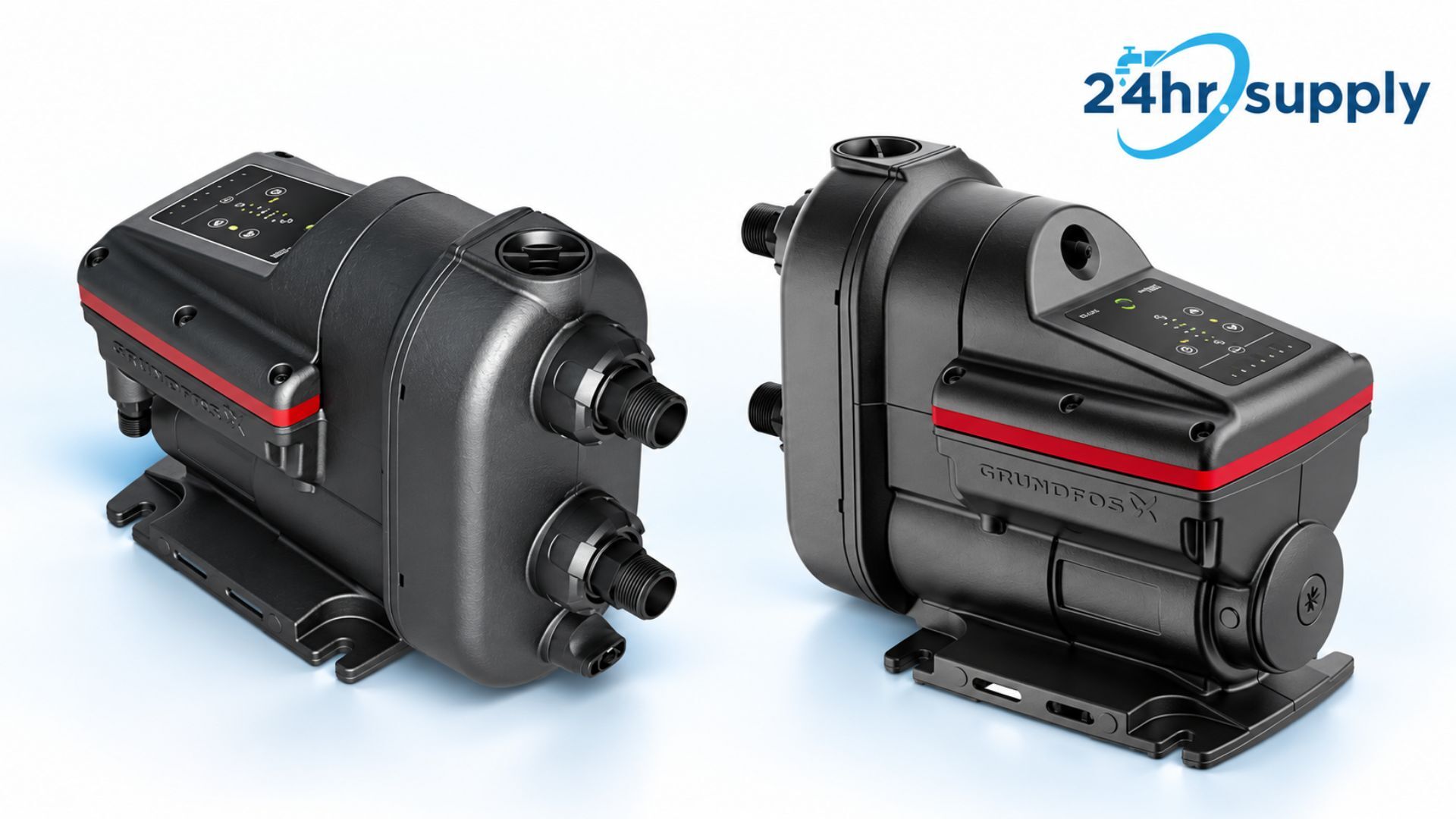
The controller adjusts motor speed to bring pressure toward the selected setpoint, within the unit’s capacity. As demand falls, output can fall too. That response happens automatically during normal operation. A small pressure tank buffers changes, while a non-return valve limits reverse flow.
This feedback process differs across models. You can compare Grundfos SCALA1 and SCALA2 in our other guide for a closer look at their fixed-speed and variable-speed operation.
Extra Stages Add Pressure
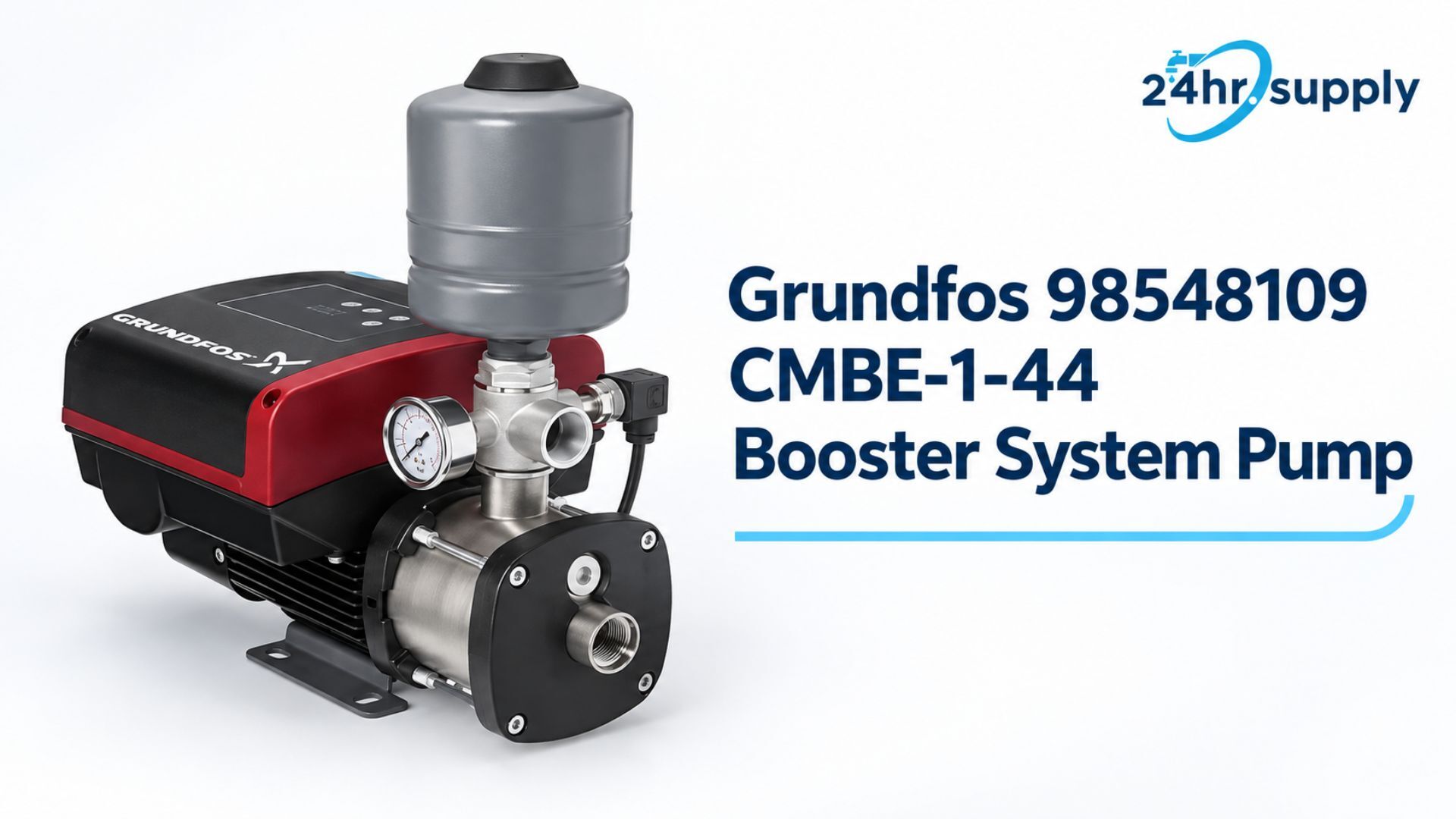
Some designs develop pressure through several impellers arranged in sequence. Water passes through each stage and gains additional energy before reaching the outlet. The Grundfos CMBE constant-pressure booster combines this multistage arrangement with speed control.
However, controls still operate within physical limits. An inadequate incoming supply or demand beyond the selected unit’s capacity can prevent it from maintaining the target pressure. For that reason, a larger number on the control panel cannot compensate for every limitation in the water supply or pipework. The equipment and the system have to work together.
What Setting Should Your Grundfos Pump Be On?
Your Grundfos pump should use the setting specified for its model, system design, and required performance. Commissioning records provide a starting point because similar-looking units may serve different installations.
From our experience, here are the main adjustments you should check:
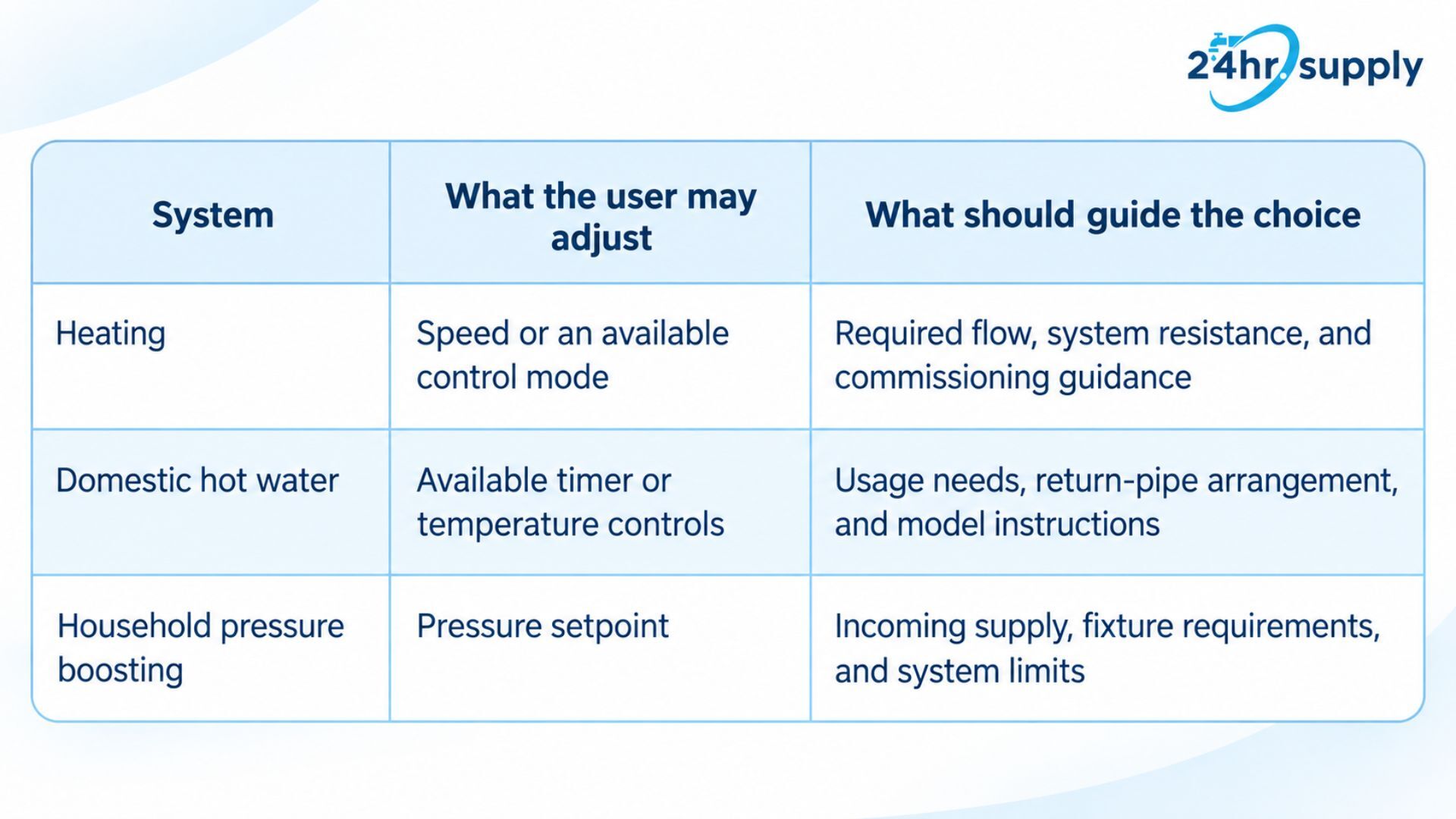
For a booster pump installation, confirm the intended pressure before making changes. A water pressure pump may have electronic controls, but button functions and adjustment procedures vary.
So, find the instructions that match the product number, then follow the procedure. If the original design conditions are unknown, have the required setting checked before experimenting with higher output.
How Do You Tell If a Grundfos Pump Is Working?
Your circulation pump is working when its status and the system’s response match the expected operation. A centrifugal pump’s motor can run even when useful flow is inadequate.
Here are three practical checks you can make:
- Heating. Check your central heating pump during a heat demand. A Grundfos boiler circulator should help the relevant emitters warm.
- Domestic hot water. Test delivery at the intended fixture while the hot water pump is enabled. For a Grundfos COMFORT recirculation pump, confirm the water heater is ready.
- Pressure boosting. Observe your booster pump’s gauge under a known demand and compare the reading with the intended operating conditions.
A lit display, humming sound, or warm casing alone cannot confirm effective flow.
Match the Grundfos Pump Replacement to Your System
Grundfos pump selection starts with the exact product number and the system’s required flow and head. From there, compare voltage, connections, temperature limits, and materials suitable for the fluid.
Potable-water compatibility deserves particular attention when equipment looks similar to a heating circulator. Keep those requirements together so a replacement matches the whole installation.
For example, SCALA2 has a maximum head of up to 148 feet . That figure does not describe the pressure available at every flow, and it is neither a recommended building height nor a household pressure setting.
So, check the performance curve at the required duty point (the combination of flow and head your system needs). Our other guide explains how to size a booster pump system before choosing a replacement, so feel free to check it out.
Find the Right Grundfos Pump at 24hr Supply
At 24hr Supply , we carry the UPS , COMFORT , SCALA2 , and CMBE options discussed here, with product listings that help you compare specifications. We also provide specification sheets and technical support so you can ask questions before placing an order.
To make that conversation useful, have your existing product number, application, electrical supply, and installation details ready. A clear photo of the identification label and connected pipework can help explain what you have. If you already have system calculations or commissioning information, keep those available too.
With those details in hand, you can compare suitable options more confidently. Explore the available range and shop Grundfos pumps for your system.
Your Next Step
Now that we’ve answered “how does a Grundfos pump work?” for your particular system, find the exact model’s documentation and compare it with what you observe. That gives you a useful basis for deciding whether to leave the setup alone, ask for technical help, or assess a replacement.
FAQs
What Are the Common Problems With Grundfos Pumps?
Problems include air , restrictions , leaks , and faults , but there’s no established brand-wide leading cause. A Grundfos circulating pump leaking near a water heater needs diagnosis. For booster pump issues, check out our other guide on the common Grundfos SCALA2 problems .
Should a Grundfos Pump Be On All the Time?
Some systems intentionally run continuously , such as certain water heater circulation setups. A pressure booster pump such as Grundfos SCALA2 that keeps running after demand ends needs its operating mode and system checked.
What Is the Average Lifespan of a Grundfos Pump?
There’s no reliable brand-wide average for a water pressure pump or Grundfos circulating unit. Installation, operating conditions, and maintenance affect service life, while energy efficiency ratings provide no dependable lifespan prediction.
Do Grundfos Pumps Need Servicing?
Grundfos pumps need the checks specified for their model and installation. For a Grundfos booster pump, distinguish routine pressure pump inspections from mechanical seal servicing where applicable. We recommend using compatible repair kits and qualified assistance.
What Does a Red Light on a Grundfos Pump Mean?
A red light indicates a model-specific warning or fault. Record any light flashing on your Grundfos SCALA2, then consult its fault-resolution and reset instructions. Circulation pump settings alone cannot explain every alarm.
Recent Posts
-

How to Prime a Grundfos Pump: Step-by-Step Instructions for Homeowners
If your pump is running but the tap is still dry, switch it off before checking whether it needs pr …Oct 12th 2026 -
How Does a Grundfos Pump Work? Types, Controls, and Everyday Uses
Grundfos centrifugal pumps work through an electric motor that turns an impeller, transfers energy t …Oct 12th 2026 -
Gruvlok vs. Victaulic: Key Differences in Couplings, Fittings, and Performance
A contractor, estimator, engineer, or buyer may find one grooved piping brand listed in the project …Sep 15th 2026