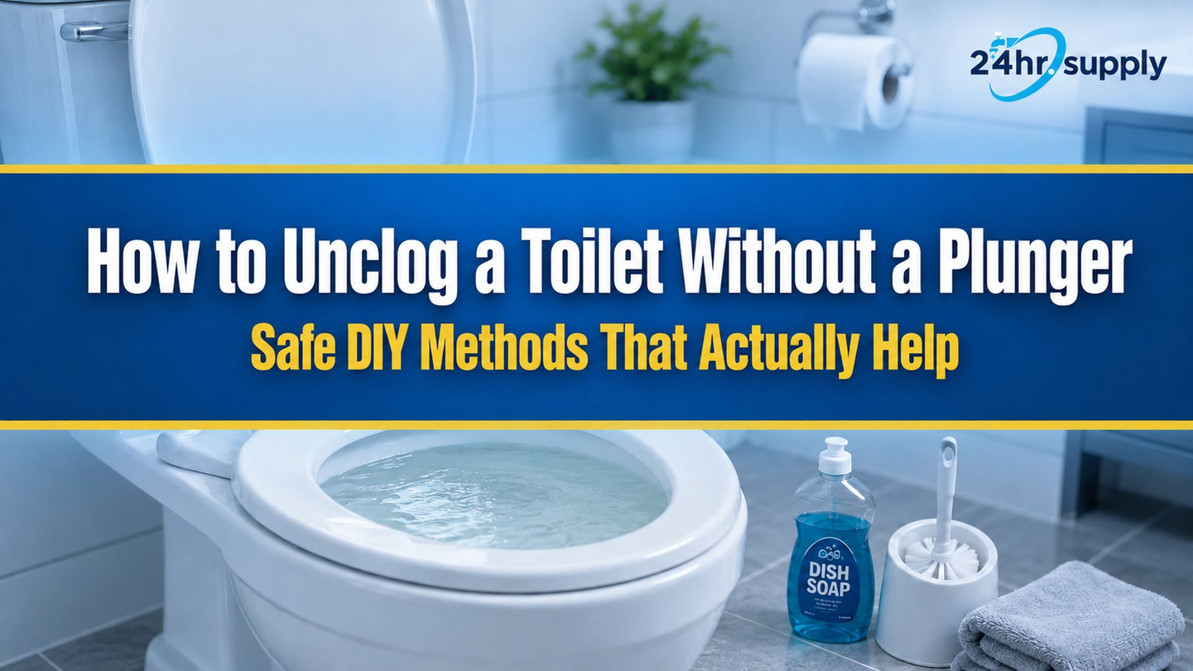
How to Unclog a Toilet Without a Plunger With Easy Step-by-Step Home Methods
A clogged toilet can become stressful fast when the bowl is filling and there is no plunger nearby. The good news is that several household methods may clear a soft blockage caused by toilet paper or organic waste. The order matters because repeated flushing or too much force can cause an overflow or push the clog deeper.
The 2022 YouGov research found that 63% of U.S. adults had clogged their own toilet , so this is a common household problem, and you shouldn’t worry too much about it.
Today, we will start with the safest options and then move toward more involved methods.
What Should You Do Before Trying to Clear the Clog?
Before trying to clear the clog, we recommend stopping the water from rising and creating enough space in the bowl for the method you plan to use.
A full toilet bowl leaves little room for soap, hot water, or pressure. It also raises the risk of contaminated water spilling onto the floor.
So, these are the first steps to take:
- Stop flushing the toilet: Another flush may send the water over the rim.
- Turn the shut-off valve clockwise: You can usually find it on the wall or floor behind the toilet.
- Close the flapper if necessary: Remove the tank lid and press the rubber flapper closed if you cannot reach or turn the shut-off valve.
- Place towels around the base: This helps contain small spills and protects the floor.
- Wear rubber gloves: Toilet water can carry bacteria and other contaminants.
- Remove some bowl water: Use a disposable container if the water is close to the rim.
- Wait several minutes: The water level may fall as a soft blockage begins to loosen.
Note from our team: Never add hot water, soap, or another mixture when the bowl is already at the brim.
Which Type of Toilet Clog Are You Dealing With?
The type of toilet clog depends on what entered the bowl, how the water behaves, and whether other fixtures are also affected.
Household methods work best on soft blockages caused by toilet paper and organic waste. On the other side, a toy, wipe, hygiene product, or another solid object requires a more cautious approach. And recurring clogs and backups in several fixtures may point to a larger drain problem.
Here are the main signs you can compare:
| What You Notice | Likely Problem | Best Next Step |
|---|---|---|
| Water slowly drops after several minutes | Soft toilet paper or waste clog | Start with dish soap and hot water |
| The bowl is full, and the water is rising | Active blockage and overflow risk | Stop the water and remove excess bowl water |
| A toy, wipe, or hygiene product was flushed | Solid foreign object | Avoid repeated flushing and use a toilet auger or plumber |
| The toilet clogs repeatedly | Flush or drain problem | Check the tank and consider a professional diagnosis |
| Sink, tub, or another toilet also backs up | Larger drain-line problem | Stop DIY attempts and call a plumber |
This quick check helps you avoid using a mild household remedy on a clog that needs a tool or professional inspection.
Which Methods Should You Try First?
You should start with methods that use time, lubrication, and gentle pressure before moving to tools that reach into the toilet trap.
Each step below suits a different type of blockage. We think you should stop when a method causes the water to rise, creates a risk of damage, or meets firm resistance.
1. Let a Soft Clog Sit for Several Minutes
A soft clog may begin to break apart if you leave it alone for several minutes.
This method works best when too much toilet paper caused the blockage and no solid object entered the bowl. So, stop flushing and watch the water level. Give the clog around 10 to 20 minutes to soften.
If the water level slowly drops, the blockage may be loosening. You can then move to dish soap and hot water. If the bowl stays full or begins to rise, shut off the water and remove some liquid before trying another method.
Waiting is a gentle first step, although it cannot clear every blockage.
2. Add Dish Soap and Hot Water
Dish soap may lubricate toilet paper and organic material, while hot water may help soften the blockage.
Our team recommends following these steps:
- Add approximately half a cup of liquid dish soap to the bowl.
- Let the soap sit for 10 to 15 minutes .
- Add about one gallon of hot tap water from a manageable height.
- Leave several inches of space at the top of the bowl.
- Wait another 10 to 20 minutes .
The water should feel hot from the tap. Also, never use boiling water because sudden heat can crack or damage porcelain.
Grease-cutting dish soap is usually the strongest household option because it is thick and slippery. Shampoo or liquid hand soap may also help when dish soap is unavailable.
Note from our team: Watch the bowl during the waiting period. If the water level falls, add a small amount of water to test the drain before attempting a full flush.
This video also helps:
3. Use a Toilet Brush as a Makeshift Plunger
A toilet brush can create movement and limited pressure around the drain opening.
First, cover the brush head with a strong plastic bag and secure the bag around the handle. Make sure the bag cannot slip off inside the toilet. Place the covered brush over the drain opening and use slow push-and-pull motions.
After that, keep the movement controlled so dirty water does not splash outside the bowl. Stop if the bag tears, slips, or fails to move the clog after several attempts.
Once you finish, remove the bag carefully and dispose of it. Disinfect the brush, handle, and any nearby surfaces that came into contact with toilet water.
Pro tip: Read our guide to flushing a toilet without running water before the next outage.
4. Try Baking Soda and Vinegar for a Mild Clog
Baking soda and vinegar may help loosen a mild organic clog , though the method is less reliable for a compact or deep blockage.
You should pour approximately one cup of baking soda into the bowl. Then, slowly add two cups of white vinegar. The mixture will fizz, so leave enough open space near the top of the bowl.
Let the mixture sit for 20 to 30 minutes . After that, add hot tap water and wait again before testing the drain.
The bubbling action may help move loose toilet paper and waste. But it will not dissolve toys, wipes, hygiene products, or other solid objects.
Move to a mechanical method when the water level does not change.
5. Use Controlled Water Pressure
Controlled water pressure may push a softened clog through the curved toilet trap. Try this method only after the bowl level has dropped.
Fill a bucket with warm water and pour a moderate amount into the bowl with steady force. You can also fill a flexible plastic bottle with warm water and direct the opening toward the toilet drain.
The goal is to create pressure without overflowing the bowl. So, start with a small amount and watch how quickly the water drains.
Note from our team: Never pour a full bucket into a high bowl. Stop immediately if the water rises toward the rim.
6. Use a Padded Wire Hanger Carefully
A straightened wire hanger may reach soft material that sits close to the drain opening.
Unwind the hanger and wrap the end with a cloth, tape, or another soft covering. This protective layer reduces the chance of scratching the porcelain.
Next, insert the padded end into the drain opening and move it gently. Use small motions to break apart or pull back material near the entrance to the trap.
Do not push hard. Firm resistance may mean the clog contains a solid object or sits deeper than the hanger can reach. Extra force can move the obstruction farther into the toilet or damage the bowl.
7. Use a Toilet Auger for a Deeper Blockage
A toilet auger is designed to reach deeper into the toilet trap than a household object.
Try to place the protected guide tube into the bowl opening. Turn the handle while feeding the cable into the trap a little at a time. Keep in mind that the cable may break through a soft clog, catch some obstructions, or help identify where the blockage sits.
Follow the manufacturer’s instructions because handle and cable designs can vary. Keep the guide against the bowl so the cable does not scrape the porcelain.
Stop if the cable becomes stuck or meets resistance that does not change with gentle movement. A hard object or drain-line problem may require professional help.
You can watch this video for more help:
8. Consider a Wet/Dry Vacuum Only as an Advanced Option
A wet/dry vacuum can remove bowl water and may create suction around a clog , though this method requires careful handling and thorough cleanup.
You can use equipment that is specifically rated for liquid pickup. Then, remove as much water as possible, place the hose near the drain opening, and create a seal with an old towel if the equipment instructions allow it.
Never use a standard household vacuum around toilet water. Water can damage the appliance and create a serious electrical hazard.
We recommend skipping this method when you cannot control splashing, seal the hose, dispose of contaminated water, or sanitize the vacuum and accessories afterward.
What Should You Avoid When Unclogging a Toilet?
You should avoid actions that can overflow the bowl, damage the toilet, expose you to chemicals, or move the blockage deeper. After all, a rushed fix can turn a small clog into a larger repair.
These are the main mistakes to avoid:
- Do not keep flushing: Each flush adds more water to a blocked bowl.
- Do not use boiling water: Sudden heat may crack the porcelain.
- Do not mix cleaning products: Bleach, drain cleaners, vinegar, and other products can create dangerous fumes or reactions.
- Do not use an unlabeled chemical product: Choose only a product that clearly states it is safe for toilets and the home’s plumbing system.
- Do not insert uncovered metal: Bare wire can scratch the bowl and damage its finish.
- Do not use a regular vacuum: Standard vacuums are unsafe around liquids.
- Do not force a hard object deeper: A toy, wipe, or hygiene product may become harder to retrieve.
When a method feels unsafe or creates no visible change, stop and reassess the clog.
How Can You Prevent Another Toilet Clog?
You can prevent many toilet clogs by flushing only appropriate material and keeping the toilet’s flushing system in good condition.
Everyday habits cause many blockages. The 2026 SupplyHouse survey found that 60% of Americans regularly flushed items other than toilet paper . Meanwhile, 45% had experienced at least one clog because of something they flushed.
Here are the most useful preventive steps:
- Flush human waste and toilet paper only.
- Put wipes, paper towels, hair, hygiene products, and food waste in the trash.
- Use smaller amounts of toilet paper when possible.
- Flush midway if you need to use a large amount of paper.
- Keep a lined trash can in the bathroom.
- Teach children to keep toys and household objects away from the toilet.
- Check the tank water level and flapper when the flush feels weak or incomplete.
- Investigate recurring clogs instead of repeatedly clearing the same symptom.
A weak flush may leave material inside the trap, so tank maintenance can matter as much as bathroom habits.
When Should You Stop DIY Methods and Call a Plumber?
You should call a plumber when the clog affects several fixtures, returns repeatedly, causes leaks or odors, or cannot be reached safely.
After all, DIY methods have limits. The 2026 SupplyHouse survey reported that 70% of DIY clog-repair attempts did not help , while 13% made the problem worse .
These warning signs suggest a deeper problem:
- Several drains or toilets are backing up.
- The toilet makes repeated gurgling sounds.
- A sewage odor comes from the toilet or nearby drains.
- Water leaks around the toilet base.
- A hard object is lodged beyond reach.
- The toilet clogs again soon after clearing.
- A toilet auger cannot move the obstruction.
- You feel unsure about using a tool safely.
These symptoms may point to a blocked drain line, sewer problem, installation issue, damaged toilet component, or poor flushing performance. A plumber can inspect the system and address the cause before water damage or another backup occurs.
Pro tip: Explore our guide to common plumbing services so you know when a repair needs professional help.
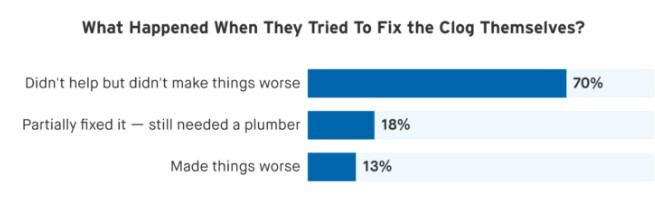
Source: 2026 SupplyHouse survey
What to Use to Unclog a Toilet Without a Plunger When Basic Methods Fail
A proper toilet auger is the most practical next tool when household methods fail, and the clog appears to sit deeper in the trap.
24hr Supply carries the Cobra Tools 40030 Homeowner Toilet Auger . It has a three-foot working length, rust-resistant spring wire, a non-slip grip, a rubber bowl guard, and a polymer guide tube. These protective features make it more suitable for toilet use than an uncovered coat hanger.
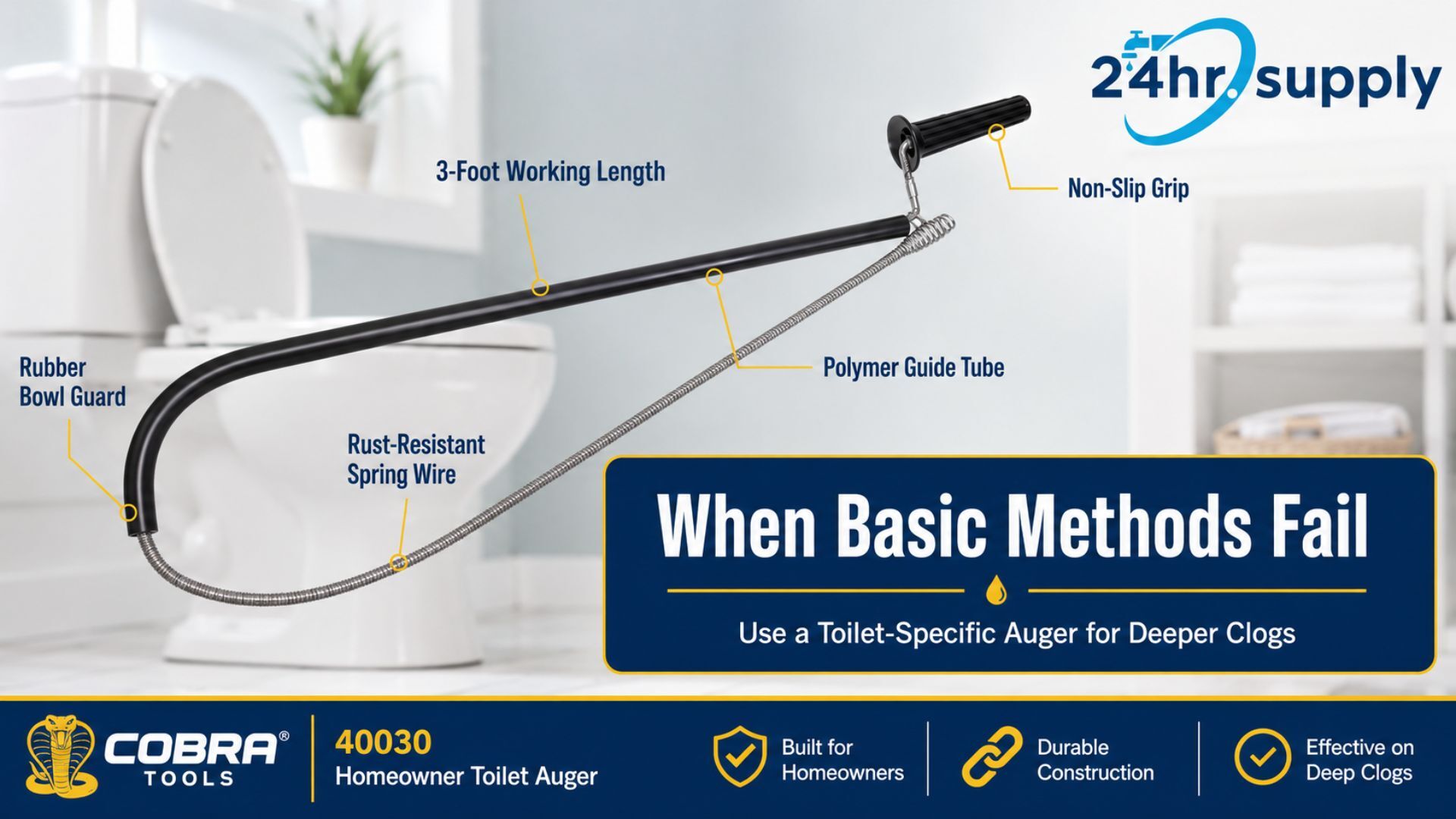
24hr Supply is an established New York-based supplier of residential and commercial plumbing products. We offer in-stock tools, fast order fulfillment, detailed product information, and customer support. Our team supplies plumbing equipment only.
Contact a plumber if the auger cannot clear the clog or several fixtures are backing up.
Wrapping Up
Start by stopping the water and deciding whether the blockage is soft or solid. Dish soap and hot water are a sensible first method for toilet paper and organic waste, while a toilet-specific auger can help with a deeper clog. Recurring blockages, sewage odors, leaks, and multiple backed-up fixtures require professional attention.
Contact 24hr Supply for help choosing the right plumbing tool.
Recent Posts
-

How to Prime a Grundfos Pump: Step-by-Step Instructions for Homeowners
If your pump is running but the tap is still dry, switch it off before checking whether it needs pr …Oct 12th 2026 -
How Does a Grundfos Pump Work? Types, Controls, and Everyday Uses
Grundfos centrifugal pumps work through an electric motor that turns an impeller, transfers energy t …Oct 12th 2026 -
Gruvlok vs. Victaulic: Key Differences in Couplings, Fittings, and Performance
A contractor, estimator, engineer, or buyer may find one grooved piping brand listed in the project …Sep 15th 2026