How to Flush a Toilet When the Water Is Off in 3 Simple and Practical Methods
A water shutoff can happen during plumbing repairs, a water-main problem, severe weather, frozen pipes, or a power outage that stops a private well pump. So, learning how to flush a toilet when the water is off can help you keep the bathroom usable until service returns.
In this guide, we’ll explain the main methods, water amounts, warning signs, and post-outage checks. Let’s get started!
How Do You Flush a Toilet When the Water Is Off?
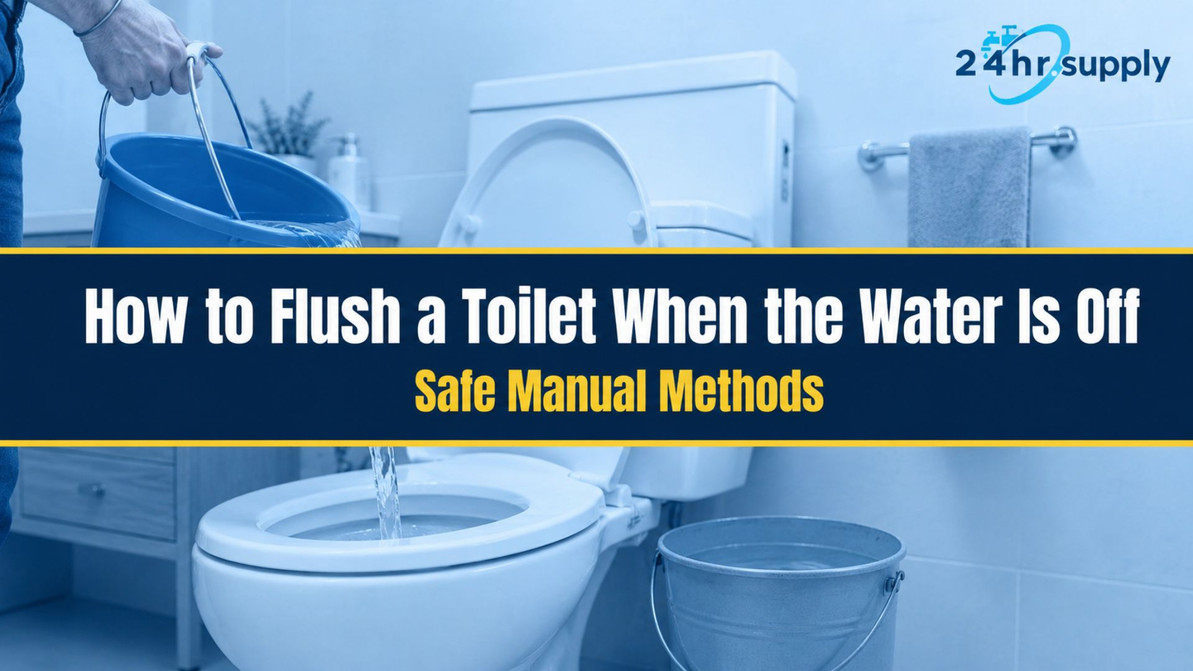
You can flush the toilet with water already in the tank, a fast bowl pour, or a manual tank refill. Vermont Department of Health guidance says 1-2 gallons poured quickly into the bowl can usually create a manual flush.
But first, check that the bowl is at a normal level. A high bowl can signal a clog.
Here are the three practical options:
1. Use the Remaining Water in the Tank
A full toilet tank usually provides one normal flush after the household supply is shut off. The tank will stay empty afterward until water service returns or someone refills it manually.
We recommend saving this flush during a longer outage. So, place a note over the handle so nobody uses it accidentally.
However, this option may already be gone if the toilet was recently flushed or has a leaking flapper.
2. Pour Water Directly Into the Toilet Bowl
A fast pour into the bowl can trigger the same siphon action that occurs during a regular flush. So, follow these steps in order:
- Fill a bucket with approximately 1-2 gallons of water.
- Lift the toilet seat and lid.
- Begin pouring into the center of the bowl.
- Increase the pouring speed to activate the siphon.
- Stop if the water level rises without draining.
A slow trickle usually fills the bowl without creating enough force for a complete flush. Pour steadily from a comfortable and manageable height to reduce splashing.
Note: You usually do not need to press the toilet handle during this method. The added water creates the flushing action by itself.
3. Refill the Toilet Tank Manually
Manually filling the tank allows the toilet to complete its usual flush cycle. Here is how to do it:
- Carefully lift off the toilet tank lid.
- Place the lid on a folded towel or stable surface.
- Add water until it reaches the normal fill line or the upper area of the overflow tube.
- Put the tank lid back in place.
- Press the handle to flush normally.
This method may work better for an older toilet or a model that responds poorly to a direct bowl pour. But avoid filling the tank above its usual water line, and stop if you notice loose, damaged, or disconnected internal parts.
Pro tip: Check our guide to identifying hot and cold faucet sides for quick home checks and fixes.
Which Manual Flushing Method Should You Use?
Use the remaining tank flush when it is available, then choose the bowl or tank method based on the toilet’s condition. The bowl method is usually faster, while a tank refill gives the toilet its normal flushing sequence. Your water level provides an important safety clue.
Here are the best starting options:
| Situation | Best starting option | Reason |
|---|---|---|
| The tank is already full | Use the remaining normal flush | It requires no extra water |
| The tank is empty, and the bowl level is normal | Pour water directly into the bowl | It is usually the fastest method |
| The bowl method is weak, or the toilet is older | Refill the tank manually | The toilet can complete its regular flush cycle |
| The bowl is unusually high | Stop adding water | A clog may cause an overflow |
| The tank keeps losing water | Inspect the flapper and tank parts | A leaking component may be draining the tank |
We recommend starting with the simplest option that fits the situation. And make sure to watch the bowl closely during every manual flush.
How Much Water Do You Need to Flush a Toilet Manually?
Like we said earlier, approximately 1-2 gallons works for many household toilets . The exact amount depends on the toilet’s age, bowl shape, flush design, and normal water volume.
WaterSense-certified toilets use 1.28 gallons per flush or less. This is 20% below the federal maximum of 1.6 gallons per flush . An older toilet may require a larger amount to create enough movement through the trapway.
So, start near the lower end of the range and observe how the toilet responds. Pouring speed matters as much as the amount. A slow pour or a small volume may raise the bowl level without activating the siphon.
We would avoid dumping a full five-gallon bucket at once. It can be difficult to control and may create unnecessary splashing.
Pro tip: Check out our home bathroom plumbing layout guide to understand what happens behind the walls.
What Kind of Water Can You Use for a Manual Flush?
You can use most types of non-potable water as long as the water is free from large debris and harmful substances.
Toilet-flushing water does not usually need to meet drinking-water standards. This gives you several options during an outage.
Here are some common water sources:
- Stored tap water
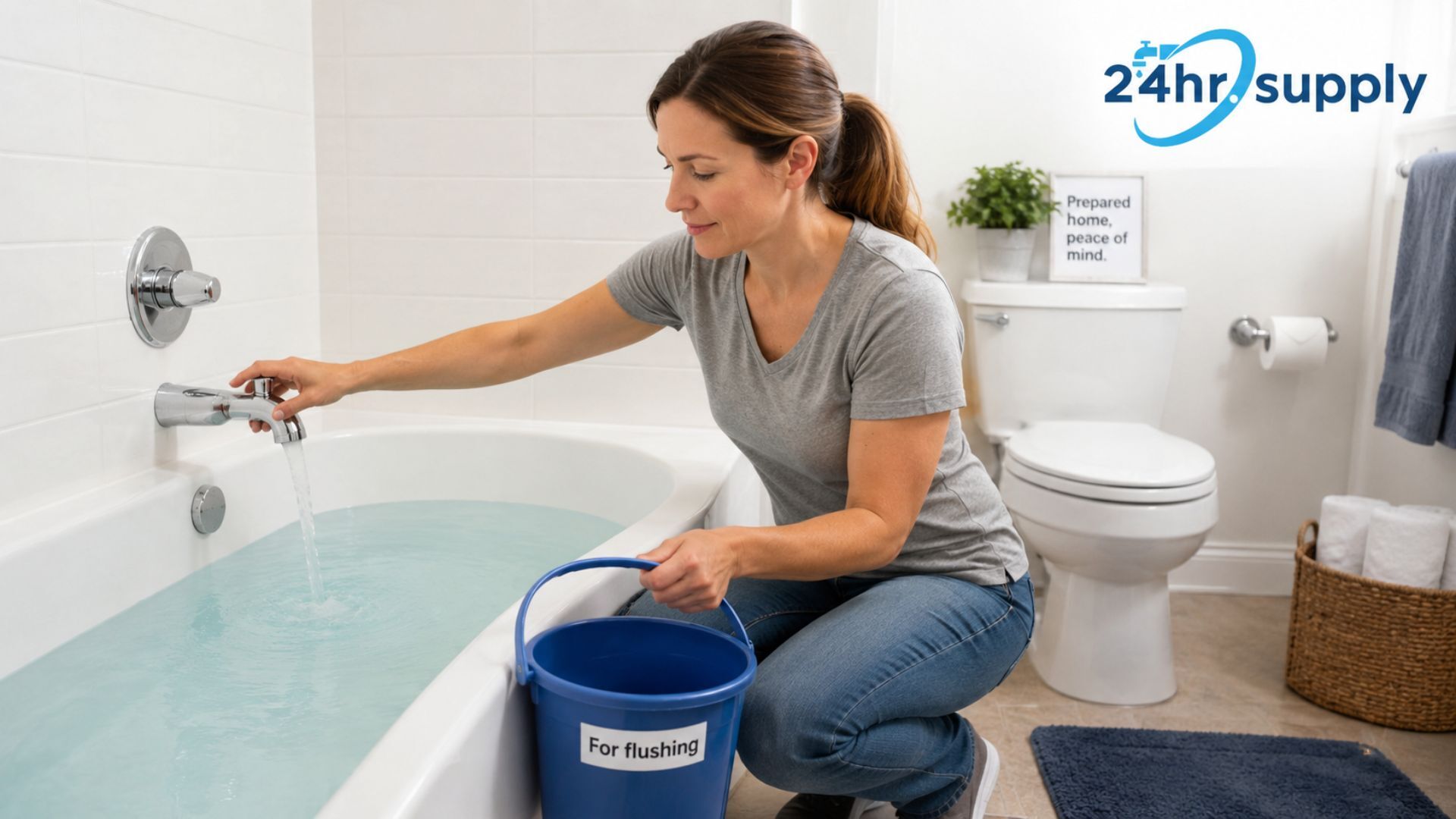
- Water collected in a bathtub before a planned shutoff
- Rainwater
- Pool water
- Used bathwater
- Lightly used household gray water
- Water from a clean container or rain barrel
The CDC recommends filling bathtubs before a known water emergency so the water can be used for toilet flushing.
Also, avoid water that contains grease, food waste, paint, solvents, harsh chemicals, thick sediment, or large debris. These materials can damage plumbing or contribute to a blockage.
Protect your drinking-water supply whenever possible. Our team recommends using non-potable water for flushing and keeping stored drinking water for hydration, cooking, and hygiene.
Why Did the Manual Flush Not Work?
A manual flush usually fails because the water moved too slowly, the toilet needed more volume, or the drain has a blockage. Toilet age and internal tank problems can also affect the result. The way the bowl responds will often point to the likely cause.
Here are the most common reasons:
- A slow pour may fail to trigger the siphon: The bowl can fill without creating enough force for a complete flush.
- Insufficient water can also cause a weak result: Some toilets require a larger volume, especially older models with higher flush requirements.
- A blockage may be preventing proper drainage: Rising water, slow movement, or a history of weak flushing can indicate a clog.
- Damaged tank components can interrupt the flush: A faulty flapper or lift chain may stop a manually filled tank from releasing water when you press the handle.
- Problems deeper in the drainage system may be responsible: Gurgling, sewage odors, or water appearing in another fixture can point to a drain or sewer-line issue.
- Certain toilet designs respond differently to manual flushing: Pressure-assisted, tankless, and commercial flushometer toilets may not behave like a standard gravity toilet.
Remember: Stop adding water when the bowl continues to rise. Repeated pouring can turn a minor problem into an overflow.
When Should You Avoid Flushing the Toilet?
Avoid manual flushing when the toilet, drain, sewer, or septic system may be unable to accept more water. Adding another bucket can worsen a backup and spread contaminated water through the bathroom.
A bowl close to the rim is a clear warning sign. The same applies when several drains are backing up, or sewage appears in a bathtub, shower, or floor drain. You should also limit flushing after flooding, during suspected septic damage, or when local authorities ask residents to reduce wastewater use.
Strong sewage odors near the toilet or nearby drains can also indicate a larger problem. In that situation, we recommend contacting a plumber or septic professional.
Lastly, wash your hands after handling buckets or toilet parts. When soap and clean water are unavailable, CDC guidance recommends hand sanitizer with at least 60% alcohol .
Pro tip: Read our guide to fixing low bathroom sink water pressure if the faucet flow seems weak.
What Should You Do After the Water Comes Back On?
After the water returns, let the toilet tank refill and complete one normal test flush. This helps confirm that the supply and drainage systems are working correctly.
Check whether:
- The toilet shutoff valve is fully open
- The tank reaches its normal water level
- The supply line has leaks
- The toilet continues to run
- The bowl drains at its usual speed
- Water appears around the toilet base
Brief sputtering can occur in household plumbing after service is restored. Persistent leaks, an empty tank, or unusual behavior across several drains may require professional attention.
Our team recommends checking the toilet again after several minutes. A slow leak may take time to appear around the valve, hose, tank, or base.
How 24hr Supply Can Help With Toilet Repairs After an Outage?
Manual flushing can keep the toilet usable for a short time, while replacement parts address leaks, faulty valves, and worn tank components. After all, a water outage may reveal a problem that was already developing inside or behind the toilet.
24hr Supply carries repair parts and fixtures for homeowners, contractors, property managers, and DIY projects.
Here are several relevant options:
- Eastman 48550 Blue Flapper Pro Series can help when the tank loses water or the toilet keeps running.
- Everflow 81112PR-NL angle stop may be useful when the fixture shutoff valve leaks, sticks, or fails to control the water supply.
- Everflow 27416-NL 16-inch braided tank supply line can replace a kinked, damaged, or leaking tank connection.
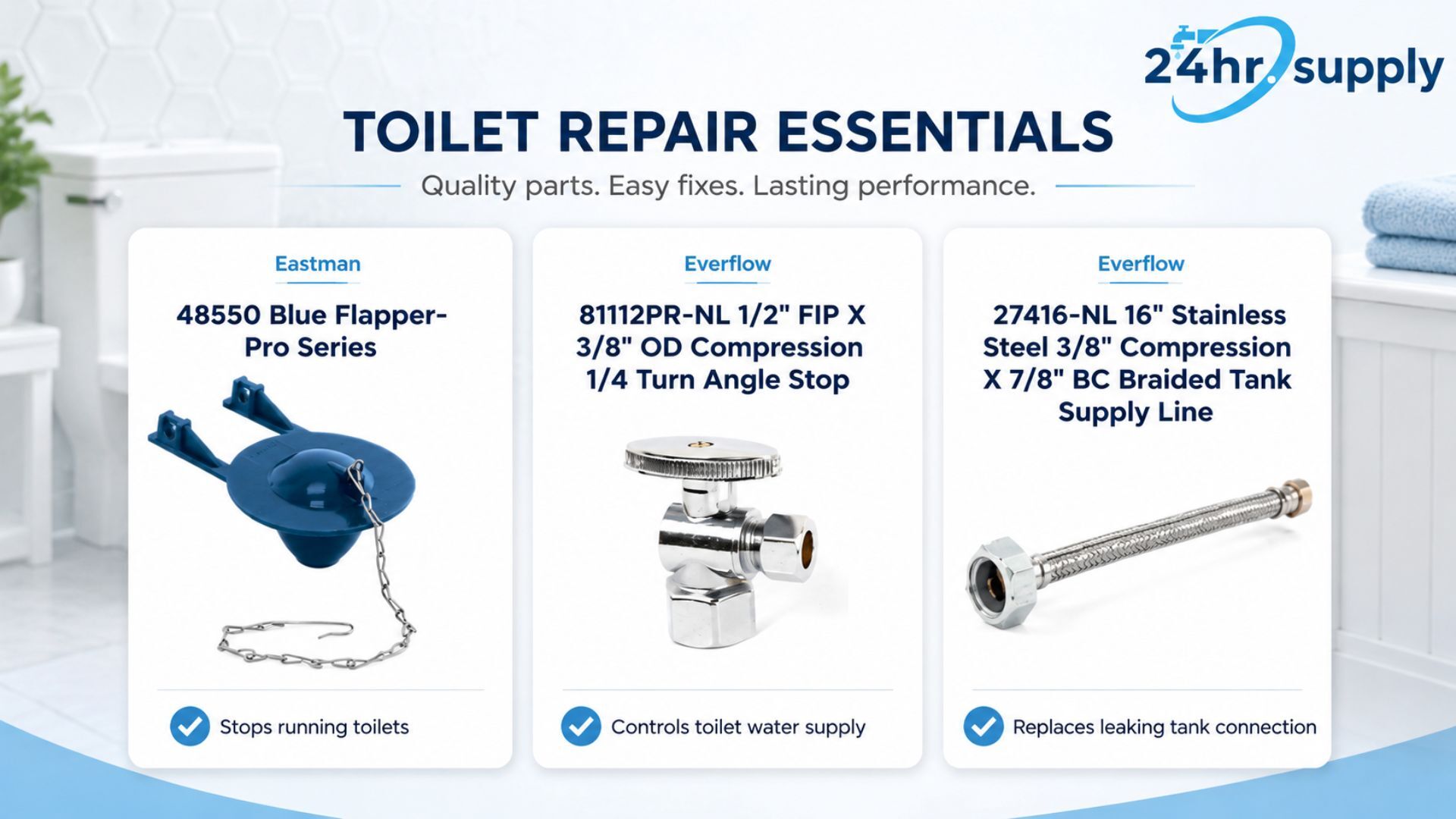
Compare dimensions, connection types, model details, and specifications before ordering. 24hr Supply also carries complete fixtures such as the Icera Malibu II when an older toilet needs full replacement.
So, make sure to check out our broad plumbing inventory, technical product information, fast fulfillment options, and customer support.
Contact us for help finding the right toilet repair part or replacement fixture.
Recent Posts
-

How to Prime a Grundfos Pump: Step-by-Step Instructions for Homeowners
If your pump is running but the tap is still dry, switch it off before checking whether it needs pr …Oct 12th 2026 -
How Does a Grundfos Pump Work? Types, Controls, and Everyday Uses
Grundfos centrifugal pumps work through an electric motor that turns an impeller, transfers energy t …Oct 12th 2026 -
Gruvlok vs. Victaulic: Key Differences in Couplings, Fittings, and Performance
A contractor, estimator, engineer, or buyer may find one grooved piping brand listed in the project …Sep 15th 2026