Tank vs. Tankless Water Heaters: Which One Is Right for You?
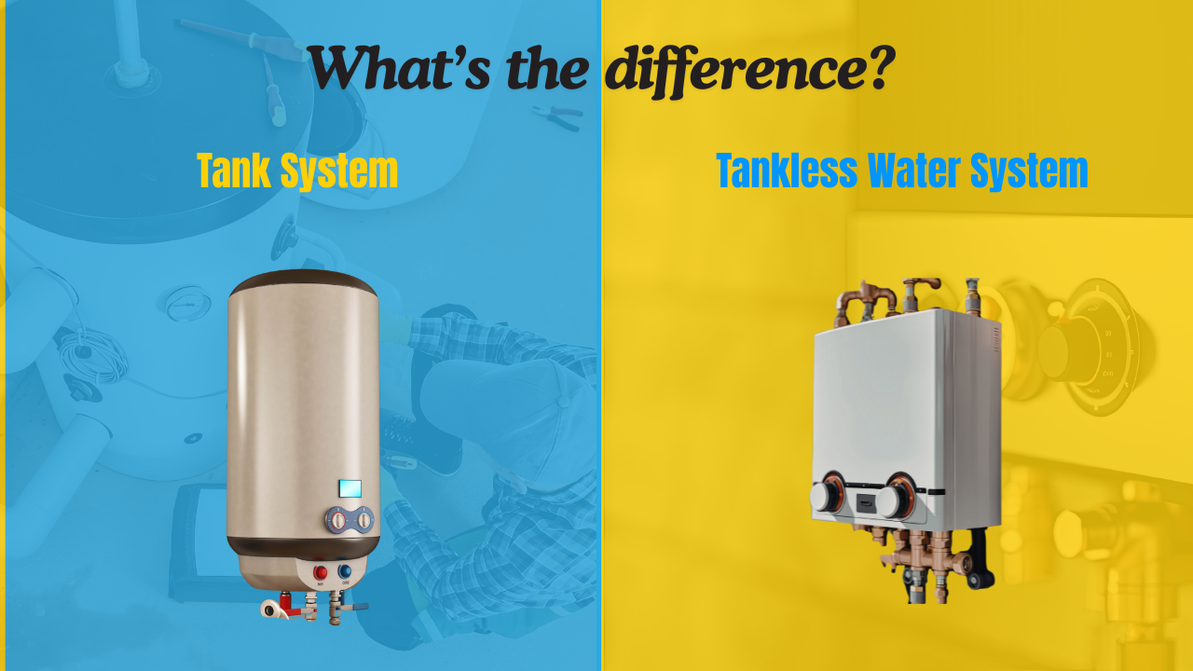
Tank vs. tankless water heaters comes down to this: tank systems are cheaper upfront and simpler, while tankless systems cost more but deliver continuous hot water and better efficiency over time. The right choice depends on how your home actually uses hot water, not just the specs on paper.
In this article, we help you break it down in a way that actually helps you decide what is the best for your home.
Tank vs. Tankless Water Heaters Overview
In a hurry? We got you. We compiled an overview section of what we will talk about.
| Category | Tank Water Heater | Tankless Water Heater |
|---|---|---|
| How It Works | Stores 30–80 gallons of hot water and reheats continuously | Heats water on demand as it flows through the unit |
| Hot Water Supply | Limited (can run out) | Continuous (as long as flow rate is supported) |
| Typical Flow Capacity | Depends on tank size | Around 2–5 GPM per unit |
| Upfront Cost | Lower ($1,000–$3,000 installed) | Higher ($2,000–$6,500+ installed) |
| Energy Efficiency | Lower due to standby heat loss | Higher only runs when needed |
| Monthly Operating Cost | Higher utility bills | Lower long-term utility costs |
| Lifespan | 8–12 years | 15–20 years |
| Installation Complexity | Simple replacement in most homes | May require upgrades (gas, electric, venting) |
| Space Required | Large floor space | Compact wall-mounted design |
| Maintenance | Annual flushing, anode rod replacement | Annual descaling and filter cleaning |
| Performance Under Demand | Can run out during heavy use | Can support continuous use but is limited by the flow rate |
| Best For | Budget-focused homeowners, smaller households | Larger households, long-term efficiency focus |
This overview is just a summary. Ready to dive in deeper? Read on to find out more.
How Do Tank and Tankless Water Heaters Work?
Tank and tankless water heaters work in completely different ways, and that affects performance in real homes. With a tank, you get strong output until the supply runs out. With tankless, you get endless hot water, but only up to a certain flow rate at a time.
Tank Water Heater (Stored Hot Water)
A tank water heater stores hot water and keeps it ready. Most units hold between 30 and 80 gallons and reheat throughout the day to maintain temperature.
- Water is constantly reheated to maintain temperature
- Hot water is drawn from the stored supply
- Refill and reheating take 20–60 minutes, depending on demand
Key limitation: once the tank empties, hot water stops.
Tankless Water Heater (On-Demand Heating)
A tankless water heater heats water only when you turn on a faucet.
- No storage tank involved
- Water is heated instantly as it passes through the unit
- Typical flow rate: 2–5 gallons per minute (GPM) per unit
Key limitation: multiple simultaneous uses can reduce pressure or temperature.
What Happens During Everyday Use?
This is where most homeowners notice the difference immediately.
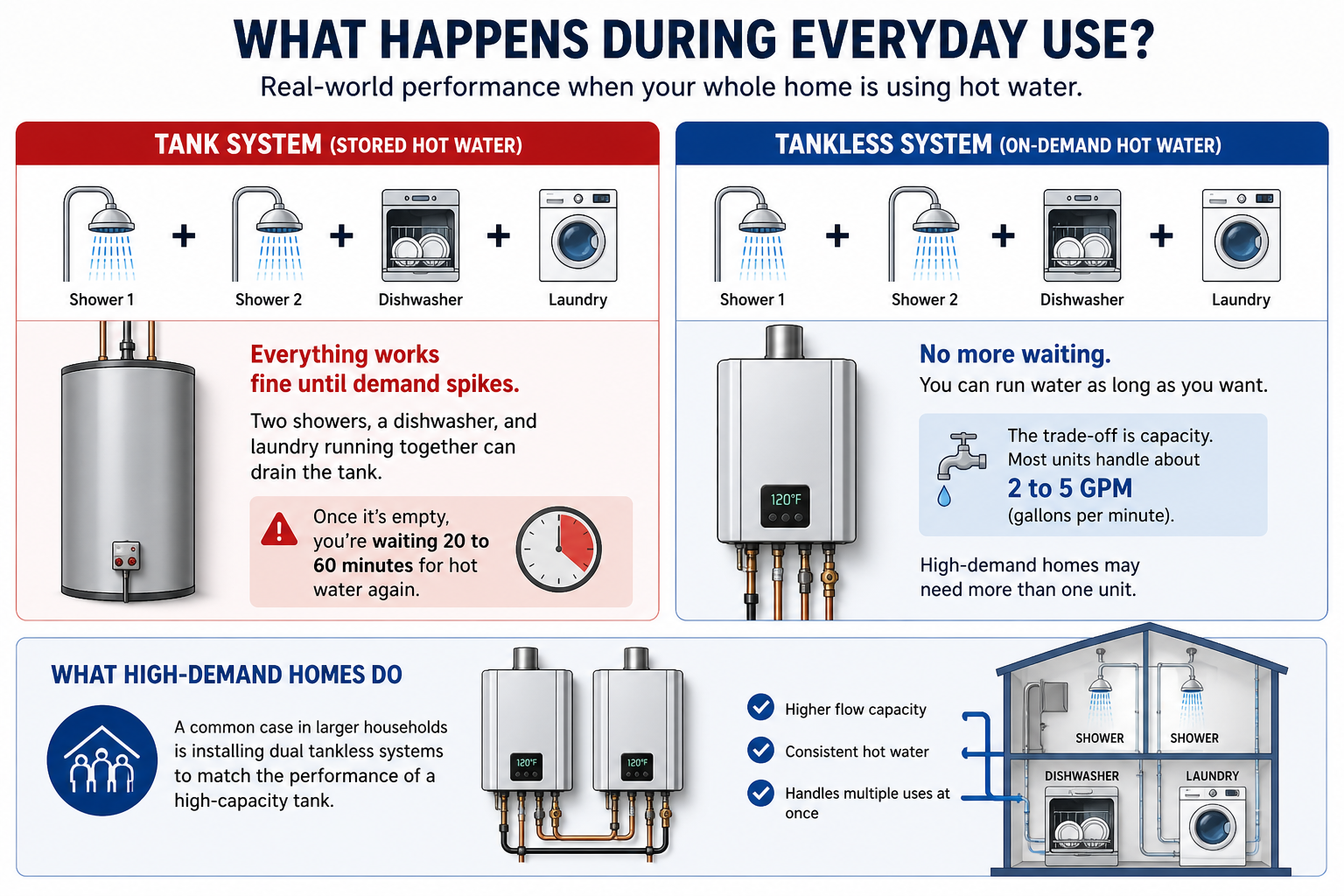
With a tank system, everything works fine until demand spikes. Two showers, a dishwasher, and laundry running together can drain the tank. Once it’s empty, you’re waiting 20 to 60 minutes for hot water again.
Tankless systems remove that wait entirely. You can run water as long as you want. The trade-off is capacity. Most units handle about 2 to 5 gallons per minute, so high-demand homes may need more than one unit.
A common case we see in larger households is installing dual tankless systems to match the performance of a high-capacity tank.
What Is the Cost Difference Between Tank and Tankless Water Heaters?
Tank systems cost less upfront, while tankless systems cost more but may save money long term.
Tank Water Heater Cost
- Unit: $300–$2,000
- Installed: $1,000–$3,000 total
- Lower installation complexity
Tankless Water Heater Cost
- Unit: $1,000–$3,000
- Installed: $2,000–$6,500+ total
- May require upgrades (gas lines, venting, electrical panel)
Why it matters
According to the U.S. Department of Energy, tankless systems can reduce energy use by 10–34% in homes with moderate water usage.
Which Water Heater Uses Less Energy?
Tankless water heaters use less energy in most homes because they do not store and reheat water.
Tank Water Heater Energy Use
- Constant reheating causes standby heat loss
- Energy is used even when no water is running
Tankless Water Heater Energy Use
- Only activates when water is needed
- No storage means no standby loss
In real-world use, homeowners often notice a clear difference in utility costs and energy efficiency between the two systems. Tankless water heaters typically lead to lower monthly utility bills because they heat water only when needed.
In contrast, tank water heaters tend to use more energy over time since they constantly reheat stored water, even during periods of low or no usage.
Which Water Heater Performs Better in Daily Use?
Performance depends on household size and usage patterns.
Tank Water Heater Performance
- Handles multiple fixtures at once
- Works well for predictable usage
- Can run out during peak demand
A common issue with tank water heaters is that running two showers while the dishwasher is on can quickly drain the hot water supply, leaving little to no hot water available.
Tankless Water Heater Performance
- Provides continuous hot water
- Limited by flow rate (2–5 GPM per unit)
- May require multiple units in larger homes
For tankless water heaters, a common real-world limitation shows up when multiple fixtures run at the same time. For example, taking two showers while running a washing machine can exceed the system’s flow capacity, which may reduce water pressure or cause the temperature to fluctuate.
How Long Do Tank vs. Tankless Water Heaters Last?
Tankless systems generally last longer due to fewer corrosion risks.
Tank Water Heater Lifespan
- Average: 8–12 years
- Common failure causes:
- Rust inside the tank
- Sediment buildup
- Leaks
Tankless Water Heater Lifespan
- Average: 15–20 years
- Common maintenance needs:
- Annual descaling
- Filter cleaning
Which Water Heater Is Easier to Install?
Tank water heaters are easier to replace. Tankless systems often require upgrades.
Tank Installation
- Direct replacement in most homes
- Lower labor cost
- Uses existing plumbing layout
Tankless Installation
- May require:
- Electrical upgrades
- Gas line adjustments
- Venting system changes
- Higher labor cost due to system complexity
Maintenance Comparison (What Homeowners Actually Do)
Maintenance affects lifespan and efficiency for both systems.
Tank Water Heater Maintenance
- Flush once per year to remove sediment
- Inspect anode rod every 3–5 years
- Check for corrosion or leaks
Tankless Water Heater Maintenance
- Descale annually (especially in hard water areas)
- Clean inlet filter
- Schedule periodic professional servicing
Safety Differences Between Tank and Tankless Water Heaters
Both systems are safe when installed correctly, but risks differ.
Tank Water Heater Risks
- Pressure buildup in older units
- Tank corrosion leading to leaks
- Potential rupture in neglected systems
Tankless Water Heater Safety Features
- Built-in temperature sensors
- Automatic shutdown if overheating occurs
- No stored high-volume water pressure
Code and safety standards
Installation is governed by guidelines from:
- International Code Council
- NFPA
Which Water Heater Should You Choose?
Tank water heaters are better if you want a lower upfront cost and simple installation. Tankless water heaters are better if you want long-term efficiency and unlimited hot water access.
Practical rule of thumb
- Choose a tank if you want fast replacement and low cost
- Choose tankless if you want energy savings and long-term value
Ready to Upgrade Your Water Heater? Find the Right Parts and Support Fast
Choosing between a tank and a tankless water heater is only step one. The real difference comes from using the right components, proper installation, and having access to reliable supplies when you need them.
Whether you are planning an upgrade or dealing with a sudden breakdown, having a trusted source like 24hrsupply gives you access to the fittings, valves, and tools required to get the job done right.
From everyday needs to emergency plumbing supplies, getting the right materials quickly can save time, prevent damage, and keep your home running without interruption.
Recent Posts
-

How to Prime a Grundfos Pump: Step-by-Step Instructions for Homeowners
If your pump is running but the tap is still dry, switch it off before checking whether it needs pr …Oct 12th 2026 -
How Does a Grundfos Pump Work? Types, Controls, and Everyday Uses
Grundfos centrifugal pumps work through an electric motor that turns an impeller, transfers energy t …Oct 12th 2026 -
Gruvlok vs. Victaulic: Key Differences in Couplings, Fittings, and Performance
A contractor, estimator, engineer, or buyer may find one grooved piping brand listed in the project …Sep 15th 2026