What Is the P-Trap? How It Works, Common Problems, Cleaning, and Replacement
You have probably seen the curved pipe beneath a sink, even if you never knew its name. That pipe is the P-trap. It helps wastewater leave the fixture and blocks sewer gases that could otherwise enter the room.
A damaged or clogged trap can cause leaks, odors, and slow drainage. For that reason, today we will explain how P-traps work, where plumbers use them, what can go wrong, how to clean one, and what to check before buying a replacement.
What Is a P-Trap, and What Is Its Purpose?
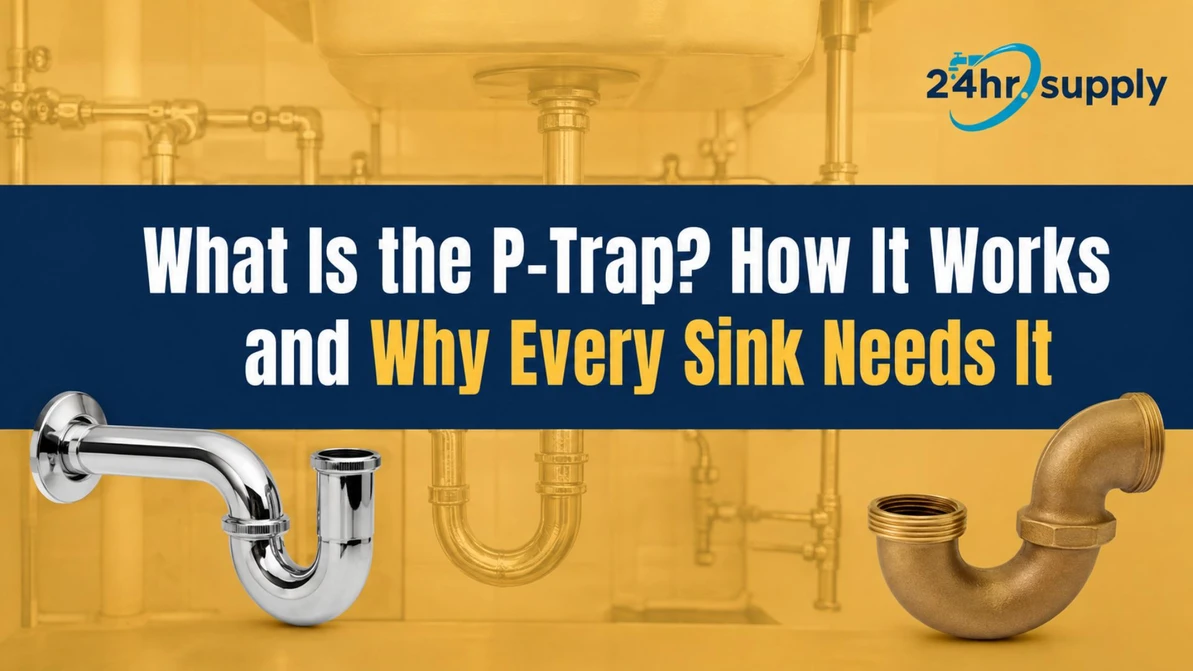
A P-trap is a curved plumbing fitting that holds water after a fixture drains, and its purpose is to create a barrier against sewer gases. If you have ever asked what is the P-trap under a sink, look for the U-shaped bend connected to a horizontal outlet pipe. Together, those sections resemble a letter P turned on its side.
So, what is the purpose of a P-trap? It has three practical jobs:
- It creates a water barrier against sewer gases and odors.
- It lets wastewater and small debris enter the drainage system.
- It may catch jewelry or other objects before they travel deeper into the drain.
The water left inside the bend is called the trap seal. According to the 2024 International Plumbing Code , a fixture trap must maintain a liquid seal between 2 and 4 inches , or 51-102 mm. P-traps commonly appear beneath sinks, tubs, showers, floor drains, and other plumbing fixtures.
Pro tip: See our guide on how bathroom plumbing works to understand where the P-trap fits into the larger drain and vent system.
How Does a P-Trap Work?
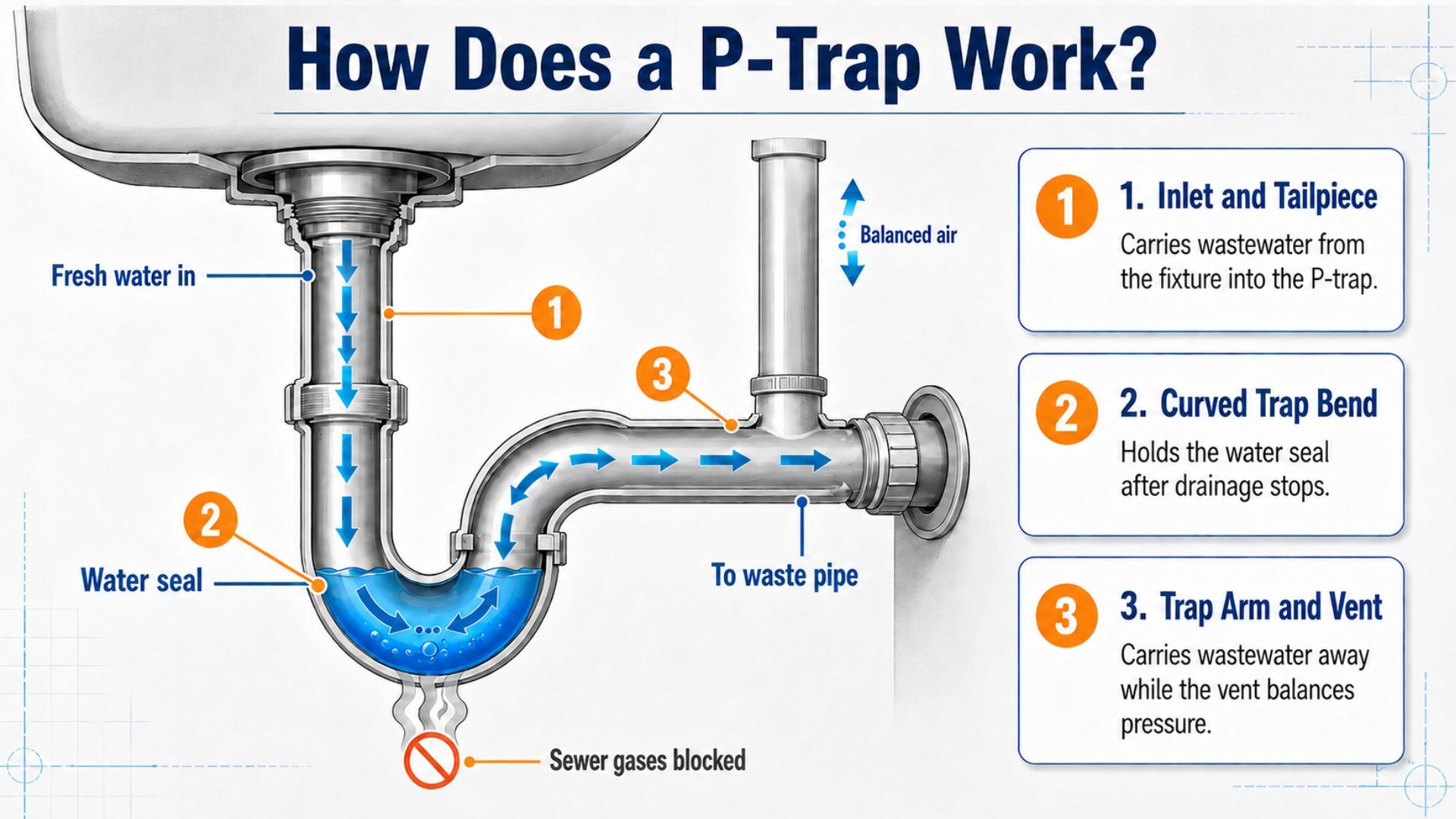
A P-trap works by keeping enough water inside its bend to block the open path between the fixture and sewer system. As fresh water enters the drain, it pushes the older water over the trap outlet and into the waste pipe. Once the flow stops, some water remains and restores the seal.
The three main parts below show how water moves through the trap and how the seal stays in place.
Inlet and Tailpiece
The tailpiece carries wastewater down through the fixture outlet and into the P-trap. A sink strainer, pop-up drain, or garbage-disposal outlet may sit above this section.
Curved Trap Bend
The curved bend holds the water seal after drainage stops. However, it can also collect hair, grease, soap residue, food particles, and small objects.
Trap Arm and Vent Connection
The trap arm carries wastewater through the wall drain. Meanwhile, the plumbing vent balances pressure inside the drainage system. This pressure control helps protect the trap seal against siphoning and sudden pressure changes.
Where Are P-Traps Used, and How Do Trap Types Differ?
P-traps appear under sinks, tubs, showers, floor drains, and many commercial fixtures, but their construction depends on the application. Toilets work a little differently because the trap is built into the fixture itself.
Contractors may need a heavy cast-iron model, while a DIY sink repair may use a lightweight tubular trap. Here are the main differences:
| Trap type | Typical application | Main characteristic | Important consideration |
|---|---|---|---|
| Tubular P-trap | Residential sinks | Lightweight and easy to access | Must match the pipe size and material |
| Cast-iron P-trap | Commercial or larger drainage systems | Heavy-duty construction | May use no-hub, service-weight, or extra-heavy connections |
| Deep-seal P-trap | Selected floor drains and commercial systems | Holds a deeper water seal | Must suit the system design and code |
| S-trap | Older plumbing | Outlet turns downward through the floor | Prohibited in many modern installations because it can siphon dry |
| Bottle trap | Exposed or tight sink spaces | Compact and decorative body | Acceptance depends on the product and local code |
Pro tip: If a blockage is causing problems around the P-trap, check out our guide to tools for clearing plumbing clogs and learn which options work for different drain issues.
Common P-Trap Problems and Warning Signs
A bad smell or wet cabinet does not always identify the exact problem. Several faults can produce similar symptoms, so we recommend checking the full assembly before ordering parts.
Here are the main signs to watch for:
- Slow drainage: Hair, grease, soap residue, or food may have collected inside the bend.
- Water beneath the sink: Loose slip nuts, worn washers, cracks, corrosion, poor alignment, or incorrect sizing may cause leaks.
- Sewer odor: The trap may be dry, dirty, cracked, poorly sealed, or affected by a venting fault.
- Gurgling sounds: A partial clog, blocked vent, or pressure problem may disrupt drainage.
- Visible damage: Metal can corrode, while plastic parts may crack, bend, or move out of alignment.
- Recurring trouble: Repeated clogs or leaks may point to the surrounding drain line or a poor installation.
If your P-trap keeps leaking, extra force on the slip nuts may cause more damage. Tightening cannot repair a cracked pipe, failed washer, bad alignment, or venting fault. Start with the source of the leak instead.
How to Clean and Unclog a P-Trap
A minor clog may clear without removing the trap, while packed debris inside the bend may require disassembly. Follow these steps to clean the P-trap safely and check its parts for damage:
- Stop using the fixture and clear the cabinet beneath it.
- Put on gloves, then place a bucket and towels under the trap.
- Remove hair or other visible debris near the drain opening.
- Try a sink plunger or suitable drain tool for a minor blockage.
- If water still drains slowly, loosen the slip nuts and remove the trap carefully.
- Empty the retained water and debris into the bucket.
- Wash the trap with warm, soapy water and a flexible brush.
- Inspect the washers, threads, connections, and pipe walls for damage.
- Reassemble each part and avoid overtightening plastic fittings.
- Run the faucet, then inspect every connection for dripping water.
Never mix chemical drain cleaners. Residue may remain inside the trap, and opening it can expose your skin or eyes to harsh chemicals. Tell a plumber about any cleaner already used before work begins.
If the fixture still drains slowly after the trap is clear, the blockage may sit deeper inside the drain line.
Pro tip: Choosing plastic components for your drainage system? Our ABS vs. PVC plumbing guide explains how these common plumbing materials differ and where each one is typically used.
When Should You Repair or Replace a P-Trap?
You should repair a P-trap when it has a minor connection problem, but replacement makes more sense when the pipe is cracked, badly corroded, deformed, incorrectly sized, or repeatedly leaking. A new washer may solve a small joint leak, and cleaning may solve a simple clog.
Before buying parts, check:
- Trap and drain diameter
- Connection type, such as tubular or no-hub
- Plastic, brass, or cast-iron construction
- Available space and pipe alignment
- Side inlet, cleanout, deep-seal, or reducing requirements
- Manufacturer instructions and local plumbing rules
Placement matters too because the trap must sit close enough to the fixture. Under the 2024 International Plumbing Code , the vertical distance between the fixture outlet and trap weir cannot exceed 24 inches. The horizontal distance cannot exceed 30 inches, measured between the center of the fixture outlet and the center of the trap inlet. Local rules may include exceptions.
If these measurements or the repair feel too complicated, call a professional. You should also get help with inaccessible pipes, damaged wall drains, recurring odors, venting problems, or leaks that continue after reassembly.
Find the Right P-Trap and Drain Parts at 24hr Supply
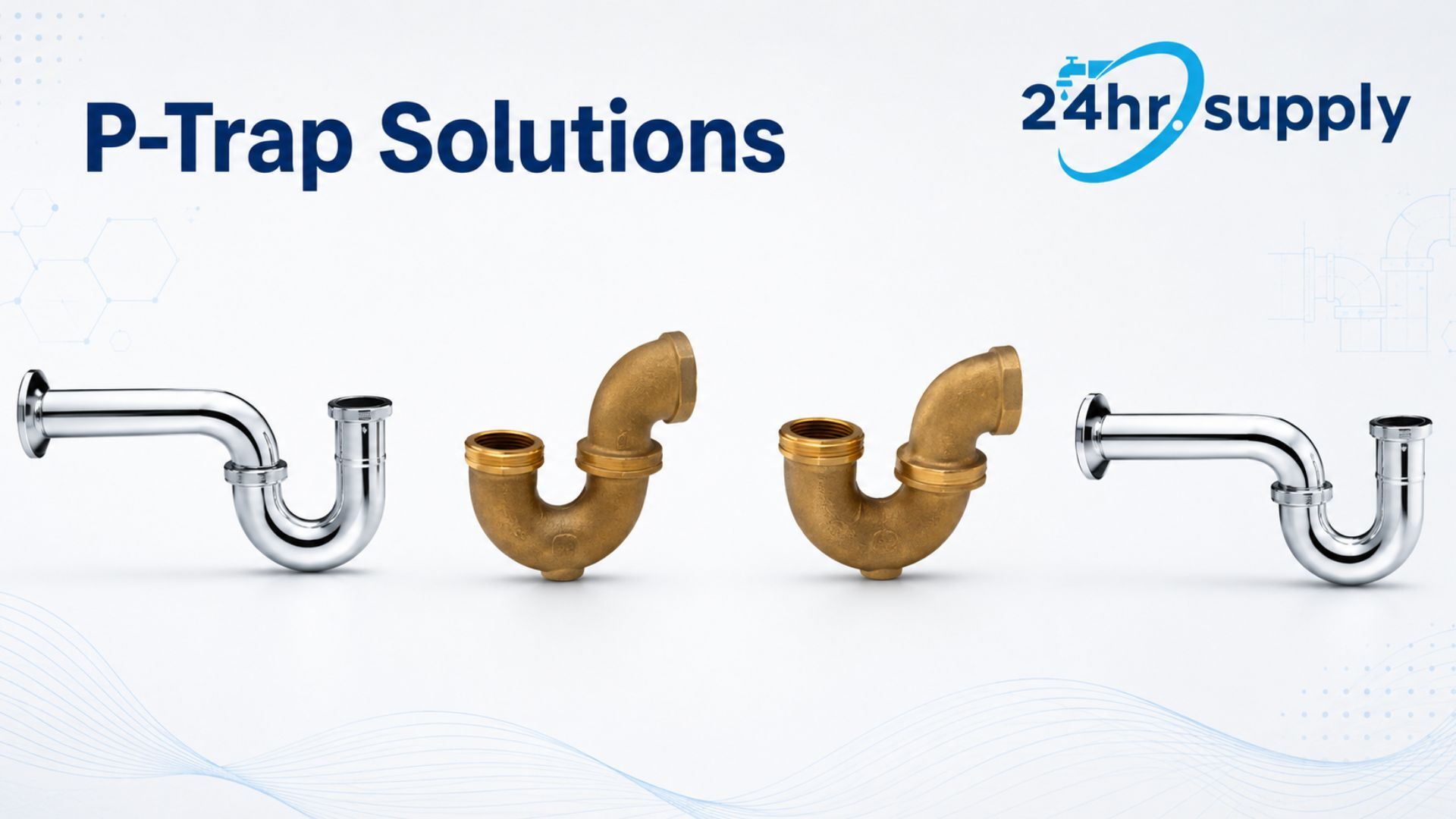
At 24hr Supply, we carry the plumbing components you need to replace a worn P-trap or complete a new sink installation. You can shop our selection of P-traps for sinks , including different sizes and configurations with or without cleanouts. We also offer sink drain parts and accessories if your project requires additional components around the drain connection.
If you are troubleshooting an existing setup first, our guide to fixing a gurgling kitchen sink explains how the P-trap can contribute to drainage and gurgling problems.
You can also contact our knowledgeable team for help finding plumbing parts that match your project and then order what you need directly from 24hr Supply.
FAQs
How Do I Know If My P-Trap Is Bad?
A P-trap may be bad if you find cracks, corrosion, recurring leaks, poor drainage, persistent odors, or visible deformation. Connections that no longer seal after proper reassembly can also indicate that a part needs replacement.
How Do You Fix a P-Trap Smell?
Fix a P-trap smell by running water into a dry trap, removing buildup, and checking each connection for leaks. If the odor returns, ask a plumber to inspect the vent and drain system.
Do P-Traps Need to Be Cleaned?
P-traps need cleaning when drainage slows, odors develop, clogs return, or an object falls into the fixture. There is no universal cleaning schedule, so we recommend responding to symptoms instead of opening a working trap unnecessarily.
How Do You Unclog a P-Trap Without Removing It?
Remove visible debris first, then try a suitable sink plunger or flexible drain tool. Use gentle pressure to protect the fittings. A solid object or compact blockage may still require removal of the trap.
Can Sewage Smell Leak from Behind a P-Trap?
Yes, sewage odors can escape near the back of a P-trap through loose joints, cracked drainpipes, failed wall connections, or an empty water seal. A plumbing vent problem can also cause recurring smells.
Do You Need to Turn off the Water to Clean a P-Trap?
You usually do not need to shut off the water supply because the P-trap belongs to the drain system. Keep the faucet unused while the trap is disconnected, or close the valves to prevent accidental flow.
Recent Posts
-

How to Prime a Grundfos Pump: Step-by-Step Instructions for Homeowners
If your pump is running but the tap is still dry, switch it off before checking whether it needs pr …Oct 12th 2026 -
How Does a Grundfos Pump Work? Types, Controls, and Everyday Uses
Grundfos centrifugal pumps work through an electric motor that turns an impeller, transfers energy t …Oct 12th 2026 -
Gruvlok vs. Victaulic: Key Differences in Couplings, Fittings, and Performance
A contractor, estimator, engineer, or buyer may find one grooved piping brand listed in the project …Sep 15th 2026