Grundfos Scala 1 vs. Scala 2: A Practical Buyer’s Guide for Homeowners
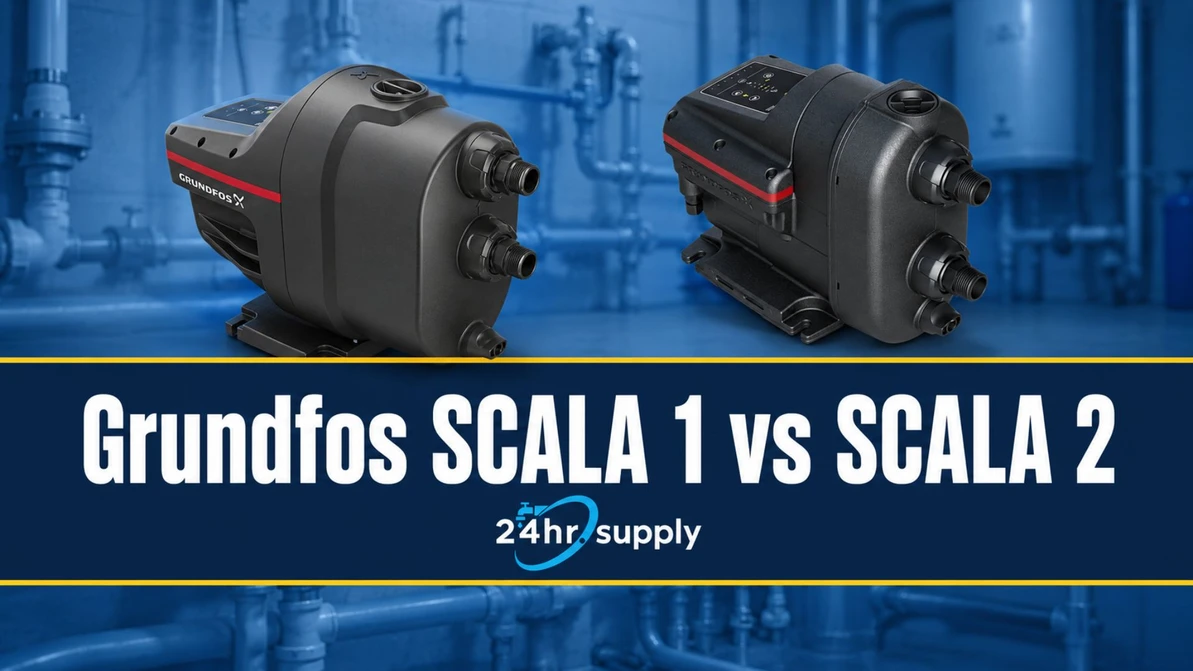
Choosing between Grundfos SCALA 1 vs. SCALA 2 comes down to how your home uses water and how much control you want over the pump. Both can improve residential water pressure, though they respond to demand in different ways.
The Grundfos SCALA range covers everything from flexible fixed-speed boosting to automatic constant-pressure control. So today, we’ll compare pressure performance, controls, noise, energy use, installation, sizing, and the applications that suit each model best.
What Is Grundfos Scala1?
Grundfos SCALA1 is an all-in-one, self-priming residential booster pump that uses fixed-speed operation when water demand activates the system.
It supports Bluetooth through Grundfos GO, external control inputs, several suction modes, and twin-pump configurations. Because of that flexibility, SCALA1 can work well for household boosting, tanks, irrigation, and applications where extra control options matter.
Source: grundfos.com
What Is Grundfos Scala2?
Grundfos SCALA2 is an integrated residential booster pump designed to maintain more consistent water pressure as demand changes around the home.
Its variable-speed motor adjusts pump output when additional fixtures open or water use falls. That makes it especially useful in homes where showers, faucets, appliances, and other outlets may operate at the same time.
Watch the official Features and benefits of SCALA2 course here.
How Grundfos Pumps Work
A residential booster pump starts when the plumbing system calls for water and raises available pressure, so fixtures receive adequate flow. In that sense, every Grundfos SCALA booster pump solves the same basic problem.
The control method is where the models start to separate. SCALA1 runs at a fixed motor speed after demand activates it. SCALA2 adjusts motor speed through integrated variable-speed controls as household demand changes.
Both are self-priming and include automatic protection features, so either Grundfos SCALA pump can serve as a compact residential boosting system when it is sized and installed correctly.
Key Differences Between SCALA1 and SCALA2
The spec sheets can look fairly close at first. Once we connect those numbers to actual water use, the differences become much easier to understand.
Here are the main differences at a glance:
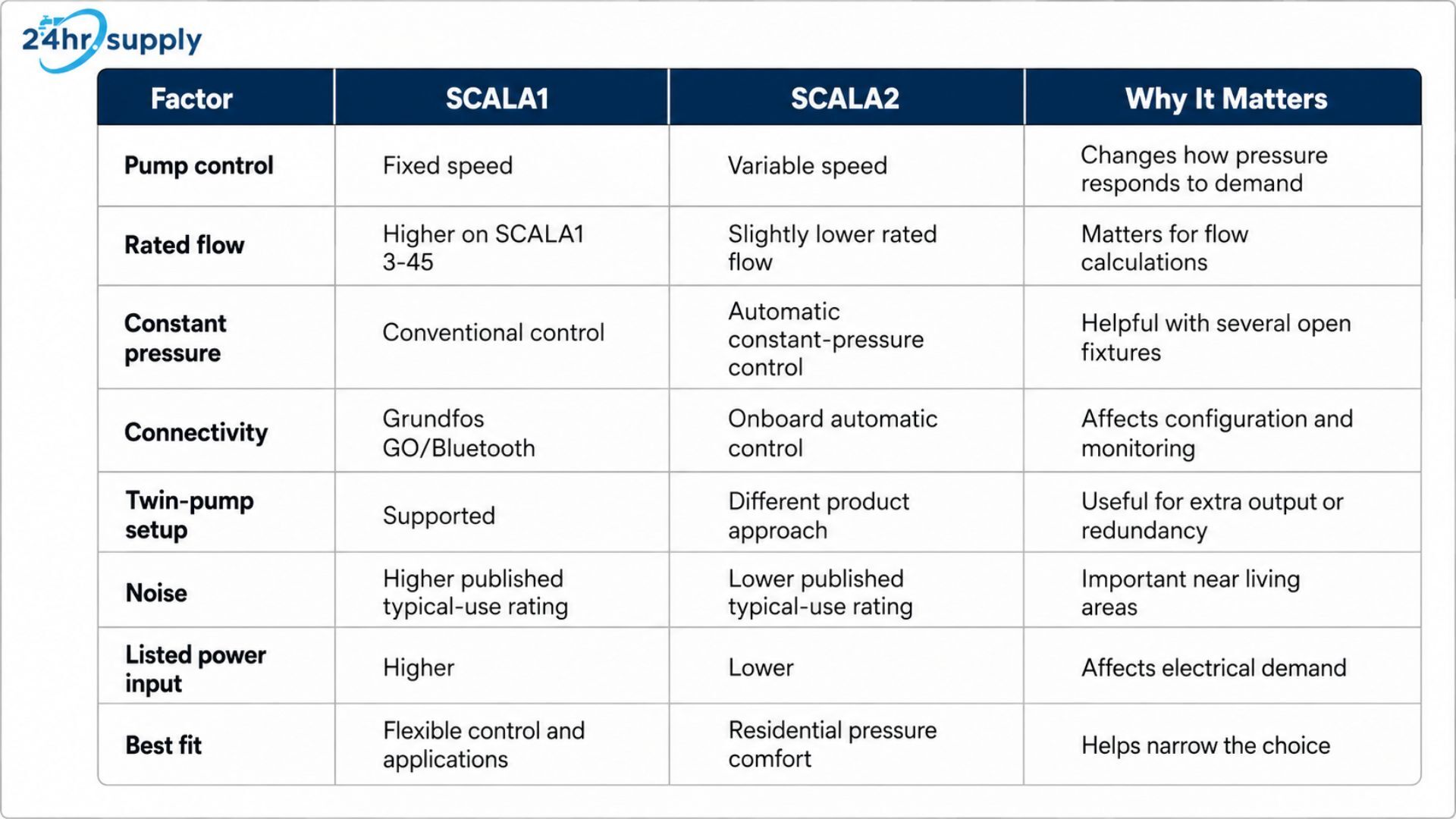
The table gives the quick answer. These details explain what those differences mean in practice.
Pressure, Flow, and Head
Flow tells us how much water the pump can move, while head represents how much pressure the pump can develop against elevation and system resistance. Operating pressure adds another limit that matters for the overall plumbing system.
The Grundfos SCALA 1 pump 3-45 has a rated flow of 14.9 GPM , compared with 13.2 GPM for SCALA2 Model 2, so SCALA1 is 1.7 GPM higher.
SCALA2 has a rated head of about 88.59 feet versus 82.02 feet for SCALA1. Actual fixture performance still depends on inlet pressure, elevation, pipe friction, and simultaneous demand.
Constant Pressure and Pump Controls
SCALA1 starts when demand appears and then runs at fixed motor speed. Its Bluetooth connection works with Grundfos GO for monitoring, scheduling, configuration, and diagnostics. Also, it supports external inputs, selectable suction modes, and two-pump duty-assist or duty-standby setups.
That gives Grundfos SCALA 1 pressure adjustment and system control a different feel from SCALA2. SCALA2 changes motor speed automatically to hold the selected pressure as demand rises or falls. Its normal constant-pressure range is 22 to 58 PSI , with up to 80 PSI available when inlet conditions allow.
Pro tip: For more context, our guide to booster pump pressure settings explains how pressure choices affect system operation.
Noise and Power Use
SCALA2 has a clear advantage in the published typical-use noise figures. Grundfos rated SCALA1 at under 55 dB(A) , while the 2024 SCALA2 Model 2 is rated at about 44 dB(A). Pump location, rigid piping, mounting, vibration, and actual operating load can still change what you hear inside the home.
The listed maximum power input also differs. SCALA1 is rated at 950 watts, while SCALA2 is rated at 550 watts. We would avoid turning that 42.1% difference into a promised electricity saving because real consumption depends on demand, pressure settings, inlet conditions, and runtime.
Installation and Water-Source Compatibility
Both pumps use 1-inch NPT connections and support self-priming operation. They can also work with suitable residential tanks and other compatible water-supply arrangements.
Before choosing either unit, we would check suction conditions, incoming pressure, available electrical power, elevation, and required flow.
Outdoor installations also need proper drainage and protection from freezing conditions. Those details can affect performance long after the pump itself has been selected.
Which Model Fits Your Home Best?
SCALA2 is usually the better starting point when consistent household pressure matters most. On the other hand, SCALA1 makes more sense when you value configuration flexibility, app control, or twin-pump options.
The right choice still depends on how your home actually uses water. Here are the situations we would look at first:
| Situation | Better Starting Point | Reason |
|---|---|---|
| Several fixtures run at once | SCALA2 | Variable speed helps maintain pressure |
| Shower pressure changes often | SCALA2 | Constant-pressure control is its main strength |
| Quiet operation matters | SCALA2 | Lower published typical noise |
| App configuration matters | SCALA1 | Grundfos GO and Bluetooth support |
| Two-pump redundancy is needed | SCALA1 | Twin configurations are supported |
| Irrigation or flexible inputs matter | SCALA1 | Broader configurable controls |
| Simple household pressure comfort is the priority | SCALA2 | Automatic pressure management |
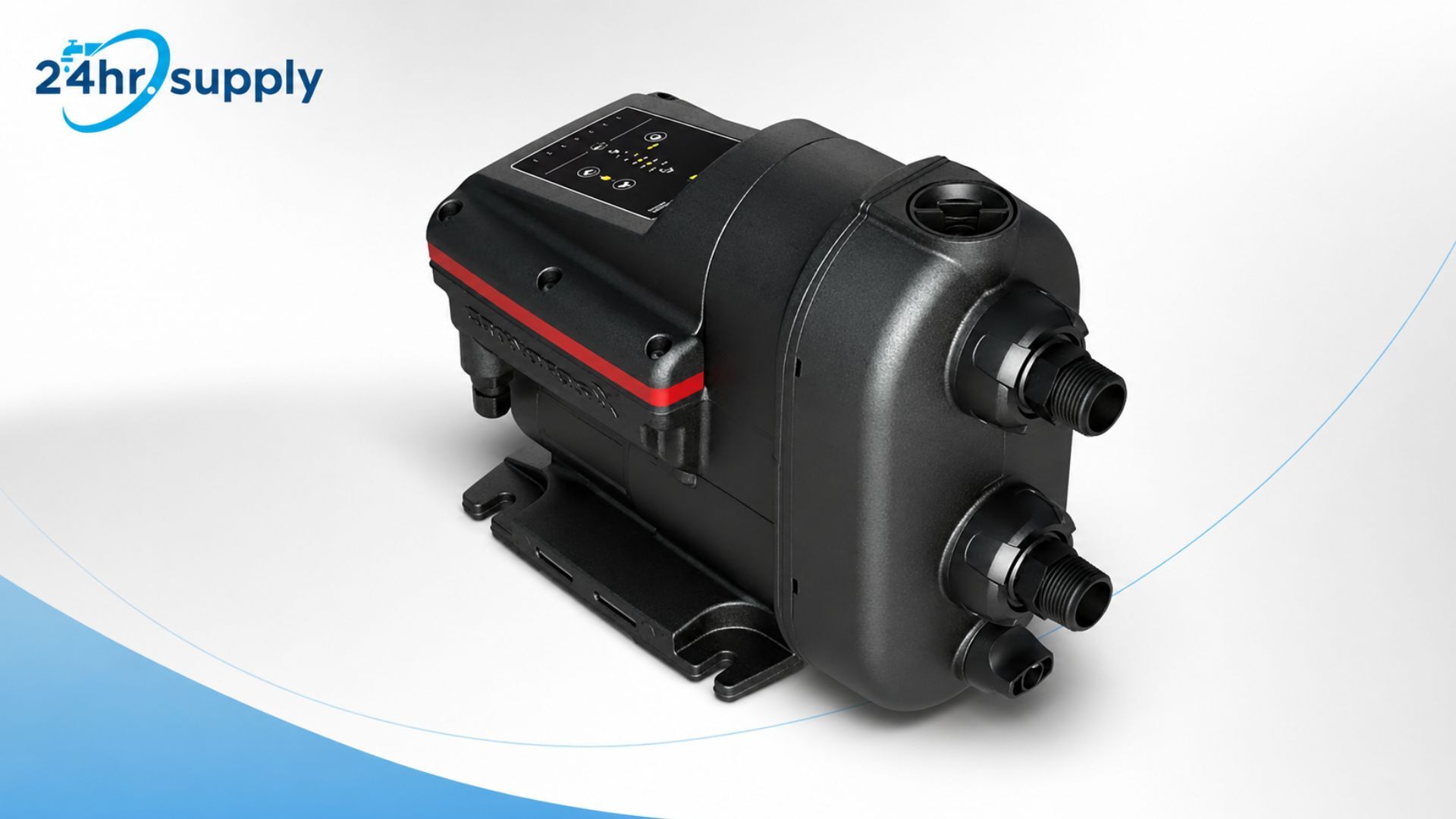
Grundfos markets Grundfos SCALA 2 for American houses and apartments with up to three floors and as many as eight simultaneously used taps. That is a useful reference point, though actual capacity still changes with outlet flow, elevation, and friction losses.
Pro tip: For a home where steady pressure is the main concern, the Grundfos SCALA2 3-45 pressure boosting pump is one option worth reviewing.
How Should You Size a SCALA Pump Before Buying?
You should size a SCALA pump by matching the pump to your available pressure, required flow, elevation, and expected simultaneous water demand.
We usually start with these factors:
- Available inlet pressure
- Desired pressure at the highest or most demanding fixture
- Number of floors
- Number of fixtures likely to run at once
- Required flow
- Elevation between the pump and highest outlet
- Friction losses through pipe, fittings, and valves
- Whether the source is mains water, a tank, or a shallow well
The Grundfos domestic-water selection guide takes a similar approach and uses the water source, number of floors, and number of taps as key selection factors.
Our guide on how to size a booster pump system goes deeper into that process. A larger specification can look attractive on paper, though correct hydraulic sizing should drive the choice.
What If Neither SCALA Model Fits the System?
If neither SCALA model meets the calculated flow or pressure requirements, another Grundfos booster system may fit the application better.
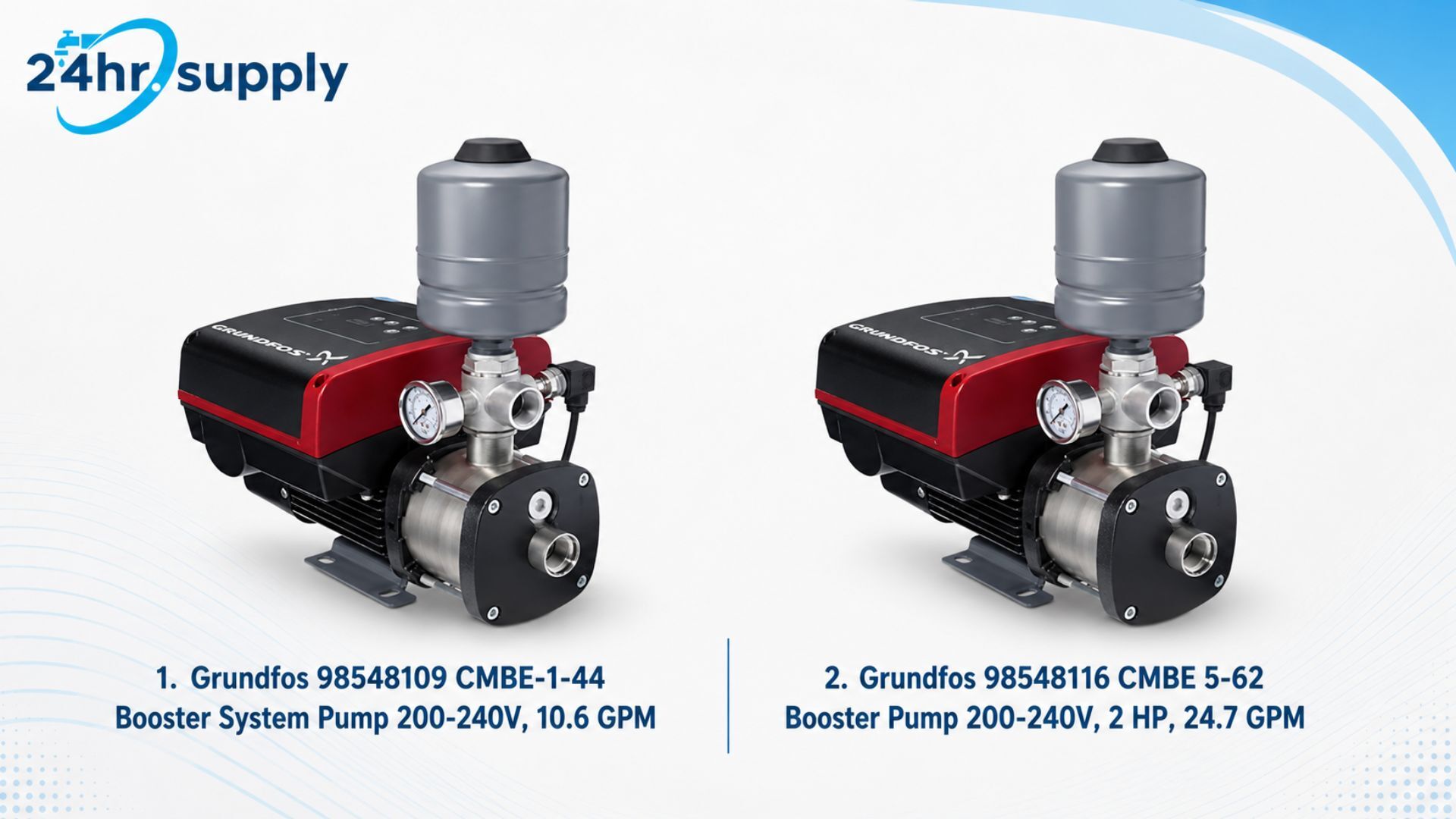
For example, the Grundfos CMBE constant-pressure booster gives you another variable-speed constant-pressure option. Systems with greater demand may also justify reviewing the Grundfos CMBE 5-62 booster pump.
We would treat these as alternatives for specific hydraulic requirements. Pressure, flow, elevation, and electrical requirements should determine whether either one makes sense.
How Can 24hr Supply Help You Choose a Grundfos Booster Pump?
24hr Supply can help you compare Grundfos booster options by giving you access to product specifications, flow and head information, electrical requirements, connection sizes, manuals, and current product availability.
Once you know your required pressure and flow, you can review the available Grundfos residential booster pumps and compare them against your system calculations. That makes the shopping process much more practical because you can move from a general SCALA1-versus-SCALA2 comparison into specific model data.
If your setup falls outside either SCALA model, the broader Grundfos booster selection also gives you other options to consider.
FAQs
What Do Grundfos SCALA 2 Problems Usually Mean?
Grundfos SCALA 2 problems usually point to an alarm, water-supply issue, blockage, dry-running condition, leak, pressure-setting issue, or installation problem. The pump’s indicator should guide your next troubleshooting step. Our other guide covers common Grundfos SCALA2 problems in more detail.
What Does a Grundfos SCALA 2 Red Light Flashing Mean?
A Grundfos SCALA 2 red light flashing means the pump has detected an alarm or operating fault. Check the alarm indicator and the model documentation before resetting the unit because the cause can vary between dry running, supply issues, system faults, and other conditions.
Where Can You Find Grundfos SCALA 2 Parts?
Grundfos SCALA 2 parts should be matched to the exact pump model and product number. Different generations can use different components, so check the pump identification data and its technical documentation before ordering replacement parts.
Can a SCALA1 Replace a SCALA2?
A SCALA1 can replace a SCALA2 only when its flow, pressure, electrical requirements, control behavior, and system capacity suit the installation. We recommend sizing the replacement against the actual plumbing demand first because the two pumps handle pressure control differently.
Recent Posts
-

What Is Cavitation? A Practical Guide to Protecting Your Water Pump System
You may have seen cavitation mentioned in a pump manual or heard it during a discussion about poor p …Oct 19th 2026 -
How to Prime a Grundfos Pump: Step-by-Step Instructions for Homeowners
If your pump is running but the tap is still dry, switch it off before checking whether it needs pr …Oct 12th 2026 -
How Does a Grundfos Pump Work? Types, Controls, and Everyday Uses
Grundfos centrifugal pumps work through an electric motor that turns an impeller, transfers energy t …Oct 12th 2026