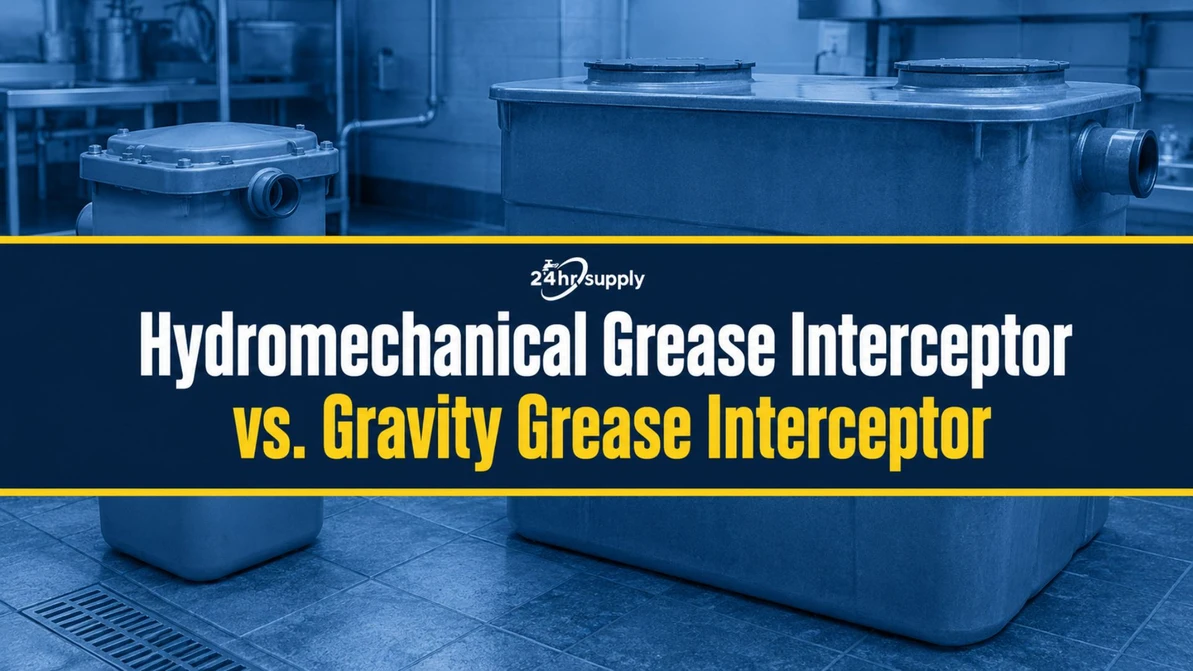
Hydromechanical Grease Interceptor vs. Gravity: How to Choose for a Kitchen
Grease interception may already be part of your commercial kitchen plan, yet choosing the right system can get confusing fast. Tank dimensions tell only part of the story.
One technology is commonly evaluated through wastewater flow and tested grease capacity, while the other relies more heavily on liquid volume, fixture load, and retention time. Apart from that, installation space and local plumbing requirements can shift the decision as well.
So, today, we’ll walk through how each system works, where the differences matter, and what to review before choosing one.
What Is a Grease Interceptor?
A grease interceptor is a plumbing device that separates fats, oils, grease, and some solids from commercial kitchen wastewater before that water continues toward the sewer system.
Understanding how a drainage system moves wastewater makes the interceptor’s role easier to see. It creates a controlled point where FOG can be separated before it travels farther downstream.
Without effective grease management, grease buildup in drain lines can contribute to restricted flow and drainage problems.
To learn more, check out this video:
What Is the Average Lifespan of a Grease Interceptor?
There is no single dependable average lifespan for every grease interceptor. Service life changes with the material, installation environment, corrosion exposure, wastewater load, cleaning schedule, physical damage, and overall maintenance.
For that reason, we recommend checking the interceptor regularly and following the manufacturer’s inspection and replacement guidance. A generic age estimate can miss problems that develop much earlier or overlook equipment that remains serviceable for longer.
What Is a Hydromechanical Grease Interceptor?
A hydromechanical grease interceptor separates FOG through controlled wastewater flow and internal features such as baffling and air entrainment.
These systems are commonly rated by flow in gallons per minute, or GPM, along with grease-storage or grease-retention capacity. That rating matters because excessive flow can reduce the time and conditions needed for effective separation, which is why a flow-control device is often part of the system.
Many HGIs are compact and installed indoors. Still, the category reaches far beyond under-sink equipment. Approved models may be installed in-floor, below grade, outdoors, or in other configurations.
For example, the Schier GB1 25 GPM grease interceptor shows the compact end of that range.
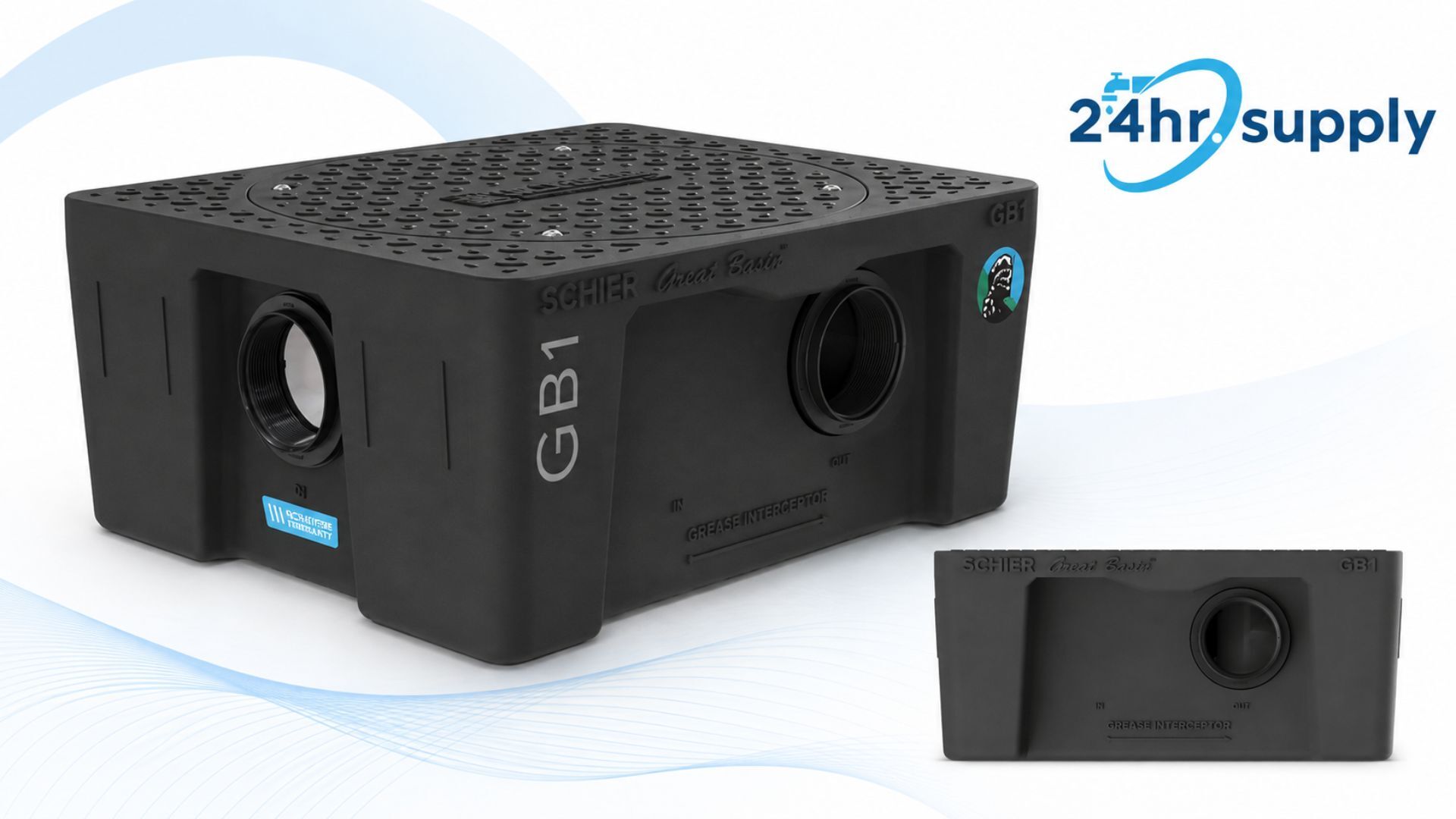
Performance can also vary considerably by model. A recent King George County approved-product list includes 50 HGI test configurations from 10 to 200 GPM, with certified separation efficiencies from 90.0% to 99.6%.
What Is a Gravity Grease Interceptor?
A gravity grease interceptor is generally a larger-volume system that gives wastewater more retention time so FOG can rise while heavier solids settle.
Sizing usually starts from liquid volume rather than a GPM performance rating alone. Depending on the jurisdiction, calculations may account for fixture load, drainage fixture units, retention time, storage allowances, and other local criteria.
These units are commonly installed underground or outdoors, and many use multiple compartments with access points for inspection and cleaning. Their footprint can therefore become an important planning issue.
Pima County offers one useful example of how local sizing can work. Its 2024 plumbing amendments set a 300-gallon minimum capacity and use a 30-minute retention period with a 25% storage factor. Those figures apply to that jurisdiction, so they should not be treated as a national sizing rule.
What Are the Key Differences Between HGI and GGI Systems?
The key differences come down to how the systems are rated, how they create separation, how much space they need, and how local authorities evaluate them.
Those differences affect real project decisions. A unit that works well on paper may still be a poor match for the available space, connected fixtures, or required maintenance access.
Here are the main points to compare:
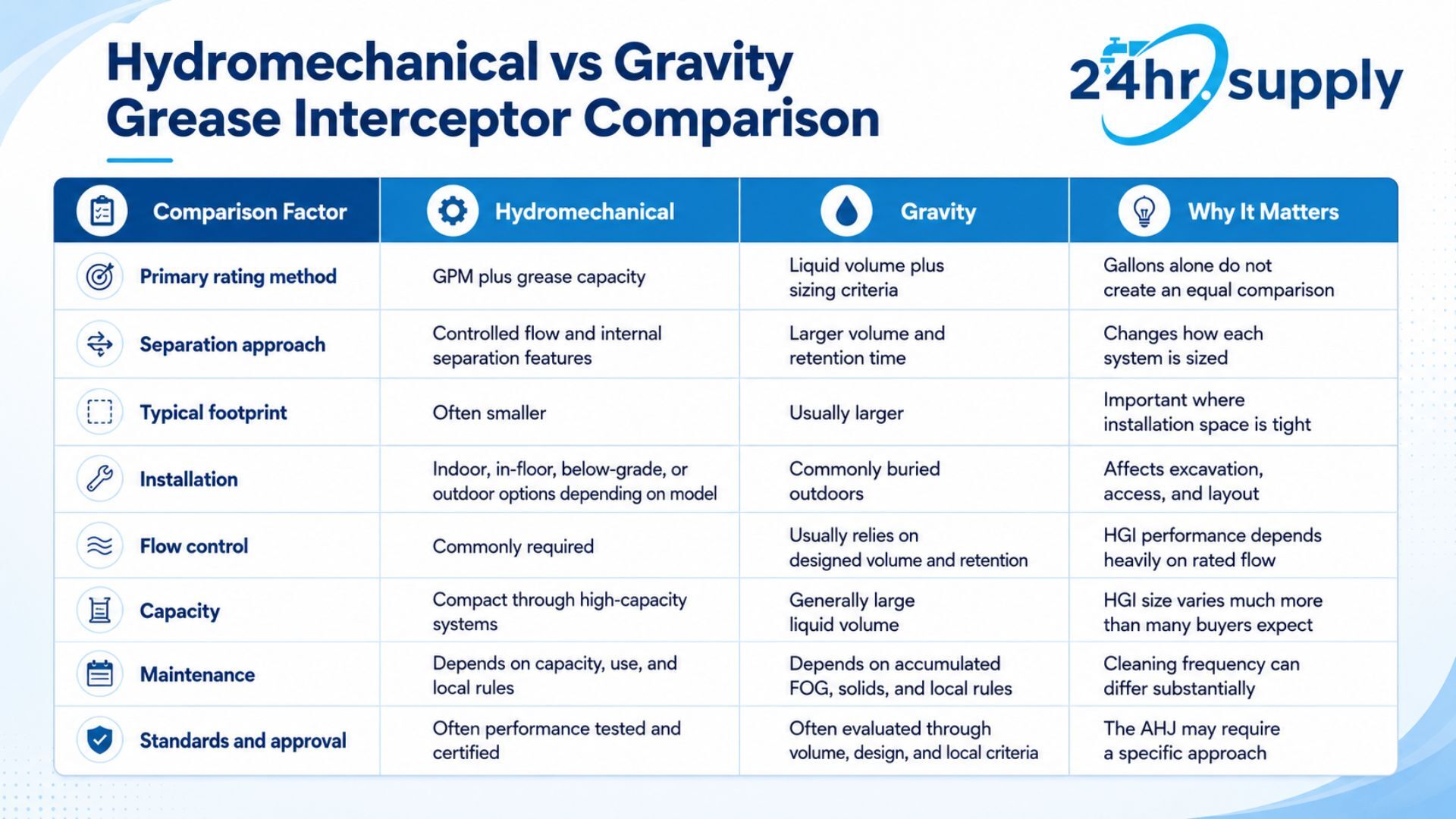
The biggest mistake we see in this comparison is treating gallons as though they mean the same thing for both technologies. A 2021 Duvall, Washington, sizing guide makes the problem clear. One worked example called for a 75-GPM HGI or a 100-gallon GGI, while another called for a 50-GPM HGI or a 750-gallon GGI.
Physical size can mislead you too. Modern hydromechanical grease interceptors include much larger systems than the familiar compact indoor units. The Schier GB-500 high-flow grease interceptor supports 100 or 200 GPM and has substantial liquid capacity.
The Schier GB-1000 hydromechanical grease interceptor pushes that idea even further with 1,000 gallons of liquid capacity and installation options that include indoor, outdoor, above-grade, and below-grade configurations.
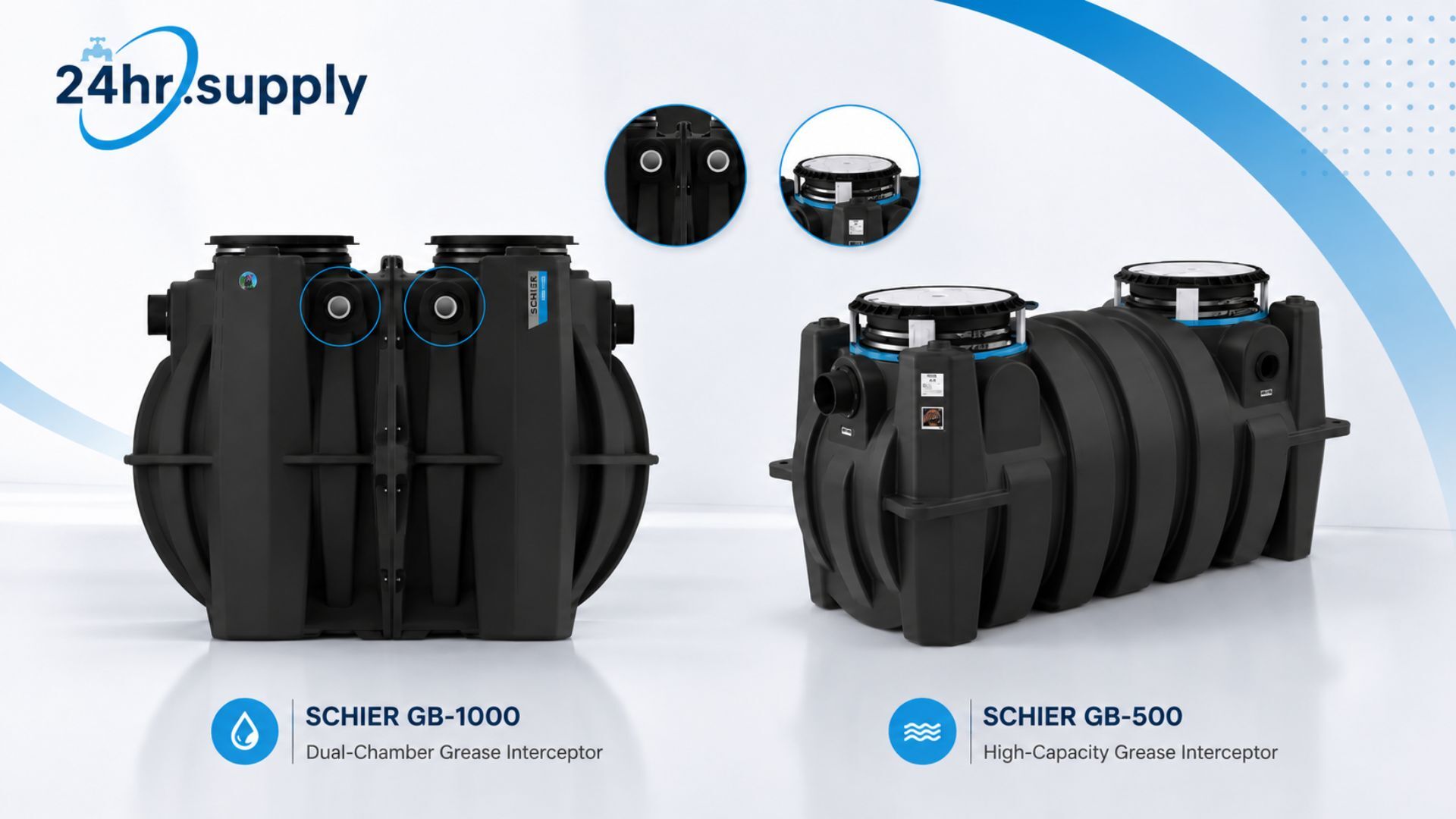
So we would never choose between the technologies based on tank size or installation location alone.
Which Grease Interceptor Fits Your Project?
The right grease interceptor is the one that matches your wastewater load, grease capacity needs, installation conditions, and local approval requirements.
Once the two technologies make sense, the decision becomes much more practical. You can start matching the system to the actual kitchen instead of comparing labels.
Here are the main factors we recommend reviewing:
- Fixture load and wastewater flow. Identify connected sinks and equipment, expected discharge rates, DFUs where applicable, and peak demand.
- Required grease capacity. Compare the rated grease capacity or required storage volume with the amount of FOG the kitchen is likely to produce.
- Available space. Look at floor space, under-sink clearance, exterior space, excavation limits, and access for service.
- Installation configuration. Review connection sizes, inlet and outlet positions, venting, flow control, covers, extensions, and above- or below-grade approval.
- Kitchen type and operating volume. A small café and a high-volume commissary can produce very different wastewater conditions even when some fixtures look similar.
- Maintenance access. The interceptor needs to remain reachable for inspection and cleaning. Poor access tends to become a bigger problem after the kitchen is already operating.
- Manufacturer documentation and local approval. Compare the exact product specification with plumbing code, sewer authority requirements, and the AHJ’s rules.
A product page can help show what that comparison looks like in practice. The Canplas Endura 50 grease interceptor gives you specific figures for flow rate, grease capacity, connection size, and installation configuration that can be checked against project requirements.
Why Can Local Code Change the Right Choice?
Local code can change the right choice because plumbing departments, FOG programs, sewer authorities, and AHJs may set their own minimum sizes, fixture limits, flow ratings, access rules, maintenance schedules, and equipment restrictions.
That means a technically suitable product can still fall outside the rules for a particular project.
Pima County gives one example. Its 2024 amendments allow certain smaller conventional HGI installations with four or fewer fixtures and set a 25 GPM, 50-pound minimum rating.
Maintenance rules can vary just as sharply. Everett requires some interceptor-style systems to be cleaned at least every 90 days , while hydromechanical trap-style systems may require weekly cleaning unless the city approves a longer interval.
So verify local sizing and approval requirements before ordering equipment.
How Can 24hr Supply Help You Compare Grease Interceptors?
24hr Supply can help you compare equipment once you know the specifications your project needs.
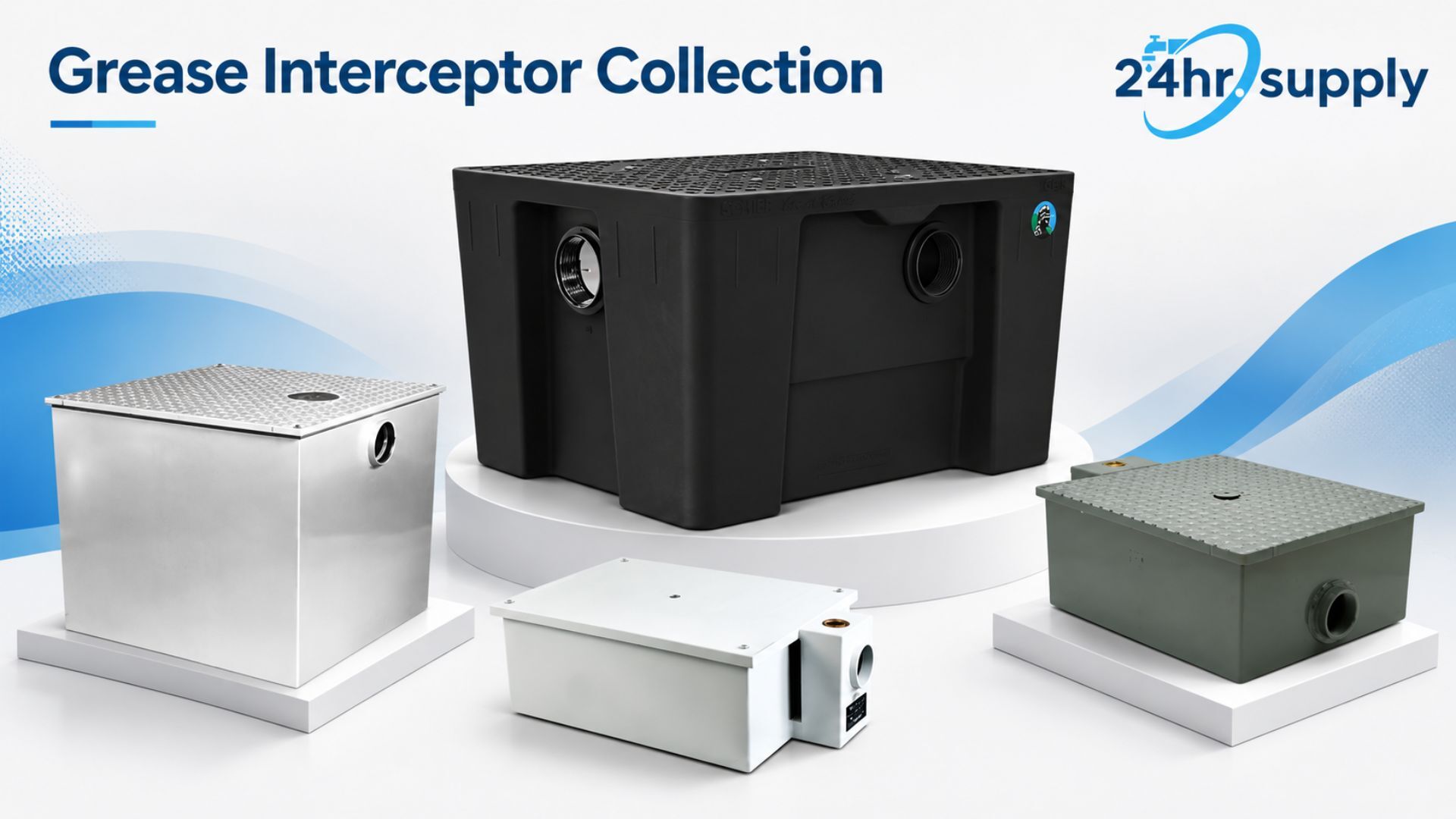
We carry grease interceptors across different flow ratings, grease capacities, liquid capacities, dimensions, connection sizes, and installation configurations. Those details make it easier to narrow the options around the requirements supplied by your designer, manufacturer documentation, plumbing code, or local authority.
We also provide product information and specification documents, so you can compare the numbers before placing an order.
And if you are planning more than the grease-management side of the kitchen, our resources on commercial kitchen plumbing equipment can help you think through other parts of the plumbing setup as well.
Conclusion
HGI and GGI systems use different sizing and performance approaches, so gallon capacity or physical size alone cannot tell you which one fits the project.
Start with wastewater flow, connected fixtures, grease capacity, available installation space, maintenance access, and local requirements. From there, compare the actual equipment specifications. That process gives you a much clearer path to the right interceptor and helps avoid expensive changes later.
Recent Posts
-

How to Prime a Grundfos Pump: Step-by-Step Instructions for Homeowners
If your pump is running but the tap is still dry, switch it off before checking whether it needs pr …Oct 12th 2026 -
How Does a Grundfos Pump Work? Types, Controls, and Everyday Uses
Grundfos centrifugal pumps work through an electric motor that turns an impeller, transfers energy t …Oct 12th 2026 -
Gruvlok vs. Victaulic: Key Differences in Couplings, Fittings, and Performance
A contractor, estimator, engineer, or buyer may find one grooved piping brand listed in the project …Sep 15th 2026